Gluten Free Works Gluten Free Resources News and Tips

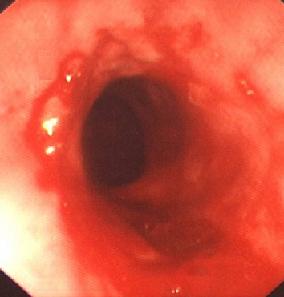
Editors’ note: This animal study investigating the effects of Lactobacillus rhamnosus, a strain of probiotic bacteria, on ulcers of the stomach lining of rats demonstrated that bacteria placed directly into the stomach significantly and according to dose reduced gastric ulcer size. If the results of this animal research are reproduced in humans, it would demonstrate that probiotics may hasten recovery for people suffering from stomach ulcers. The bacteria did not affect the function of normal gastric mucosa but normalized those with abnormal changes during ulceration.
“Probiotic Lactobacillus rhamnosus GG enhances gastric ulcer healing in rats.”
Lam EK, et. al.
Department of Pharmacology, The University of Hong Kong, China.
European Journal of Pharmacology. 2007 Jun 22;565(1-3):171-9.
Background: Probiotics are widely used as functional foods which have been advocated for the maintenance of gastrointestinal microflora equilibrium and treatment of gastrointestinal disorders. However, studying the role of probiotics in peptic ulcer disease is limited. The aim of the present study is to investigate the effect of a probiotic strain Lactobacillus rhamnosus GG on gastric ulcer and to elucidate the mechanisms involved.
Methods: Gastric kissing ulcers were induced in rats by acetic acid (60% v/v). L. rhamnosus GG was given intragastrically (directly into the stomach) at 10(8) cfu/day or 10(9) cfu/day for three consecutive days after ulcer induction. L. rhamnosus GG successfully colonized in the gastric mucosa especially at the ulcer margin. It also significantly and dose-dependently reduced gastric ulcer area.
Results: L. rhamnosus GG successfully colonized in the gastric mucosa especially at the ulcer margin. It also significantly and dose-dependently reduced gastric ulcer area. Cell apoptosis to cell proliferation ratio was strongly decreased and accompanied by significant up-regulation of ornithine decarboxylase (ODC) and B-cell lymphoma 2 (Bcl-2) protein expression at the ulcer margin. Angiogenesis was also significantly stimulated together with the induction of vascular endothelial growth factor (VEGF) expression. Furthermore, L. rhamnosus GG up-regulated the phosphorylation level of epidermal growth factor receptor (EGF receptor) without altering the total EGF receptor expression.
Conclusions: These findings suggested that L. rhamnosus GG enhanced gastric ulcer healing via the attenuation of cell apoptosis to cell proliferation ratio and increase in angiogenesis. Regulators of these processes such as ODC, Bcl-2, VEGF and EGF receptor are likely to be involved in the healing action of L. rhamnosus GG for gastric ulcer.
————————
Author Information: Cleo Libonati, RN, BSN
Cleo Libonati is president/CEO and co-Founder of Gluten Free Works, Inc. She is the author of Recognizing Celiac Disease and the Gluten Free Works Treatment Guide.
 Premenstrual syndrome (PMS) is a female menstrual disorder that occurs regularly around ovulation and subsides within a few days of the onset of menstruation. PMS affects up to 75% of women during their childbearing years.
![stock-photo-3443895-depression-and-sorrow1-216x300[1]](https://glutenfreeworks.com/wp-content/uploads/2010/06/stock-photo-3443895-depression-and-sorrow1-216x3001.jpg) Kathleen (not her real name) came to counseling because of anxiety. After an intake, we identified several areas in her life that sounded like they were contributing to her difficulties. We started working with Cognitive Behavioral Therapy, a system that looks at the thought sequence you use, and where a distorted belief can be corrected and thereby relieve suffering.
Kathleen (not her real name) came to counseling because of anxiety. After an intake, we identified several areas in her life that sounded like they were contributing to her difficulties. We started working with Cognitive Behavioral Therapy, a system that looks at the thought sequence you use, and where a distorted belief can be corrected and thereby relieve suffering. I sit here writing this post from my bed. It’s 9:39pm and I have been in bed since 4:30pm. My tonsils are so big it hurts to swallow and I feel like I have been in a boxing match where I lost, severely.
![wpw_10-1564[1]](https://glutenfreeworks.com/wp-content/uploads/2016/07/wpw_10-15641-300x200.jpg)
 Guidelines for the treatment of IBS published by the American College of Gastroenterology include screening for celiac disease. These guidelines were established in 2008.
 Celiac Disease causes hundreds of signs, symptoms, associated disorders and complications. Almost all of them can be improved, reversed or cured by removing gluten from the diet and treating the symptoms individually.