Find out what your nails are telling you about your health in this important video tutorial. These nail problems reveal underlying causes that need to be corrected – and are usually simple to fix –…
Researchers in Switzerland have made the welcome discovery that the essential nutrient zinc effectively inhibits gastric acid secretion in humans.
The researchers were investigating whether zinc could lead to a rapid and sustained increase of stomach pH (more alkaline) in both animals and humans and provide a rapid acid suppression therapy. They demonstrated that zinc offers a new and prolonged therapy for
The mineral zinc is classified as an essential nutrient due to the vital functions it performs in our bodies. It is found in almost every cell of the body with highest concentrations in the liver, pancreas, kidney, bone, and muscle. High concentrations occur in the brain, middle ear, eye, prostate gland, sperm, skin, hair, and nails. This micronutrient is essential for the activity of approximately 100 enzymes. Enzymes promote biochemical reactions in the body.
E czema, or atopic dermatitis, is a chronic recurring inflammatory skin disorder characterized by itching, eczematous plaques and a defective epidermal barrier (surface layer of skin cells) that fails to hold moisture, with affected areas becoming dry then inflamed.
Q: Why does eczema develop?
A: Patients with atopic dermatitis have genetically determined risk factors that affect the barrier function of the skin and immune responses that interact with environmental factors.1
Atopic eczema is associated both with an abnormal skin matrix and impaired systemic immune response. Therefore, isolated topical treatment may have suboptimal effect.2
Atopic eczema is a common presentation of immune response towards food proteins in infancy.3
Global evidences reflect a marked increase in prevalence, which has tripled since 1960. In the United States, the current prevalence rates range from 10% to 20% in children and 1 to 3% in adults.4
What Is Eczema In Celiac Disease and/or Gluten Sensitivity?
Sources:
Mesquita Kde C, Igreja AC, Costa IM. Atopic dermatitis and vitamin D: facts and controversies. An Bras Dermatol. 2013 Nov-Dec;88(6):945-53. doi: 10.1590/abd1806-4841.20132660. [↩]
Caffarelli C, Santamaria F, Vottero A, Bernasconi S. Progress in Pediatrics in 2012: choices in allergy, endocrinology, gastroenterology, hematology, infectious diseases, neurology, nutrition and respiratory tract illnesses. Ital J Pediatr. 2013 May 8;39(1):26. [↩]
Ho MH, Wong WH, Chang C. Clinical Spectrum of Food Allergies: a Comprehensive Review. Clin Rev Allergy Immunol. 2012 Nov 16. [↩]
Mesquita Kde C, Igreja AC, Costa IM. Atopic dermatitis and vitamin D: facts and controversies. An Bras Dermatol. 2013 Nov-Dec;88(6):945-53. doi: 10.1590/abd1806-4841.20132660. [↩]
A cquired ichthyosis is an uncommon, nonhereditary cutaneous disorder characterized by dry, rough skin with prominent symmetrical scaling that involves significant portions of the body.
Most microscopic studies of acquired ichthyosis exhibit hyperkeratosis (thickened skin) with a reduced or absent granular layer.1
Q: What is the granular layer of skin?
A: The granular layer is the third cell layer(of five) composing the epidermis, or outer surface of skin.
Acquired icthyosis has been associated with internal disease including malignancies, autoimmune/inflammatory, metabolic, endocrine, and infectious diseases, and medication use.
What Is Acquired Ichthyosis In Celiac Disease and/or Gluten Sensitivity?
Sources:
Patel N, Spencer LA, English JC 3rd, Zirwas MJ. Acquired ichthyosis. J Am Acad Dermatol. 2006 Oct;55(4):647-56. [↩]
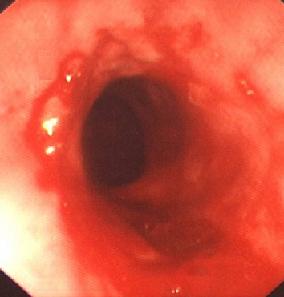
P ostbulbar duodenal ulceration is a chronic inflammatory disorder characterized by thickening of the intestinal lining with excoriation penetrating the muscularis mucosae (muscle layer of the intestine) associated with villous atrophy.
The ulcer is well-defined. Stenosis due to thickening of the area narrows the hollow inside of the duodenum which impairs passage of foodstuffs and may lead to obstruction.
Q: Is postbulbar duodenal ulceration painful?
A: Postbulbar duodenal ulceration may not cause symptoms but usually causes gnawing pain that is relieved by eating food. After eating there develops nausea and bloating.
Complications include obstruction, bleeding, and perforation of the duodenal lining. Ulcers do not usually become malignant.
What Is Postbulbar Duodenal Ulceration/Stenosis In Celiac Disease and/or Gluten Sensitivity?
A therosclerosis is a disease of arteries involving the buildup of fatty material called plaque along the walls of medium and large arteries characterized by patchy subintimal thickening, hardening, and loss of elasticity of blood vessels.
The intima is the innermost layer of an artery, having contact with blood. The subintima is beneath it.
Q: What happens when arteries become narrowed and less flexible?
A: Narrowing of the inside diameter of blood vessels and hardening of their walls reduce or obstruct blood flow through them which impairs their ability to supply tissues of the body with oxygen and nourishment.
When tissues are deprived of oxygen, pain and dysfunction results such as angina pectoris involving heart muscle because the heart continually needs oxygen never being able to rest.
It is thought that atherosclerosis develops from 1) epithelial cell dysfunction of the intima, and 2) lipid (fat) accumulation in smooth muscle cells and in foam cells, causing buildup of fatty deposits on the inside walls progressing to fibrous plaque formation. That is, intimal smooth muscle cells are surrounded by connective tissue and intracellular and extracellular lipids (fat build-up inside and outside of these cells).
What Is Atherosclerosis In Celiac Disease and/or Gluten Sensitivity?
Do you recognize this circular hair loss pattern? It is called alopecia areata. According to the National Alopecia Areata Foundation, “no FDA approved treatment or cure exists yet.”
No cure, eh? It is amazing how many times I hear this “no cure” declaration when I KNOW people who have been cured of the condition in question, in this case, alopecia areata. Maybe they mean no DRUG exists that cures it.
I was recently shopping at a department store to pick up some new exercise shorts when the security guard walked past me.
He was a young man, about twenty-five, medium height with a thick build, pale skin and short cropped black hair. I noticed several round spots where hair was missing from the side and back of his head. It looked like he had taken an electric razor and buzzed those places bare.
I said hi. He replied with a smile and a hello. I told him I didn’t mean to pry, but I noticed the bald spots and asked whether he got them in an accident. He said no, they just started appearing a few years ago and he’s tried everything to get the hair to grow back.
I asked if he was taking zinc supplements. He said no and asked why…
According to the Health Guide, alopecia areata is caused by an immune reaction and targets the area and zinc deficiency. The immune reaction can be caused by gluten and the zind deficiency by either not eating enough, or more likely, by malabsorption of zinc – a common problem in people with celiac disease who are not on a gluten-free diet. Taking zinc and following a gluten-free diet can turn around alopecia areata so that the hair grows back.
The guard thanked me about ten times. He was ecstatic to discover that he might have hope of getting his hair back after all.
Now, I don’t know how smart it is to walk up to a stranger and start advising them on their hair loss, but in this case I already knew a number of people whose alopecia areata resolved after they went gluten free.
This is why we gathered medical information from around the world to create the Gluten Free Works Health Guide. So, everyone, no matter where they live, can access it and find out what is causing their symptoms and the steps they need to take to fix them. So, they could discover which of their medications might be depleting the nutrients they need and which foods or supplements they need to ingest to replete their levels. So, they could connect the dots and take charge of their health. So, they could get healthy and stay that way.
Woman with long standing osteoporosis. Courtesy of Wikimedia.
What Is Osteoporosis?
Osteoporosis is a metabolic bone disorder characterized by diminished bone mass (density) with normal cell appearance but fragile bone strength that prediposes to broken bones, and with high bone turnover.
This condition usually goes undetected until late when loss of height or a bone fracture occurs. In fact, each year 1.5 million fractures mainly of the hip, spine and wrist are attributed to osteoporosis. Compression fractures of vertebrae bones are the most common, accounting for 700,000 cases.
Bone is composed of specialized connective tissue called osseous tissue. Osseous tissue is made up of living bone cells (osteocytes) that are embedded in a hard matrix (framework) of calcified substance.
Bone matrix contains collagen fibers and the minerals calcium phosphate and calcium carbonate, which provide strength to bone. The copper enzyme, lysyl oxidase, is involved in the cross-linking of collagen in forming the framework for depositing calcium and other minerals to build and repair bone.
Q: How do osteocytes function in bone?
A: Osteocytes maintain the health of bone by their metabolic activity in regulating normal bone turnover. Bone turnover is the breaking down and removal of old or damaged bone and rebuilding or remodeling of healthy bone that is ongoing throughout life. The bone formation process takes about 3 months to complete.
Osteoporosis develops from failure of the body to maintain health and to provide bone tissue with adequate nutrition for proper function. Risk factors that can be modified include: low calcium intake, sedentary lifestyle, smoking, drinking alcohol excessively, eating a diet with excessive caffeine, protein, and phosphate, and taking certain medications over a long time such as steroids, thyroid preparations, the anti-convulsive drug phenytoin, aspirin, antacids, anticoagulants, some diuretics, and some chemotherapeutic drugs. See below for a fuller description.
In addition to celiac disease, osteoporosis is associated with advancing age, family history, nulliparity (no pregnancies) and post-menopause in females, certain disorders such as hyperthyroidism, hypogonadism, inflammatory bowel disease like Crohn’s disease, multiple myeloma, anorexia nervosa, and Cushing’s disease.
Bone strength is easily measured by testing bone mineral density (BMD). BMD is evaluated by DEXA scan (dual-energy X-ray absorptiometry). DEXA at the femoral neck and lumbar spine is considered the gold standard to confirm the diagnosis of osteoporosis. Results are expressed as T and Z scores. T scores compare the result with a 20 to 40 year old helathy person while Z scores compare the result with persons in the same age group. Both are measured in standard deviations (SD).
According to WHO criteria (World Health Organization), a T-score of -1 SD or greater denotes normal bone, a T-score between −1 to −2.5 SD denotes osteopenia, and a T-score of −2.5 or more denotes osteoporosis.1
Treatment is aimed to preserve and increase bone density, minimize symptoms for better quality of life and reduce risk of bone fractures.
What Is Osteoporosis In Celiac Disease and/or Gluten Sensitivity?
The cumulative effects of gluten-induced inflammation, treatment delay, and malabsorption result in lower bone density and bone fragility.2
Sources:
Pantaleoni S, Luchino M, Adriani A, Pellicano R, Stradella D, Ribaldone DG, Sapone N, Isaia GC, Di Stefano M, Astegiano M. Bone mineral density at diagnosis of celiac disease and after 1 year of gluten-free diet. ScientificWorldJournal. 2014;2014:173082. doi: 10.1155/2014/173082. [↩]
Grace-Farfaglia P. Bones of Contention: Bone Mineral Density Recovery in Celiac Disease-A Systematic Review. Nutrients. 2015 May 7;7(5):3347-3369. [↩]
Zincemia means the zinc level in blood plasma is too low to meet metabolic needs of the body for this mineral.
Q: How important is a normal blood level of zinc?
A: A low blood level of zinc is characterized by widespread alterations in energy metabolism, growth, hemoglobin, carbon dioxide transport, hormone activity, insulin storage, many enzyme activities, prostaglandin function, collagen production, male fertility, protein synthesis, and vitamin A metabolism.
What Is Zincemia In Celiac Disease and/or Gluten Sensitivity?
Cancel your subscription?
We're sorry to see you go.
Please select a reason for cancellation.
Please provide additional details.
Your subscription is cancelled
You won't be billed again. If you change your mind, you can subscribe again at any time.
Cancelled
Cancellation request submitted
We've received your request. Your subscription remains active while we process it. We'll email you once it's confirmed.
Cancellation pending
Pause subscription
Your subscription payments will be paused. Your existing access will remain active while your subscription is paused.
Please choose a valid future date.
Resume subscription
Your subscription payments will resume on the normal billing schedule.
Access Content
Affiliate Terms
By joining our Affiliate Program, you agree to the following terms:
1. Eligibility: You must be 18 years or older to participate. We reserve the right to refuse service to anyone for any reason at any time.
2. Promotional Guidelines: Affiliates must not engage in misleading advertising or spam. Promotions must accurately represent our brand and products.
3. Affiliate Links: You must use your unique tracking link to receive credit for referred sales.
4. Prohibited Use: You may not use our branding in a way that may confuse customers or misrepresent your relationship with us.
5. Termination: We reserve the right to terminate your account at any time for breach of these terms.
6. Changes to Agreement: We may update these terms at any time. Continued participation implies acceptance of any changes.
By continuing, you agree to the terms of this Affiliate Agreement.





![Alopecia-Areata-wikimedia-227x300[3]](https://glutenfreeworks.com/wp-content/uploads/2016/07/Alopecia-Areata-wikimedia-227x3003-227x300.jpg)

