Skip to content

Pulmonary Hemosiderosis, Idiopathic  (Lane-Hamilton Syndrome)

intest (2)What Is Obnoxious Gas?

[dropcap]O bnoxious gas, or flatus, is gas that is not only offensive when passed but also lingers in the air longer than ordinary gas does.

Gas is a natural digestive product within the colon that is composed mainly of hydrogen and carbon dioxide gases. These gases are given off in the necessary bacterial breakdown of undigested fermentable food entering the colon from the small intestine.

Q: What makes gas obnoxious?

A: The production of obnoxious gas depends on the type and quantity of undigested food residue that is passed into the colon from the small intestine, dysfunctional motility instead of normal peristalsis, and dysbiosis. Dysbiosis is the condition of  having unhealthy or insufficient populations of microbes responsible for digesting (fermenting) foodstuffs in the lower gut or colon. 

Gases produced by intestinal microbes may modulate intestinal motor function (muscle movement) in individuals with functional bowel disease. Methane, produced by enteric bacteria in the human gut, is associated with slowed intestinal transit and constipation.1

What Is Obnoxious Gas In Celiac Disease and/or Gluten Sensitivity?

Sources:
  1. Jahng J, Jung IS, Choi EJ, Conklin JL, Park H. The effects of methane and hydrogen gases produced by enteric bacteria on ileal motility and colonic transit time. Neurogastroenterol Motil. 2012 Feb;24(2):185-90, e92. doi: 10.1111/j.1365-2982.2011.01819.x. Epub 2011 Nov 20.

    Methane is produced in the colon by intestinal methanogens (microbes) that metabolize hydrogen, one of the end products of normal anaerobic (meaning without oxygen) bacterial fermentation.  Fermentation of the undigested starchy part of carbohydrates produces hydrogen in the intestine, which is the food for methane production by intestinal methanogens.

    Hydrogen and methane are excreted in the flatus and in breath giving the opportunity to indirectly measure their production using breath testing. ((Triantafyllou K, Chang C, Pimentel M. Methanogens, Methane and Gastrointestinal Motility. J Neurogastroenterol Motil. 2014 Jan;20(1):31-40. Epub 2013 Dec 30. []

Hashimoto’s Disease (Autoimmune Thyroiditis Causing Hypothyroidism)

hypoglycemia symptom of celiac disease and glutenWhat Is Hypoglycemia?

Hypoglycemia means the level of glucose within cells is too low to meet metabolic needs of the body for this essential sugar.

Q: What are the metabolic needs for glucose?

A: Glucose is the most important simple sugar in human metabolism mainly because it is the primary source of energy for most cells of the body.

Energy contained in the glucose molecule is obtained by the body from its reaction with oxygen (oxidation). This oxidation reaction occurs in power producing mitochondria structures that are located within cells.1

Hypoglycemia is characterized by alterations in neurologic, metabolic and muscular functions:

  1. Neurologic function because brain tissue is particularly dependent on glucose for energy,
  2. Metabolic function of glucose-dependent tissues which include red blood cells, white blood cells, bone marrow, eye, inner heart of the kidney, and peripheral nerves because these tissues cannot metabolize fatty acids as an alternate source of energy, and
  3. Muscle function because muscle cells continually require glucose for energy production.

Glucose is made available to cells through the regulating action of insulin, a hormone produced by specialized cells located on the surface of the pancreas.

What Is Hypoglycemia In Celiac Disease and/or Gluten Sensitivity?

Sources:
  1. http://hyperphysics.phy-astr.gsu.edu/hbase/organic/sugar.html accessed 11 14 12 []

Alopecia Areata

neutrophilWhat Is Neutropenia?

[dropcap]N eutropenia  is a blood disorder characterized by presence of an abnormally low number of neutrophils.

Neutrophils are white blood cells (leukocytes) that serves as the primary defense against infections by destroying bacteria in the blood. 

Specfically, neutrophils are a type of granulocyte that contain granules filled with potent chemicals to break down the microbes they ingest. Some of these chemicals, such as histamine, also contribute to inflammation and allergy.

The process of eating and digesting microbes is called phagocytosis. Neutrophils are phagocytes.1

Q: How do neutrophils eat microbes?

A: Segmented neutrophils  are the mature phagocytes that migrate through tissues to destroy microbes and respond to inflammatory stimuli. Segmented neutrophils comprise 40-75 % of the peripheral leukocytes. They are usually 9 to 16 µm in diameter. The nuclear lobes, normally numbering from 2 to 5, may be spread out so that the connecting filaments are clearly visible, or the lobes may overlap or twist. The chromatin pattern is coarse and clumped. The cytoplasm is abundant with a few nonspecific granules and a full complement of rose-violet specific granules.1

What Is Neutropenia In Celiac Disease and/or Gluten Sensitivity?

Sources:
  1. http://www.wadsworth.org/chemheme/heme/microscope/seg.htm [] []

Bronchiectasis

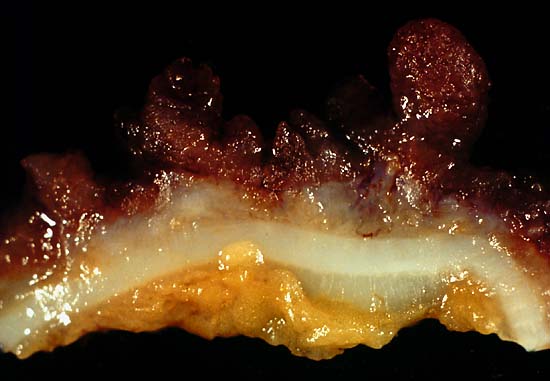
This photo was from a total colectomy done for clinically severe, intractable chronic ulcerative colitis. It shows a closer view of a longitudinal section through the colon wall. This demonstrates not only the angry red mucosa but also the tendency for the inflamed tissue to throw itself up into inflammatory pseudopolyps. Source: Ed Uthman, MD. Public domain.
This photo is from a total colectomy done for severe, intractable chronic ulcerative colitis. It shows a close view of a lengthwise section through the colon wall. This demonstrates not only the angry red mucosa, but also, the tendency for the inflamed tissue to throw itself up into inflammatory pseudopolyps.
Source: Ed Uthman, MD. Public domain.

What Is Ulcerative Colitis?

[dropcap]U lcerative colitis is an inflammatory disorder of the colon characterized by continuous inflammation of the mucosa and submucosa usually with small ulcers, extending from the rectum and typically involving the distal colon, rectum, and anus and producing bloody diarrhea.

While the severity of ulcerative colitis varies among patients, iron deficiency anemia often develops due to blood loss especially when there are many bloody bowel movements in a day.

The onset of ulcerative colitis is most commonly in young adulhood.

Q: Is this disease painful?

A: Yes with the passage of stool.

Psychological stress and subsequent dysbiosis exacerbate ulcerative colitis.

Psychological stress activates multiple physiological processes aimed at maintaining balance within the body. These physiological processes also have the capacity to influence the composition of microbial communities in the digestive tract, and research now indicates that exposure to stressful stimuli leads to gut microbiota dysbiosis.1

While the relative abundance of many different bacterial types can be altered during stressor exposure, findings in nonhuman primates and laboratory rodents, as well as humans, indicate that bacteria in the genus Lactobacillus are consistently reduced in the gut during stress.2

Presently, ulcerative colitis cannot be cured. This condition has a course of remissions, when symptoms subside, and flares, when symtpoms get worse. Treatment is aimed to reduce flares and promote remission. In all cases, correction of dysbiosis improves the condition.

Ulcerative colitis is associated with increased incidence of cancer of the colon.3

What Is Ulcerative Colitis In Celiac Disease and/or Gluten Sensitivity?

Sources:
  1. Galley JD, Bailey MT. Impact of stressor exposure on the interplay between commensal microbiota and host inflammation. Gut Microbes. 2014 May 1;5(3):390-396. Epub 2014 Apr 1. []
  2. Galley JD, Bailey MT. Impact of stressor exposure on the interplay between commensal microbiota and host inflammation. Gut Microbes. 2014 May 1;5(3):390-396. Epub 2014 Apr 1. []
  3. Taber’s Cyclopedic Medical Dictionary. F. A. Davis. Philadelphia, PA []

Asthma

Depiction of pancreatic amylase molecule.

What Is Macroamylasemia?

[dropcap]M acroamylasemia is an acquired enzyme disorder that causes elevated levels of the enzyme amylase (hyperamylasaemia) in the bloodstream. It is characterized by altered amylase molecules that have become abnormally bound with plasma proteins in the bloodstream, commonly IgG (immunoglobulin G) and/or IgA (immunoglobulin A).

The resulting molecule is too large to be properly filtered by the kidneys and excreted in the urine as would be normal unbound amylase, causing sustained elevation of amylase levels in the plasma.

With normal kidney function, a hyperamylasemia without an increase in urine amylase suggests the diagnosis of macroamylasemia, and is confirmed by identifying the macromolecular components.1

Amylase is a an enzyme produced by the pancreas and the parotid glands to digest starch in the diet. Comparatively small amounts are also produced by other organs.

Q: How do the pancreas and parotid glands deliver their amylase for digestion of starch?

A: The parotid glands deliver their amylase into the mouth. The action of amylase in the mouth starts the breakdown of starch as it is chewed and moistened with saliva.

After the starchy food is liquified in the stomach, the mass empties into the duodenum. Here pancreatic amylase is delivered through the common bile duct into the duodenum where it turns starch into maltose sugar. The next step to final digestion of starch is carried out by enzymes in the small intestinal lining that split maltose into its component sugar which is glucose.

Glucose is a simple sugar that can be absorbed into the bloodstream for use in the body. Humans cannot live without adequate glucose.

Distinquishing macroamylasemia from hyperamylasemia due to pancreatic disease is necessary to prevent needless treatment and investigation for pancreatitis.2

What Is Macroamylasemia In Celiac Disease and/or Gluten Sensitivity?

Sources:
  1. Torrent Vernetta A, Segarra Cantón O, Soler Palacín P, Segura Cardona RM, Infante Pina D. Macroamylasaemia in paediatrics. An Pediatr (Barc). 2008 Nov;69(5):439-41. []
  2. Isham CA, Ridgeway NA, Hedrick R, Cate JC 4th. Screening for macroamylase in a community hospital. Clin Chem. 1984 May;30(5):741-2. []

Polymyositis

What Is Helicobacter Pylori (H. Pylori) Infection? [dropcap]H elicobacter pylori infection is a potentially deadly stomach disease characterized by chronic superficial inflammation and ulcerations in 100% of infected patients. This infection disrupts normal defense and… 

Attention Deficit Hyperactive Disorder (ADHD)

A small intestinal mucosa from a case of refractory coeliac disease immunostained sequentially for CD3 (alkaline phosphatase-blue) and CD8 (peroxidase-brown). Most intraepithelial lymphocytes are CD3+, CD8-.Courtesy pubcan.org
Mucosa  in refractory celiac  disease immunostained sequentially for CD3 (alkaline phosphatase-blue) and CD8 (peroxidase-brown). Most intraepithelial lymphocytes are CD3+, CD8-. Courtesy pubcan.org

What Is Refractory Celiac Disease?

[dropcap]R efractory celiac disease, formerly called refractory sprue, is a severe complication characterized by persistence of symptoms and intestinal inflammation despite gluten free diet after 12 months.1

Refractory celiac disease appears in two forms, ulcerative jejunitis (RCD I) and cryptic intestinal T-cell lymphoma (RCD II).

Patients with RCD I seem to profit from immunosuppressive treatment, but positive response to corticosteroid treatment does not exclude underlying enteropathy–associated T-cell lymphoma (EATL).

Patients with RCD II have a high percentage of abberant T-cells and is usually resistant to medical therapies. The presence of an aberrant clonal intraepithelial T-cell population has led to the designation of refractory celiac disease with this population as a cryptic intestinal T-cell lymphoma, characterized by frequent dissemination to the blood and the entire gastrointestinal lining.2

  • Refractory sprue may occur after an initial response to gluten free diet or without any evidence of preexisting celiac disease. All other causes of malabsorption must be excluded, such as collagenous colitis.
  • In a subgroup of patients with enteropathy-associated T-cell lymphoma (EATL) there is progressive deterioration of a refractory form of celiac disease. The prognosis is poor, although some patients respond to corticosteroids and immunosuppressive agents.3
  • A nationwide Finnish study showed that patients of male gender, older age, severe symptoms or seronegativity (negative antibody result) at the diagnosis of celiac disease are at risk of future refractory coeliac disease and should be followed up carefully.4
  • Chorea has been described as a paraneoplastic phenomenon in patients with non-Hodgkin’s lymphoma and has been described as associated with lymphoma arising from a background of refractory celiac disease. The finding of chorea in association with celiac disease should prompt a search for possible underlying intestinal T-cell lymphoma.5

How Prevalent Is Refractory Celiac Disease?

Sources:
  1. Murray JA, The widening spectrum of celiac disease. American Journal of Clinical Nutrition. Mar 1999;69 (3):354-365. []
  2. Culliford AN, Green PH. Refractory sprue. Current Gastroenterology Reports. Oct 2003;5(5):373-8. []
  3. Culliford AN, Green PH. Refractory sprue. Current Gastroenterology Reports. Oct 2003;5(5):373-8. []
  4. Ilus T, Kaukinen K, Virta LJ, Huhtala H, Mäki M, Kurppa K, Heikkinen M, Heikura M, Hirsi E, Jantunen K, Moilanen V, Nielsen C, Puhto M, Pölkki H, Vihriälä I, Collin P. Refractory coeliac disease in a country with a high prevalence of clinically-diagnosed coeliac disease. Aliment Pharmacol Ther. 2014 Feb;39(4):418-25. doi: 10.1111/apt.12606. []
  5. Kitiyakara T, Jackson M, Gorard DA. Refractory coeliac disease, small-bowel lymphoma and chorea. J R Soc Med. 2002 Mar;95(3):133-4. []

Uveitis, Non-Infectious  

Courtesy Wikipedia.com
Parathyroid Glands in the Neck. Courtesy Wikipedia.com

What Is Secondary Hyperparathyroidism?

[dropcap]S econdary hyperparathyroidism is a parathyroid disorder resulting from hypocalcemia (low blood calcium level) that is characterized by excessive production of parathyroid hormone in the attempt to normalize the low blood calcium by releasing calcium from bone.

Parathyroid hormone is produced by the four pea sized parathyroid glands that are located on the thyroid gland in the front of the neck. In part, because the thyroid and parathyroid glands share the same anatomic place in the body and because they have similar names, they are often confused although they have completely different actions.

Parathyroid hormone regulates calcium and the opposing mineral phosphorus in the blood. In secondary hyperparathyroidism, calcium blood levels are low to normal while phosphorus levels are increased which stimulates the outpouring of parathyroid hormone.

Q: How does secondary hyperparathyroidism differ from primary hyperparathyroidism?

A: In primary hyperparathyroidism blood calcium is high and phosphorus is low, which is the opposite of secondary hyperparathyroidism.

The most common cause of secondary hyperparathyroidism is kidney disease causing failure to reabsorb calcium followed by vitamin D deficiency and malabsorption.

What Is Secondary Hyperparathyroidism In Celiac Disease and/or Gluten Sensitivity?

Psoriasis

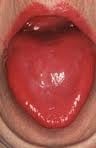
niacin deficiencyWhat Is A Fiery Red, Smooth, Burning Tongue?

[dropcap]A fiery red, smooth, burning tongue is an alteration in tongue tissue that is characteristic of advanced niacin deficiency.1

Q: How does niacin deficiency cause the tongue to be red and sore?

A: Niacin is an essential B vitamin that is required for a healthy tongue and by all body cells as well. Deficiency first shows in tissues with rapid cellular turnover, such as mucosal cells of the tongue.

When absorbed from the small intestines, niacin (the form in food) becomes the active form niacinamide. Niacinamide is converted by the body into co-enzymes which are present in all cells. These enzymes function in oxidation-reduction reactions essential for release of energy from carbohydrates, fats, and proteins and are needed as components for more than 200 enzymes involved in metabolism.

In addition to producing energy, niacinamide is essential for healthy skin and the mucosal lining of the digestive tract, normal functioning of the brain and nervous system, and production of steroid hormones from adrenal glands and hormones from sex glands.

What Is A Fiery Red, Smooth, Burning Tongue In Celiac Disease and/or Gluten Sensitivity?

Sources:
  1. Krause’s Food, Nutrition, & Diet Therapy. 10th Edition. Kathleen Mahan, Sylvia Escott-Stump. 2000. W.B. Saunders Company. []

Vitiligo

Areas of the Pharynx Where Cancer May Occur. Courtesy Wikimedia.

What Is Cancer Of The Pharynx?

[dropcap]C ancer of the pharynx is a malignant growth of stratified squamous cells that line the pharynx, or throat.

Q: What are stratified squamous cells that line the pharynx?

A: Stratified squamous cells are thin, flat epithelial cells consisting of several layers forming the surface mucosa that protects underlying layers of the pharynx. These cells lie very close together and have no blood vessels.

The pharynx is the upper passageway of the throat where swallowing food and fluids from the mouth first pass on the way to the esophagus and breathing air passes from the nose and mouth to and from the lungs.

The pharynx provides for speech production, adequate taste reception, and proper hearing through equalization of air pressure in the eustachian tubes.

The pharynx has three areas and pharyngeal cancer can occur in any of them: the nasopharynx behind the nose, the oropharynx behind the mouth, and the hypopharynx or laryngopharynx, just above the larynx. Tonsils, adenoids, and other lymph tissue lie at the back of the throat.

Unfortunately, cancers of the pharynx tend not to be detected until late in their course when symptoms become evident. This makes the prognosis poor. See symptom below.

What Is Cancer Of The Pharynx In Celiac Disease and/or Gluten Sensitivity?