Skip to content

Appendicitis: definition

Eye Stabilized with Cyclosporin Drops.
Eye Stabilized with Cyclosporin Eye Drops. Inflammation Controlled,  Still Edematous. GFW

What Is Keratoconjunctivitis Sicca?

Keratoconjunctivitis sicca is a distressing autoimmune form of dry eye that causes chronic bilateral dessication (dryness of both eyes) with inflammation of the conjunctiva and cornea due to tear abnormality.

Little sores develop that cause the symptoms and which can be seen through staining procedures. Thickening of the cornea may result, impairing vision, but there is not loss of tissue.

Q: What is tear abnormality?

A: Tear abnormality means that something is wrong with production of tears that continuously bathe the eyes to keep them moist, create a smooth surface for clear vision, nourish the cornea, wash away debris, and protect against germ invasion.

These tears are not the same composition as the tears produced when crying. Rather, they are a complex three layer fluid called the tear film. The tear film is made by the combined action of three eye structures: lacrimal glands produce an aqueous layer, Meibomian glands in the eyelids produce a lipid (oil) layer that coats the aqueous layer, and goblet cells in the conjunctiva produce a mucous layer that spreads the tear layer.

A qualitative and quantitative deficiency of tears can lead to the persistent and progressive damage of the ocular surface with a compromised wound-healing process. 

What Is Keratoconjunctivitis Sicca In Celiac Disease and/or Gluten Sensitivity?

Appendix: definition

 Keratomalacia in a severely malnourished 10-month-old Indonesian boy.  (Sommer A, Sugana T: Corneal xerophthalmia and keratomalacia. Arch Ophthalmol 100:404, 1982)
Keratomalacia in a severely malnourished 10-month-old Indonesian boy.1

What Is Keratomalacia?

K eratomalacia is a severe non-inflammatory eye condition characterized by a hazy, dry cornea that becomes softened and denuded (loss of protective layer), which when liquified is then irreversibly destroying the eyeball and causing blindness.

The conjunctiva and lacrimal glands (tear producing) are also affected resulting in ulceration of the eye surface with, or without, Bitot’s spots (foamy patches) because these tissues also require adequate vitamin A to function normally.

The conjunctiva is the mucous membrane that lines the inside of the eyelids and covers the eyeball surface, also called the white of eye.

Q: What does the term keratomalcia mean?

A: In the term keratomalcia, kerato refers to the cornea and malacia means softening of the tissues.

What Is Keratomalacia In Celiac Disease and/or Gluten Sensitivity?

Sources:
  1. Sommer A, Sugana T: Corneal xerophthalmia and keratomalacia. Arch Ophthalmol 100:404, 1982 []

Ascending Colon: definition

NightblindnessWhat Is Night Blindness?

N ight blindness is a visual defect caused by lack of rhodopsin in the rods of the retina located in the back of the eyeball due to inadequate vitamin A.

Q: How does inadequate vitamin A cause a lack of rhodopsin in the eyeball?

A: Rhodopsin is a visual pigment that requires vitamin A as a component.

Night blindness is characterized by decreased ability to see at night or in the dark because rhodopsin is a chemical required for the retina to distinquish light and dark. It is an early feature of vitamin A deficiency and also decreased content of oxygen in the blood such as anemia.

With increasing vitamin A deficiency, damage to the rods and to the eyeball itself occurs because these tissues also require vitamin A for structure and function.

Night blindness can be brought on by poor diet, gastroenteritis and fever due to increased requirements for vitamin A if stores in the liver are low, malabsorption, and systemic disease that interferes with storage in the liver or transport in the blood.

Breastfeeding infants of mothers who are vitamin A deficient are at high risk since they will not have adequate liver stores and cannot get enough from mother’s milk.

In teenagers it can be the beginning symptoms of retinitis pigmentosa, a group of retinal degenerations that primarily affect the rod photoreceptors.1

What Is Night Blindness In Celiac Disease and/or Gluten Sensitivity?

Sources:
  1. Gordon K. Klintworth, MD, PhD. The Eye Pathologist.com []

Ascites: definition

Opthalmoplegia. Courtesy bmj.com
Opthalmoplegia. Courtesy BMJ from lookfordiagnosis.com

What Is Ocular Myopathy?

O cular myopathy is an impairment of musculature of the eyeball that is characterized by abnormalities of eye movement that make initiating and maintaining eye movement and eye contact difficult.

What Is Ocular Myopathy In Celiac Disease and/or Gluten Sensitivity?

Astrovirus: definition

Drawing of eyeball to illustrate uveitis. Courtesy National Eye Institute
Drawing of Eye to Illustrate Uvea Tract. Courtesy
National Eye Institute

What Is Non-Infectious Uveitis?

N on-infectious uveitis, as opposed to that which is caused by an infection, is an inflammatory eye disorder characterized mainly by swelling of the uveal tract structures in the anterior (front) of the eye.  

Inflammation can also affect the lens, retina, optic nerve, and vitreous, producing reduced vision or blindness if left untreated. 

Q: What are structures of the uveal tract?

A: Structures of the uveal tract are composed of the iris, the ciliary body, and the choroid: 

  • The iris is the colored circle at the front of the eye. It defines eye color, secretes nutrients to keep the lens healthy, and controls the amount of light that enters the eye by adjusting the size of the pupil (opening).
  • The ciliary body is located between the iris and the choroid. It helps the eye focus by controlling the shape of the lens and it provides nutrients to keep the lens healthy.
  • The choroid is a thin, spongy network of blood vessels, which primarily provides nutrients to the retina in the back of the eye.1

Uveitis may be caused by problems or diseases occurring in the eye itself or it can be part of an inflammatory disease affecting other parts of the body. The uveal tract has a rich supply of blood vessels that contain immune cells to fight microbial invasion. These immune cells are lymphocytes, phagocytes, and plasma cells.

The uvea can be attacked by autoimmune antibodies produced in autoimmune diseases that affect similar tissues in other parts of the body such as psoriasis, Behcet’s syndrome, multiple sclerosis, sarcoidosis, Vogt Koyanagi Harada’s disease, and celiac disease.

Uveitis can last for a short (acute) or a long (chronic) time. The severest forms of uveitis reoccur many times.

What Is Non-Infectious Uveitis In Celiac Disease and/or Gluten Sensitivity?

Sources:
  1. http://www.nei.nih.gov/health/uveitis/uveitis.asp []

Asymptomatic: definition

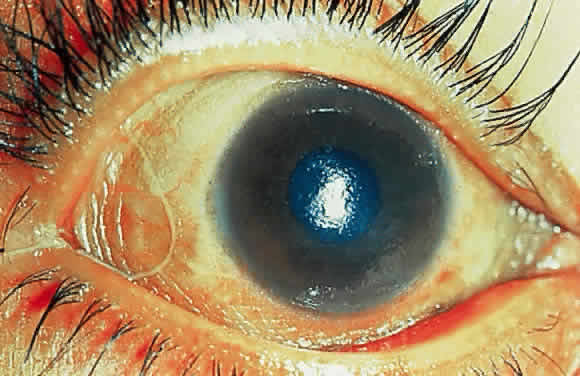
Marked conjunctival and corneal xerosis. The entire bulbar conjunctiva is dry and thickened and almost skinlike. (Sommer A, Sugana T, Djunaedi E, Green R: Vitamin A-responsive panocular xerophthalmia in a healthy adult. Arch Ophthalmol 96:1630, 1978)

What Is Xerophthalmia?

X erophthalmia is a serious condition of extreme drying and thickening of the conjunctiva following chronic inflammation and failure to make tears, characterized by hazy, dry cornea.

Vitamin A is obtained from the diet and is required in the cornea for maintaining epithelial (surface cell) health.1

Xerophthalmia is most often associated with malnutrition involving chronic, severe vitamin A deficiency and may develop from chronic liver disease, intestinal disorders such as celiac disease, pancreatitis, and extensive bowel surgery that cause malabsorption.

It may also develop in autoimmune diseases such as Sjogrens syndrome.

Q: What is the prognosis for xerophthalmia?

A: Xerophthalmia has the potential to rapidly advance to corneal necrosis (keratomalacia) and blindness.

What Is Xerophthalmia In Celiac Disease and/or Gluten Sensitivity?

Sources:
  1. Alwitry A. Vitamin A deficiency in coeliac disease. Br J Ophthalmol. 2000 September; 84(9): 1075. doi:  10.1136/bjo.84.9.1075e []

Atonic Colon: definition

Courtesy encyclopedia.lubopitko-bg.com

What Is Loss of Smell?

L oss of smell is a disorder that is characterized by impaired olfactory sense, or olfaction.

Partial or complete loss of smell can result from malnutrition, chronic rhinitis, polyps, chronic sinusitis, medications, old age, head trauma, Alzheimer’s disease and Parkinson’s disease.

Q: How do we smell things?

A: The sense of smell is complex. It involves specialized olfactory cells that are chemoreceptors, that is, they detect odor molecules in the air we breathe in through our nose and transmit the information to the olfactory area of our brain, called the olfactory cortex, by way of the olfactory tract.   Olfactory cells are located in the top of the nasal cavity.

The ability to smell strongly contributes to the ability to taste, so that individuals with loss of smell have great difficulty in perceiving the taste of food. The result is loss of the appetite for and pleasure from food.

What Is Loss of Smell In Celiac Disease and/or Gluten Sensitivity?

Atrophic Gastritis: definition

Loss of TasteWhat Is Dysgeusia?

D ysgeusia is impaired or altered sense of taste characterized by the inability to distinguish the flavor of a substance.

Q: What causes loss of the ability to taste?

A: Some causes of impaired taste include these health conditions: malnutrition, hypothyroidism, diabetes mellitus,  hypertension, adrenal cortical insufficiency, liver disease, and Sjogren’s syndrome.

What Is Dysgeusia In Celiac Disease and/or Gluten Sensitivity?

Autoimmune Hepatitis: definition

Broken lower leg. Courtesy FreePik.com

What Are Bone Fractures?

B one fractures, or broken bones, are breaks in skeletal bones that occur usually from trauma to the bone itself or by a sudden violent contraction of muscle attached to it.

Q: Are there other causes of bone fractures besides trauma?

A: Fractures may occur spontaneously without trauma in certain pathological disorders such as osteoporosis, osteonecrosis, osteomalacia, osteomyelitis, syphilis, and cancer affecting the bone.

Bone fractures are a major public health problem with treatment costs in the billions of dollars and lead to subsequent disability for many patients.

Hip fractures, for example, may be complicated by infection at the surgical site, pneumonia, decubitus ulcer from lack of movement, and deep vein thrombosis making hip fractures the second leading cause of nursing home admissions in the USA.

Improvement of bone health and reducing risk factors such as smoking, caffeinated drinks (coffee, tea and sodas), and use of alcohol are key to preventing bone fractures.

Bone strength is easily measured by testing bone mineral density (BMD). BMD is evaluated by DEXA scan (dual-energy X-ray absorptiometry).  DEXA at the femoral neck and lumbar spine is considered the gold standard to confirm the diagnosis of osteoporosis.  Results are expressed as T and Z scores. T scores compare the result with a 20 to 40 year old helathy person while  Z scores compare the result with persons in the same age group. Both are measured in standard deviations (SD).

According to WHO criteria (World Health Organization), a T-score of -1 SD or greater denotes normal bone, a T-score between −1 to −2.5 SD denotes osteopenia, and a T-score of −2.5 or more denotes osteoporosis.1

What Are Bone Fractures In Celiac Disease and/or Gluten Sensitivity?

Sources:
  1. Pantaleoni S, Luchino M, Adriani A, Pellicano R, Stradella D, Ribaldone DG, Sapone N, Isaia GC, Di Stefano M, Astegiano M. Bone mineral density at diagnosis of celiac disease and after 1 year of gluten-free diet. ScientificWorldJournal. 2014;2014:173082. doi: 10.1155/2014/173082. []

Barium: definition

Chiropracter Adjusting Spine for Back Pain.
Chiropractor Adjusting Spine for Back Pain.

What Is Bone Pain?

B one pain is pain or tenderness in bone tissue. Bone pain intensity and location depend on the causative disorder.

Q: What are causative disorders of bone pain?

A: Bone pain is a feature of various disorders that include malnutrition, bone disease such as osteoarthritis, infection, inflammation, hyperparathyroidism, immune mechanisms, fractures, adverse effects or toxic effects of certain medications, and cancer such as sarcoma, leukemia, multiple myeloma, and metastatic lesions from a primary tumor elsewhere.

What Is Bone Pain In Celiac Disease and/or Gluten Sensitivity?