Skip to content

Asymptomatic: definition
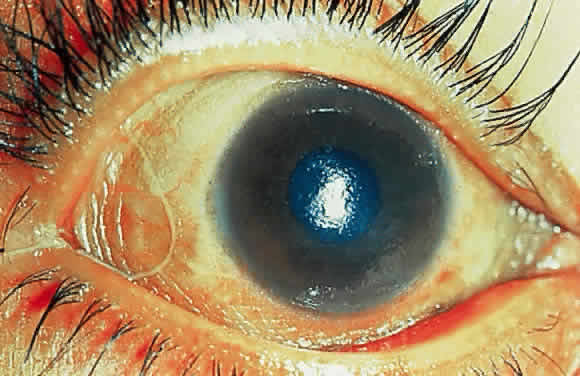
Marked conjunctival and corneal xerosis. The entire bulbar conjunctiva is dry and thickened and almost skinlike. (Sommer A, Sugana T, Djunaedi E, Green R: Vitamin A-responsive panocular xerophthalmia in a healthy adult. Arch Ophthalmol 96:1630, 1978)

What Is Xerophthalmia?

X erophthalmia is a serious condition of extreme drying and thickening of the conjunctiva following chronic inflammation and failure to make tears, characterized by hazy, dry cornea.

Vitamin A is obtained from the diet and is required in the cornea for maintaining epithelial (surface cell) health.1

Xerophthalmia is most often associated with malnutrition involving chronic, severe vitamin A deficiency and may develop from chronic liver disease, intestinal disorders such as celiac disease, pancreatitis, and extensive bowel surgery that cause malabsorption.

It may also develop in autoimmune diseases such as Sjogrens syndrome.

Q: What is the prognosis for xerophthalmia?

A: Xerophthalmia has the potential to rapidly advance to corneal necrosis (keratomalacia) and blindness.

What Is Xerophthalmia In Celiac Disease and/or Gluten Sensitivity?

Sources:
  1. Alwitry A. Vitamin A deficiency in coeliac disease. Br J Ophthalmol. 2000 September; 84(9): 1075. doi:  10.1136/bjo.84.9.1075e []

Atonic Colon: definition

Courtesy encyclopedia.lubopitko-bg.com

What Is Loss of Smell?

L oss of smell is a disorder that is characterized by impaired olfactory sense, or olfaction.

Partial or complete loss of smell can result from malnutrition, chronic rhinitis, polyps, chronic sinusitis, medications, old age, head trauma, Alzheimer’s disease and Parkinson’s disease.

Q: How do we smell things?

A: The sense of smell is complex. It involves specialized olfactory cells that are chemoreceptors, that is, they detect odor molecules in the air we breathe in through our nose and transmit the information to the olfactory area of our brain, called the olfactory cortex, by way of the olfactory tract.   Olfactory cells are located in the top of the nasal cavity.

The ability to smell strongly contributes to the ability to taste, so that individuals with loss of smell have great difficulty in perceiving the taste of food. The result is loss of the appetite for and pleasure from food.

What Is Loss of Smell In Celiac Disease and/or Gluten Sensitivity?

Atrophic Gastritis: definition

Loss of TasteWhat Is Dysgeusia?

D ysgeusia is impaired or altered sense of taste characterized by the inability to distinguish the flavor of a substance.

Q: What causes loss of the ability to taste?

A: Some causes of impaired taste include these health conditions: malnutrition, hypothyroidism, diabetes mellitus,  hypertension, adrenal cortical insufficiency, liver disease, and Sjogren’s syndrome.

What Is Dysgeusia In Celiac Disease and/or Gluten Sensitivity?

Autoimmune Hepatitis: definition

Broken lower leg. Courtesy FreePik.com

What Are Bone Fractures?

B one fractures, or broken bones, are breaks in skeletal bones that occur usually from trauma to the bone itself or by a sudden violent contraction of muscle attached to it.

Q: Are there other causes of bone fractures besides trauma?

A: Fractures may occur spontaneously without trauma in certain pathological disorders such as osteoporosis, osteonecrosis, osteomalacia, osteomyelitis, syphilis, and cancer affecting the bone.

Bone fractures are a major public health problem with treatment costs in the billions of dollars and lead to subsequent disability for many patients.

Hip fractures, for example, may be complicated by infection at the surgical site, pneumonia, decubitus ulcer from lack of movement, and deep vein thrombosis making hip fractures the second leading cause of nursing home admissions in the USA.

Improvement of bone health and reducing risk factors such as smoking, caffeinated drinks (coffee, tea and sodas), and use of alcohol are key to preventing bone fractures.

Bone strength is easily measured by testing bone mineral density (BMD). BMD is evaluated by DEXA scan (dual-energy X-ray absorptiometry).  DEXA at the femoral neck and lumbar spine is considered the gold standard to confirm the diagnosis of osteoporosis.  Results are expressed as T and Z scores. T scores compare the result with a 20 to 40 year old helathy person while  Z scores compare the result with persons in the same age group. Both are measured in standard deviations (SD).

According to WHO criteria (World Health Organization), a T-score of -1 SD or greater denotes normal bone, a T-score between −1 to −2.5 SD denotes osteopenia, and a T-score of −2.5 or more denotes osteoporosis.1

What Are Bone Fractures In Celiac Disease and/or Gluten Sensitivity?

Sources:
  1. Pantaleoni S, Luchino M, Adriani A, Pellicano R, Stradella D, Ribaldone DG, Sapone N, Isaia GC, Di Stefano M, Astegiano M. Bone mineral density at diagnosis of celiac disease and after 1 year of gluten-free diet. ScientificWorldJournal. 2014;2014:173082. doi: 10.1155/2014/173082. []

Barium: definition

Chiropracter Adjusting Spine for Back Pain.
Chiropractor Adjusting Spine for Back Pain.

What Is Bone Pain?

B one pain is pain or tenderness in bone tissue. Bone pain intensity and location depend on the causative disorder.

Q: What are causative disorders of bone pain?

A: Bone pain is a feature of various disorders that include malnutrition, bone disease such as osteoarthritis, infection, inflammation, hyperparathyroidism, immune mechanisms, fractures, adverse effects or toxic effects of certain medications, and cancer such as sarcoma, leukemia, multiple myeloma, and metastatic lesions from a primary tumor elsewhere.

What Is Bone Pain In Celiac Disease and/or Gluten Sensitivity?

Barium Enema X Ray: definition

X-ray showing osteitis fibrosa cystica in long bones. Courtesy Wikimedia.

What Is Osteitis Fibrosa Cystica?

O steitis fibrosa cystica is a metabolic bone disease characterized by decalcification and softening of bones with bone cyst formation and bone tumors developing from effects of chronic vitamin D deficiency causing hyperparathyroidism and parathyroid adenoma (tumor).

Hyperparathyroidism is a sustained elevated parathyroid hormone level in the blood which draws calcium from bone tissue.

Q: How does vitamin D deficiency cause hyperparathyroidism?

A: Vitamin D is required to absorb calcium from the food we eat. Deficiency of vitamin D  in turn causes deficiency of calcium to develop. Without adequate calcium for essential body functions, the pituitary gland stimulates the parathyroid glands to produce parathyroid hormone for the purpose of getting calcium from bone tissue which is less essential to life.

Unfortunately, the bones become depleted of calcium and become soft and disfigured.

What Is Osteitis Fibrosa Cystica In Celiac Disease and/or Gluten Sensitivity?

Barium Meal: definition

The woman's legs second from the right show bowing in osteomalacia.
The legs second from the right show bowing in osteomalacia in contrast to the others.

What Is Osteomalacia?

O steomalacia is a metabolic bone disorder that causes abnormal skeletal changes characterized by generalized reduction in bone density (bone softening) in adults and pseudofractures (apparant on x-ray) with muscular weakness and bone tenderness.

Bones have the normal amount of living collagen tissue that make up their structure but lack adequate calcium and phosphorus minerals that are required for strength.

Blood studies show the level of parathyroid hormone (PTH), which maintains calcium and phosphorus balance in the body, and the enzyme bone alkaline phosphatase (BALP), which breaks down bone, are elevated while calcium and phosphorus are decreased. Bone biopsy gives the definitive diagnosis.

Q: How do bones get soft?

A: Bones get soft because the normal process of depositing minerals in bone tissue is defective. Bone is continually being remodelled. This is the normal process of breaking down small areas of weak or fractured bone and replacing with healthy bone. The unique cells that break down or dissolve damaged bone are called osteoclasts and cells that build new bone in its place are osteoblasts.

In the condition of osteomalacia, there is not adequate calcium and phosphorus to strengthen new bone made by the osteoblasts and this is the result of inadequate vitamin D. The result is soft bones and weak muscles that worsen as the condition progresses.

The main causes of vitamin D deficiency include malabsorption, poor diet, lack of sunshine, and disorders of vitamin D metabolism. Osteomalacia can also be a feature of systemic disorders such as hyperparathyroidism, partial gastrectomy, pancreatic disease, kidney disease, biliary disease and inflammatory bowel disease. Osteomalacia may be induced by tumors and drugs such as bisphosphonates and certain anti-seizure medications.

What Is Osteomalacia In Celiac Disease and/or Gluten Sensitivity?

Barrett: definition

X-ray showing osteonecrosis of the femur. Courtesy Wikimedia.
X-ray showing osteonecrosis of the femur (right side). Courtesy Wikimedia.

What Is Osteonecrosis?

O steonecrosis is a bone disorder resulting from insufficient blood flow to a part of the skeleton and is characterized by resulting death of bone cells (necrosis).

After a while the bone can collapse. If this condition is not treated, the joint will deteriorate and this will become severe arthritis.

It is most common in the hip and shoulder, but can affect other large joints such as knee, elbow, wrist and ankle.1

What Is Osteonecrosis In Celiac Disease and/or Gluten Sensitivity?

Sources:
  1. http://www.ncbi.nlm.nih.gov/pubmedhealth/PMH0004519/ []

Blue Rubber Bleb Nevus Syndrome: definition

canstockphoto2000608What Is Primary Dyspareunia (Painful Intercourse)?

D yspareunia is a distressing female genital disorder characterized by pain during or after coitus involving the labia, vagina or pelvis.

There are two types of dyspareunia: primary which affect the vagina itself in the abscence of pelvic pathology and secondary which involves problems in the pelvis other than the vagina.1

  • Causes of primary dyspareunia include hormone changes in menopause, Sjogrens syndrome, diabetes, psychological conditions, and nutritional deficiencies.
  • Causes of secondary dyspareunia include problems with uterus, bowel disease, urinary tract infection, uterine prolapse, and pelvic disease such as endometriosis and cancer.

Q: How common is dypareunia?

A: Dyspareunia is the most common cause of pelvic pain in women.2

What Is Dyspareunia In Celiac Disease and/or Gluten Sensitivity?

Sources:
  1. Osayande AS, Mehulic S. Diagnosis and initial management of dysmenorrhea. Am Fam Physician. 2014 Mar 1;89(5):341-6. []
  2. Osayande AS, Mehulic S. Diagnosis and initial management of dysmenorrhea. Am Fam Physician. 2014 Mar 1;89(5):341-6. []