[dropcap]T ransient erythroblastopenia is a rare disorder of red blood cell formation characterized by brief, reversible disappearance of erythroblasts (red blood cell precursors) in the bone marrow of children.
Q: What do the red blood cells look like?
A: Circulating red blood cells appear normal so that the anemia which develops is a normocytic (normal cellular) anemia in contrast to microcytic (small cell) anemia in iron deficiency or macrocytic (large cell) anemia in vitamin B12 or folic acid deficiency.
Because new red blood cells are failing to mature, packed red blood cell transfusions may be necessary in severe anemia.
In adults, this disorder is called pure red blood cell anemia.
What Is Transient Erythroblastopenia In Celiac Disease and/or Gluten Sensitivity?
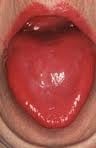
[dropcap]A fiery red, smooth, burning tongue is an alteration in tongue tissue that is characteristic of advanced niacin deficiency.1
Q: How does niacin deficiency cause the tongue to be red and sore?
A: Niacin is an essential B vitamin that is required for a healthy tongue and by all body cells as well. Deficiency first shows in tissues with rapid cellular turnover, such as mucosal cells of the tongue.
When absorbed from the small intestines, niacin (the form in food) becomes the active form niacinamide. Niacinamide is converted by the body into co-enzymes which are present in all cells. These enzymes function in oxidation-reduction reactions essential for release of energy from carbohydrates, fats, and proteins and are needed as components for more than 200 enzymes involved in metabolism.
In addition to producing energy, niacinamide is essential for healthy skin and the mucosal lining of the digestive tract, normal functioning of the brain and nervous system, and production of steroid hormones from adrenal glands and hormones from sex glands.
What Is A Fiery Red, Smooth, Burning Tongue In Celiac Disease and/or Gluten Sensitivity?
[dropcap]A[/dropcap]rachidonic acid is a major essential (must have/can’t make) omega-6 fatty acid.
Structurally, arachidonic acid is a key component of nerve membranes, together with docosahexaenoic acid (DHA), a major opposing omega-3 fatty acid, making up 15-20% of the brain’s dry mass and more than 30% of the retina.
In healthy human volunteers, positron emission tomography (PET) has shown that the normal human brain consumes 17.8 mg/day of arachidonic acid.1
Arachidonic acid is particularly concentrated in highly active membranes such as nerve synapses (junctions) and in photoreceptors in the eye retina.2
Arachidonic acid is an important building substance for the eicosanoids.
Q: What function do the eicosanoids have that are derived from arachidonic acid?
A: Eicosanoids are a large group of highly bioactive hormone-like substances including prostaglandins, leukotrienes, and thromboxanes that are involved in blood clotting, inflammation, and vasoconstriction. Eicosanoids derived from arachidonic acid are pro-inflammatory, pro-blood clotting, and constrict blood vessels in opposition to those derived from the omega-3 fatty acids which do the opposite in order to keep a balance in the body.
What Is Arachidonic Acid Deficiency In Celiac Disease and/or Gluten Sensitivity?
Sources:
Rapoport SI. Brain arachidonic and docosahexaenoic acid cascades are selectively altered by drugs, diet and disease. Prostaglandins Leukot Essent Fatty Acids. 2008 Sep-Nov;79(3-5):153-6. Epub 2008 Oct 29. [↩]
Richardson AJ. The importance of omega-3 fatty acids for behavior, cognition, and mood. Scandinavian Journal of Nutrition. 2003;47(2):92-8. [↩]
Swollen Tongue Causing Tooth Indentations. Notice the Accompanying Denuded Area Due to Riboflavin Deficiency and Mild Candida Overgrowth. GFW
What Is A Pale, Smooth, Burning Tongue?
[dropcap]A pale, smooth, burning tongue is an alteration in tongue tissue characteristic of iron deficiency. The tongue is also swollen.1
Additionally, the sore tongue surface may be invaded by candida yeast which takes advantage of the sore tissue.
Iron deficiency itself increases susceptibility to infection.
Q: What is iron deficiency?
A: Iron deficiency results when the level within cells is too low to meet metabolic needs of the body for this mineral.
Deficiency is characterized by impaired red blood cell formation, free-radical disposal, oxygenation of cells, immune response to infection, enzyme activity, cognitive performance, digestion, nail structure, and fetal health.2
Iron is an essential mineral that is required for normal body function. Almost two-thirds of iron in the body is found in hemoglobin, the protein in red blood cells that carries oxygen to tissues. Smaller amounts of iron are found in myoglobin, a protein that helps supply oxygen to muscle, and in enzymes that assist biochemical reactions.
Iron is also found in proteins that store iron for future needs and that transport iron in blood. Iron stores are regulated by intestinal iron absorption.3
What Is A Pale, Smooth, Burning Tongue In Celiac Disease and/or Gluten Sensitivity?
[dropcap]G eographic tongue is a painful alteration in tongue tissue that is characteristic of riboflavin (vitamin B2) deficiency.1
Q: How does the tongue surface appear?
A: Areas of inflamed tissue with flattened papillae develop among areas of normal tissue, giving a map-like appearance to the tongue surface. There are often swollen papillae that hurt or sting, such as is seen in the photo to the left.
A diet that does not provide adequate amounts of riboflavin and any condition that 1) interferes with riboflavin absorption from the gut, 2) depletes the vitamin from the body, 3) overuses the vitamin in the body, or 4) adversely affects its use in the body will result in riboflavin deficiency causing geographic tongue.
Riboflavin is essential for converting foodstuffs into energy, maintaining the normal lifespan of red blood cells and maintaining healthy skin, eyes, hair, and nervous system. Riboflavin is converted into its active forms, flavin adenine dinucleotide (FAD) and flavin mononucleotide (FMN). These enzymes are primarily involved as co-factors in oxidation reduction reactions that are essential for cellular energy production and respiration.
Riboflavin is required for the conversion of pyridoxine (vitamin B6) to its functional form and the production of niacin (vitamin B3) from the amino acid tryptophan. Riboflavin has a role in antioxidant status by activating glutathione reductase, which regenerates used glutathione, a powerful antioxidant.
Respiratory infection, exercise, certain diseases, drugs and hormones can adversely influence riboflavin status.2 Stress is a major depleter of riboflavin.
What Is Geographic Tongue In Celiac Disease and/or Gluten Sensitivity?
[dropcap]R[/dropcap]iboflavin, also called vitamin B2, is fundamentally required for the breakdown of carbohydrates, amino acids, and fats in metabolism, enables oxygen to be used by cells, and acts as a component of more than a dozen enzymes involved in energy production and use.
Some enzymes needing riboflavin also require magnesium to properly function.
In other activities, riboflavin is required for healthy cardiovascular and nervous systems, eye health, and supports antioxidant protection. Functions are more fully described below.
Urinary excretion of riboflavin cannot be detected when vitamin intake is below the required levels. On the other hand, when intake exceeds saturation in the body, the vitamin and/or its metabolites are actively excreted into urine to prevent excessive toxicity of the vitamins.1
There is no specific name for riboflavin deficiency disease.
What Is Riboflavin Deficiency In Celiac Disease and/or Gluten Sensitivity?
Sources:
Shibata K, Hirose J, Fukuwatari T. Relationship Between Urinary Concentrations of Nine Water-soluble Vitamins and their Vitamin Intakes in Japanese Adult Males. Nutr Metab Insights. 2014 Aug 5;7:61-75. doi: 10.4137/NMI.S17245. [↩]
[dropcap]U nexpected weight loss is unintentional loss of body mass composition or inability to gain weight marked by decreased serum proteins and increased stool fat.1
What Is Unexpected Weight Loss In Celiac Disease and/or Gluten Sensitivity?