Skip to content

Aphthous Ulcers (Canker Sores) 

Aphthous_ulcer[1]What Are Aphthous Ulcers?

[dropcap]A[/dropcap]phthous ulcers, also called canker sores, are a chronic disorder of soft mouth tissue characterized by small, painful purpuric, papular, or erosive lesions that are often surrounded by erythematous (red) margins.1

Q: What soft mouth tissues develop canker sores?

A: Canker sores can erupt on the mucosal surface of the inside lip, sides of mouth, under the tongue and along the side of the tongue. When they are forming, the area swells into a papule, or small bump. Later, the surface erodes and a crater forms with firm pus.

What Are Aphthous Ulcers In Celiac Disease and/or Gluten Sensitivity?

Sources:
  1. Lahteenoja H, Toivanen A, Viander M, Maki M, Irjala K, Raiha I, Syrjanen S. Oral mucosal changes in coeliac patients on a gluten-free diet. European Journal of Oral Sciences. Oct 1998;106(5):899,8p. []

Cheilosis (Cracks in corners of mouth)

cheilosisWhat Is Cheilosis?

[dropcap]C[/dropcap]heilosis is a painful feature of nutritional deficiencies, especially riboflavin and/or pyridoxine deficiency, and less frequently, from vitamin B12, folic acid, and iron. It is characterized by redness of the lips with cracking and weeping in the corner of the mouth.

Q: What is the consequence of weeping at the corners of the mouth?

A: The open sores that develop at the corners of the mouth invite infection by candida albicans, a yeast organism, and less commonly by bacteria normally present on the skin such as staphylococcus aureus.

These sores make opening the mouth very painful and so restrict eating, talking, socializing, and dental care.

What Is Cheilosis In Celiac Disease and/or Gluten Sensitivity?

Macrocytosis

Comparison of normoblast and megaloblastWhat Is Macrocytosis?

[dropcap]M[/dropcap]acrocytosis is a blood cell disorder characterized by altered blood cell formation that results in abnormally large erythrocytes (red blood cells) circulating in the bloodstream.

The mean corpuscular volume (MCV), which is a measure of the size of red blood cells in the bloodstream, is greater than 100 fL as shown in a complete blood count (CBC) laboratory analysis report.

Macrocytosis produces macrocytic anemias that are classified as megaloblastic or non-megaloblastic:

  1. Megaloblastic anemias result from disorders of DNA synthesis of red blood cell precursors (megaloblasts) in bone marrow due to B vitamin deficiency demonstrated by macro-ovalocytes and hypersegmented neutrophils.1
  2. Non-megaloblastic anemias are or those caused primarily by alcoholism, liver disease and hypothyroidism.2

What Is Macrocytosis In Celiac Disease and/or Gluten Sensitivity?

Sources:
  1. Kaferle J, Strzoda CE.Evaluation of macrocytosis. Am Fam Physician. 2009 Feb 1;79(3):203-8. []
  2. Davenport J. Macrocytic anemia. Am Fam Physician. 1996 Jan;53(1):155-62. []

Hyperprolactinemia (Excess Prolactin Hormone)

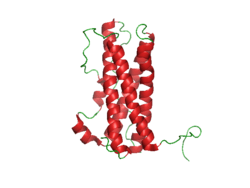
Prolactin Structure. Courtesy Boris TM at Wikipedia.

What Is Hyperprolactinemia?

[dropcap]H[/dropcap]yperprolactinemia is an excess secretion of prolactin hormone causing an elevated blood level that is characterized by its effects on reproduction: in females causing  amenorrhea and in males causing reduced sexual potency.

Q: What is prolactin?

A: Prolactin is a hormone produced by the the anterior pituitary gland that is transported by the bloodstream to stimulate androgen hormone production in male and estrogen hormone production in female sex glands. However, too much prolactin inhibits hormone production of estrogen in women and testosterone in men.

In pregnant females upon delivery of a baby, prolactin stimulates breast development and milk production for the purpose of feeding the infant. Sucking by the infant stimulates the release of prolactin which keeps the milk supply adequate.

Prolactin also promotes autoimmune mechanisms. Prolactin interferes specifically with B cell tolerance induction, enhances proliferative response to antigens and mitogens and increases the production of immune globulins, cytokines and autoantibodies.1

Other conditions that can stimulate prolactin release include nutritional deficiencies, thyroid stimulating hormone (TSH) produced by the pituitary gland, stress, exercise, and anterior pituitary tumors.

What Is An Elevated Prolactin Level In Celiac Disease and/or Gluten Sensitivity?

Sources:
  1. Shelly S, Boaz M, Orbach H. Prolactin and autoimmunity. Autoimmun Rev. 2012 May;11(6-7):A465-70. doi: 10.1016/j.autrev.2011.11.009. []