Skip to content

Cancer Of The Pharynx 

Areas of the Pharynx Where Cancer May Occur. Courtesy Wikimedia.

What Is Cancer Of The Pharynx?

Cancer of the pharynx is a malignant growth of stratified squamous cells that line the pharynx, or throat.

Q: What are stratified squamous cells that line the pharynx?

A: Stratified squamous cells are thin, flat epithelial cells consisting of several layers forming the surface mucosa that protects underlying layers of the pharynx. These cells lie very close together and have no blood vessels.

The pharynx is the upper passageway of the throat where swallowing food and fluids from the mouth first pass on the way to the esophagus and breathing air passes from the nose and mouth to and from the lungs.

The pharynx provides for speech production, adequate taste reception, and proper hearing through equalization of air pressure in the eustachian tubes.

The pharynx has three areas and pharyngeal cancer can occur in any of them: the nasopharynx behind the nose, the oropharynx behind the mouth, and the hypopharynx or laryngopharynx, just above the larynx. Tonsils, adenoids, and other lymph tissue lie at the back of the throat.

Unfortunately, cancers of the pharynx tend not to be detected until late in their course when symptoms become evident. This makes the prognosis poor. See symptom below.

What Is Cancer Of The Pharynx In Celiac Disease and/or Gluten Sensitivity?

Adenocarcinoma Of Small Intestine (Cancer)

Section of small bowel surgically removed for adenocarcinoma that grew through the wall. By: CDC/ Dr. Edwin P. Ewing, Jr.

What Is Adenocarcinoma Of Small Intestine?

Adenocarcinomas are malignant tumors, or cancer, of the small bowel arising out of glandular tissue. They fall in the category of rare neoplasm, comprising only 3% of all gastrointestinal malignancies.

Primary adenocarcinoma is the most common histological (cell) subtype constituting 35–50% of cases.1 

Q: What does adenocarcinoma look like?

A: Adenocarcinoma may manifest as strictures, nodules, excavating masses, or annular lesions.2

What Is Adenocarcinoma Of Small Intestine In Celiac Disease and/or Gluten Sensitivity?

Sources:
  1. Benhammane H, El M’rabet FZ, Serhouchni KI, El yousfi M, Charif I, Toughray I, et al. Small Bowel Adenocarcinoma Complicating Coeliac Disease: A Report of Three Cases and the Literature Review. Case Rep Oncol Med. 2012; 2012: 935183. Published online 2012 December 1. doi: 10.1155/2012/935183 []
  2. Ramachandran I, Sinha R, Rajesh A, Verma R. Multidetector row CT of small bowel tumors.  Clinical Radiology. 2007; 62:607-614. []

Abnormal Blood Values in Childhood

canstockphoto18551453
Illustration Showing Skin Anatomy.

What Is Pruritic Skin?

P ruritic skin is a symptom of a primary disease that may involve only the skin or a systemic disorder with other features and is characterized by chronic itching.

Q: What part of skin is affected by itchiness?

A: Itching may arise from any layer of skin, depending on the cause.

In the image to the right, the outermost protective surface layer, or stratum cornem, is shown as a thin tan line. It is the top dead layer of the epidermis that normally sloughs off as new cells move up to replace it. The epidermis is shown as a dark pink layer. It is composed of five layers of keratinocytes that flatten as they move upward.

The pink layer under the epidermis is the dermis, or true skin, which is composed of collagen and elastin tissue. It contains oil glands that lubricate skin, sweat glands, blood vessels, nerve endings, lymphatics, and hair follicles. Under the dermis is subcutaneous tissue containing fat cells here colored yellow on the bottom of the image.

What Is Pruritic Skin In Celiac Disease and/or Gluten Sensitivity?

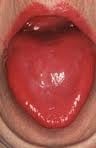
Tongue – Beefy Red, Smooth, Burning 

tongue in B12 deficiencyWhat Is Beefy Red, Smooth, Burning Tongue?

Beefy, red, smooth, burning tongue is an inflammatory alteration in tongue tissue characteristic of vitamin B12 deficiency.

Inflammation makes the tongue red and sore which, when untreated, progresses to atrophied papillae (shrunken taste buds) that makes the tongue smooth.

Q: Why does vitamin B12 alter the tongue?

A: Vitamin B12 is essential for the metabolism of all cells, especially for those of the digestive tract of which the tongue is an organ.1

These easily seen changes to tongue tissue are an important diagnostic feature of deficient vitamin B12, which causes other devastating unseen damage, because the discomfort generally causes the individual to seek medical care.

What Is Beefy Red, Smooth, Burning Tongue In Celiac Disease and/or Gluten Sensitivity?

Sources:
  1. Krause’s Food, Nutrition, & Diet Therapy. 10th Edition. Kathleen Mahan, Sylvia Escott-Stump. 2000. W.B. Saunders Company. []

Tongue – Fiery Red, Smooth, Burning

niacin deficiencyWhat Is A Fiery Red, Smooth, Burning Tongue?

A fiery red, smooth, burning tongue is an alteration in tongue tissue that is characteristic of advanced niacin deficiency.1

Q: How does niacin deficiency cause the tongue to be red and sore?

A: Niacin is an essential B vitamin that is required for a healthy tongue and by all body cells as well. Deficiency first shows in tissues with rapid cellular turnover, such as mucosal cells of the tongue.

When absorbed from the small intestines, niacin (the form in food) becomes the active form niacinamide. Niacinamide is converted by the body into co-enzymes which are present in all cells. These enzymes function in oxidation-reduction reactions essential for release of energy from carbohydrates, fats, and proteins and are needed as components for more than 200 enzymes involved in metabolism.

In addition to producing energy, niacinamide is essential for healthy skin and the mucosal lining of the digestive tract, normal functioning of the brain and nervous system, and production of steroid hormones from adrenal glands and hormones from sex glands.

What Is A Fiery Red, Smooth, Burning Tongue In Celiac Disease and/or Gluten Sensitivity?

Sources:
  1. Krause’s Food, Nutrition, & Diet Therapy. 10th Edition. Kathleen Mahan, Sylvia Escott-Stump. 2000. W.B. Saunders Company. []

Vomiting

VomitingWhat Is Vomiting?

Vomiting is the regurgitation of swallowed food back out of the mouth.

What Is Vomiting In Celiac Disease and/or Gluten Sensitivity?

Psoriasis

niacin deficiencyWhat Is A Fiery Red, Smooth, Burning Tongue?

A fiery red, smooth, burning tongue is an alteration in tongue tissue that is characteristic of advanced niacin deficiency.1

Q: How does niacin deficiency cause the tongue to be red and sore?

A: Niacin is an essential B vitamin that is required for a healthy tongue and by all body cells as well. Deficiency first shows in tissues with rapid cellular turnover, such as mucosal cells of the tongue.

When absorbed from the small intestines, niacin (the form in food) becomes the active form niacinamide. Niacinamide is converted by the body into co-enzymes which are present in all cells. These enzymes function in oxidation-reduction reactions essential for release of energy from carbohydrates, fats, and proteins and are needed as components for more than 200 enzymes involved in metabolism.

In addition to producing energy, niacinamide is essential for healthy skin and the mucosal lining of the digestive tract, normal functioning of the brain and nervous system, and production of steroid hormones from adrenal glands and hormones from sex glands.

What Is A Fiery Red, Smooth, Burning Tongue In Celiac Disease and/or Gluten Sensitivity?

Sources:
  1. Krause’s Food, Nutrition, & Diet Therapy. 10th Edition. Kathleen Mahan, Sylvia Escott-Stump. 2000. W.B. Saunders Company. []

Tetany

VomitingWhat Is Vomiting?

V omiting is the regurgitation of swallowed food back out of the mouth.

What Is Vomiting In Celiac Disease and/or Gluten Sensitivity?

Uveitis, Non-Infectious  

Courtesy Wikipedia.com
Parathyroid Glands in the Neck. Courtesy Wikipedia.com

What Is Secondary Hyperparathyroidism?

S econdary hyperparathyroidism is a parathyroid disorder resulting from hypocalcemia (low blood calcium level) that is characterized by excessive production of parathyroid hormone in the attempt to normalize the low blood calcium by releasing calcium from bone.

Parathyroid hormone is produced by the four pea sized parathyroid glands that are located on the thyroid gland in the front of the neck. In part, because the thyroid and parathyroid glands share the same anatomic place in the body and because they have similar names, they are often confused although they have completely different actions.

Parathyroid hormone regulates calcium and the opposing mineral phosphorus in the blood. In secondary hyperparathyroidism, calcium blood levels are low to normal while phosphorus levels are increased which stimulates the outpouring of parathyroid hormone.

Q: How does secondary hyperparathyroidism differ from primary hyperparathyroidism?

A: In primary hyperparathyroidism blood calcium is high and phosphorus is low, which is the opposite of secondary hyperparathyroidism.

The most common cause of secondary hyperparathyroidism is kidney disease causing failure to reabsorb calcium followed by vitamin D deficiency and malabsorption.

What Is Secondary Hyperparathyroidism In Celiac Disease and/or Gluten Sensitivity?

Xerophthalmia

Parathyroid gland anatomyWhat Is Idiopathic Hypoparathyroidism?

I diopathic hypoparathyroidism is a metabolic condition that results from reduced secretion or impaired action of parathyroid hormone (PTH) which results in a combination of low calcium and elevated phosphorus levels in the body.

Calcium and phosphorus are minerals that act in opposition to each other in the body. Idiopathic means the cause is not known.

Parathyroid hormone is produced by the four pea sized parathyroid glands that are located on the thyroid gland in the front of the neck. Partly because the thyroid and parathyroid glands share the same anatomic place in the body and partly because they have similar names, they are often confused although they have completely different actions.

Q: What does parathyroid hormone do in the body?

A: This vital hormone maintains a correct balance of calcium and phosphorous in the bloodstream and ultimately has an effect on all organs because of the complexity of intracellular calcium physiology.1 

Parathyroid hormone is required to sustain life, therefore undetected or misdiagnosed hypoparathyroidism may pose a significant threat to health outcomes, as its presence may increase disease and mortality in affected individuals.

The clinical consequences of parathyroid hormone deficiency or impaired receptor action involve many body functions. In some patients, however, its manifestation may be non-specific, and in these cases the correct diagnosis may be easily missed.

Digestive manifestations of hypoparathyroidism are few and consist mainly of steatorrhea due to insufficient meal-stimulated cholecystokinin secretion by the duodenal mucosa.2

Laboratory measurements show hypocalcemia (low blood calcium level), hyperphosphatemia (high blood phosphate level), and inappropriately low or undetectable parathyroid hormone levels. Treatment consists of oral calcium supplementation and vitamin D derivatives.3

Idiopathic hypoparathyroidism is rare, although there is a growing incidence of the autoimmune form of hypoparathyroidism, which may occur in combination with other autoimmune diseases such as celiac disease.

What Is Idiopathic Hypoparathyroidism In Celiac Disease and/or Gluten Sensitivity?

Sources:
  1. Abboud B, Daher R, Boujaoude J. Digestive manifestations of parathyroid disorders. World J Gastroenterol. 2011 Sep 28;17(36):4063-6. doi: 10.3748/wjg.v17.i36.4063. []
  2. Abboud B, Daher R, Boujaoude J. Digestive manifestations of parathyroid disorders. World J Gastroenterol. 2011 Sep 28;17(36):4063-6. doi: 10.3748/wjg.v17.i36.4063. []
  3. Krysiak R, Handzlik-Orlik G, Kedzia A, Machnik G, Okopień B. Hypoparathyroidism: the present state of art. Wiad Lek. 2013;66(1):18-29. []