Anorexia or loss of appetite is a reduced desire to eat which can cause unintentional weight loss.
Anorexia is a feature of many disorders caused by malutrition such as celiac disease and aging or gastrointestinal problems such as chronic gastroenteritis, and dysgeusia (loss of taste).
Q: Are there other conditions that cause anorexia?
A: Other underlying problem include medication side effects, infection, chronic pain, depression, grief, dehydration, hormonal dysfunction such as thyroid disease, primary hyperparathyroidism, or Addison’s disease, autoimmune mechanisms such as sarcoidosis, and cancer growth.
What Is Anorexia In Celiac Disease and/or Gluten Sensitivity?
Aphthous ulcers, also called canker sores, are a chronic disorder of soft mouth tissue characterized by small, painful purpuric, papular, or erosive lesions that are often surrounded by erythematous (red) margins.1
Q: What soft mouth tissues develop canker sores?
A: Canker sores can erupt on the mucosal surface of the inside lip, sides of mouth, under the tongue and along the side of the tongue. When they are forming, the area swells into a papule, or small bump. Later, the surface erodes and a crater forms with firm pus.
What Are Aphthous Ulcers In Celiac Disease and/or Gluten Sensitivity?
Sources:
Lahteenoja H, Toivanen A, Viander M, Maki M, Irjala K, Raiha I, Syrjanen S. Oral mucosal changes in coeliac patients on a gluten-free diet. European Journal of Oral Sciences. Oct 1998;106(5):899,8p. [↩]
Cheilosis is a painful feature of nutritional deficiencies, especially riboflavin and/or pyridoxine deficiency, and less frequently, from vitamin B12, folic acid, and iron. It is characterized by redness of the lips with cracking and weeping in the corner of the mouth.
Q: What is the consequence of weeping at the corners of the mouth?
A: The open sores that develop at the corners of the mouth invite infection by candida albicans, a yeast organism, and less commonly by bacteria normally present on the skin such as staphylococcus aureus.
These sores make opening the mouth very painful and so restrict eating, talking, socializing, and dental care.
What Is Cheilosis In Celiac Disease and/or Gluten Sensitivity?
Bleeding and/or swollen gums is an inflammatory disorder characterized by changes in gum integrity that may result in tooth loss.
Sponginess of the gum (swelling) indicates inflammation, called gingivitis.
Q: What causes gingivitis?
A: Gingivitis that is caused by inadequate dental hygiene shows as pockets of swollen gum between or along the base of teeth where sticky plaque was allowed to build up. Plaque holds bacteria that inflames the gums where it occurs.
Gingivitis that is caused by vitamin C deficiency, pregnancy, certain drugs such as the anti-epileptic drug phenytoin, and leukemia affects the whole gum irrespective of mouth care.
What Are Bleeding / Swollen Gums In Celiac Disease and/or Gluten Sensitivity?
Coagulation factors II, VII, IX, X found in blood are essential for normal blood clotting. Low coagulation factors on blood assay indicate an altered secondary coagulation disorder that is characterized by impaired clot formation.
Each coagulation factor must be present in sufficient quantity in order for normal clotting to occur, but the level required is different for each factor. Results are frequently reported as a percentage with 100% being normal. For example, a factor VIII that is 30% would be considered abnormally low.1
The production of the coagulation factors II, VII, IX, and X requires vitamin K without which the factors will be low.
Q: What happens when coagulation factors II, VII, IX, and X are low?
A: When any of the blood clotting factors are lacking or not working properly, the blood tests prothrombin (PT) and partial thromboplastin time (PTT) will be abnormally prolonged. Prothrombin and partial thromboplastin time measure the time it takes for blood to clot. When you bleed, the body launches a series of activities that help the blood clot. This is called the coagulation cascade. There are three pathways to this event. These tests looks at coagulation factors, found in two of these pathways.2
What Are Low Coagulation Factors In Celiac Disease and/or Gluten Sensitivity?
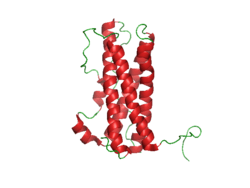
Prolactin Structure. Courtesy Boris TM at Wikipedia.
What Is Hyperprolactinemia?
Hyperprolactinemia is an excess secretion of prolactin hormone causing an elevated blood level that is characterized by its effects on reproduction: in females causing amenorrhea and in males causing reduced sexual potency.
Q: What is prolactin?
A: Prolactin is a hormone produced by the the anterior pituitary gland that is transported by the bloodstream to stimulate androgen hormone production in male and estrogen hormone production in female sex glands. However, too much prolactin inhibits hormone production of estrogen in women and testosterone in men.
In pregnant females upon delivery of a baby, prolactin stimulates breast development and milk production for the purpose of feeding the infant. Sucking by the infant stimulates the release of prolactin which keeps the milk supply adequate.
Prolactin also promotes autoimmune mechanisms. Prolactin interferes specifically with B cell tolerance induction, enhances proliferative response to antigens and mitogens and increases the production of immune globulins, cytokines and autoantibodies.1
Other conditions that can stimulate prolactin release include nutritional deficiencies, thyroid stimulating hormone (TSH) produced by the pituitary gland, stress, exercise, and anterior pituitary tumors.
What Is An Elevated Prolactin Level In Celiac Disease and/or Gluten Sensitivity?
Sources:
Shelly S, Boaz M, Orbach H. Prolactin and autoimmunity. Autoimmun Rev. 2012 May;11(6-7):A465-70. doi: 10.1016/j.autrev.2011.11.009. [↩]
Vitamin K is a family of fat-soluble vitamins, called K vitamers, that exists in three forms:
K1 is a natural form found in plants (phylloquinone);
K2, found in some animal foods, is synthesized in the intestine (menaquinone); and
K3, is a synthetic form that must be activated in the liver (menadione).
Vitamin K is essential for the formation of clotting factors in blood and bone proteins and serves as a cofactor in the production of proteins that regulate blood clotting.
Q: What are the clotting factors that require vitamin K in the regulation of blood clotting?
A: The clotting factors that require vitamin K in the regulation of blood clotting are factors II, VII, IX, and X. Low coagulation factors on blood assay indicate an altered secondary coagulation disorder that is characterized by impaired clot formation.
Each coagulation factor must be present in sufficient quantity in order for normal clotting to occur.
What Is Vitamin K Deficiency In Celiac Disease and/or Gluten Sensitivity?
 What Is Anorexia?
![Aphthous_ulcer[1]](https://glutenfreeworks.com/health/wp-content/uploads/sites/10/Aphthous_ulcer1.jpg)