
Those Wavy Fingernails Are Not a Sign of Good Health
I was sitting in the waiting room at the Honda dealer last Friday and a middle aged woman next to me mentioned she had celiac disease after hearing me turn down a complimentary pastry. We…
I was sitting in the waiting room at the Honda dealer last Friday and a middle aged woman next to me mentioned she had celiac disease after hearing me turn down a complimentary pastry. We…


“Psoriasis: 7 New Genetic Clues”
Newly Discovered Genetic Variations May Make Psoriasis More Likely, Study Shows
By Miranda Hitti
WebMD Medical NewsReviewed by Louise Chang, MDApril 3, 2008 — Scientists have discovered seven genetic variations linked to psoriasis.

 Lately, it seems like more and more celebrities and professional athletes are openly talking about going gluten free. Whether it’s due to a diagnosis of celiac disease or a gluten sensitivity, or simply because they want to get healthy, many of them have noted a weight loss as part of the benefits they’ve been seeing. Then why is it, that so many doctors and specialists will dismiss a diagnosis of celiac disease in a patient simply because the patient is not underweight?
In a recent article by Sonia Kupfer, MD, the belief that people with un-diagnosed celiac disease are all underweight is revealed to

 In the first double blind randomized placebo-controlled study of gluten and symptoms in people without celiac disease, researchers from Australia have confirmed that gluten is a trigger of digestive symptoms and fatigue. They concede that “non-celiac gluten intolerance” may exist.
The researchers challenged and re-challenged people with IBS in whom celiac disease had been excluded whose symptoms were controlled on a gluten-free diet. These individuals were randomized to gluten-free diet with daily supplements of muffins and bread with a standard amount of gluten added or not added. Both the patients and the

Editors’ note: This case report illustrates that a person can live a long time reporting apparent good health and be completely unaware that they have symptoms of celiac disease. In this case, hematomas, (which are swollen black and blue marks caused by a break in the wall of a blood vessel), that developed on his legs caused the patient to seek medical attention. The ability of his blood to clot was severely impaired and yet there was no other manifestation of hemorrhage. Discover more about bruising and hundreds of other health issues and how to treat them at the Gluten Free Works Treatment Guide.


[Editor’s Note: The post below is a response to a young woman with cataracts and celiac disease. Cataracts are directly related to nutrient deficiencies of vitamin A, calcium, magnesium, protein, vitamin C and possibly vitamin…


Muscle weakness is the lack of muscle strength to perform physical work that we should be able to do, such as lifting objects, climbing steps or simply walking or getting up from a chair. Muscle weakness is different from muscle fatigue, which is the lack of energy to continue physical work once begun. Muscle weakness is also different from lassitude, or chronic fatigue, which is the feeling of tiredness or exhaustion but without loss of muscle strength.
Muscle weakness is common in celiac disease. It may stem from one or more nutrient deficiencies, associated disorders or complications. This article addresses only nutritional causes of muscle weakness resulting from malabsorption and/or loss of minerals from diarrhea or vomiting.

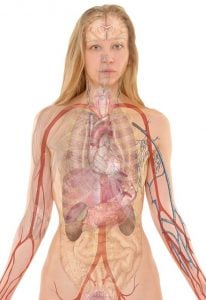 In 2007, Gluten Free Works published “Recognizing Celiac Disease,” the first work to present over 300 signs, symptoms, associated disorders and complications gathered from documented medical research from around the world.
The book proved that researchers were finding hundreds of health problems associated with celiac disease and gluten.
This list is now being used by celiac disease centers, national celiac organizations and health organizations to help identify at risk patients and determine whether patient symptoms are consistent with celiac disease.
But how can one disorder cause so many problems?
Here’s a look at one way…nutritional deficiencies.

Lipitor raked in more than $5 billion for pharmaceutical giant, Pfizer Inc., during 2009 according to Drugs.com.

Sales of the 5 leading drugs for mental disorders topped $12,750,023,000, while Nexium and Prevacid totaled 7,523,382,000.
All eight of these drugs deplete nutrients.
Revenues of the Top 8 Selling Drugs of 2009
Lipitor: lowers cholesterol – $5,363,193,000
Nexium: acid reducer – $5,014,827,000
Prevacid: acid reducer – $2,508,555,000
Seroquel: antipsychotic – $3,117,591,000

![Graves-Proptosis_and_lid_retraction_from_Graves_Disease-wikimedia[1]](https://glutenfreeworks.com/wp-content/uploads/2009/11/Graves-Proptosis_and_lid_retraction_from_Graves_Disease-wikimedia1.jpg) Hyperthyroidism is a common condition worldwide. It occurs in 1-2 per cent of the population with greater incidence in iodine-deficient regions and is 10 times more common in women than men between the ages of 20 and 40 years.1
Hyperthyroidism is a common condition worldwide. It occurs in 1-2 per cent of the population with greater incidence in iodine-deficient regions and is 10 times more common in women than men between the ages of 20 and 40 years.1
Hyperthyroidism is estimated to affect about 3 million people in the United States. The disease affects more women than men, breaking down to about 2% of women and .2% of men. As many as 15 percent of cases of hyperthyroidism occur in patients older than 60 years.2
Hyperthyroidism (overactive thyroid) is a condition in which your thyroid gland produces too much of the hormone thyroxine. Hyperthyroidism can significantly accelerate your body’s metabolism, causing sudden weight loss, a rapid or irregular heartbeat, sweating, and nervousness or irritability.((Mayo Clinic, http://www.mayoclinic.com/health/hyperthyroidism/DS00344))
Sources: