Skip to content

Constipation, Chronic

Constipation in a young child as seen on X-ray. Lowest circle shows hard feces in the pelvis. Source, James Heilman, MD.

What Is Chronic Constipation?

[dropcap]C[/dropcap]hronic constipation is an intestinal motility disorder characterized by abnormal stool formation, consistency, and evacuation.

Motility disorder means the normal rhythmic movement of intestinal muscles, called peristalsis, that moves food matter through the gut is hampered or dysfunctional.

Studies show that methane gas present in the colon induces constipation by delaying transit time, which is the time it takes for stool to pass through the colon.

Researchers investigating the relationship between methane and constipation found that methane positivity was detected in 75% of patients with slow transit, 44% of patients with normal transit and and 28% of the patients who were controls. However, methane positivity was not related with stool consistency.1

Other researchers investigating the total amount of methane produced found that there was significantly more methane production in patients with constipation (21.1 ppm vs. 6.1 ppm, respectively) than in controls without constipation.2

Q. How does methane get into the colon?

A. Methane is produced in the colon by intestinal methanogens (microbes) that metabolize hydrogen, one of the end products of normal anaerobic (meaning without oxygen) bacterial fermentation.  Fermentation of the undigested starchy part of carbohydrates produces hydrogen in the intestine which is the substrate (food) for methane production by intestinal methanogens.

Hydrogen and methane are excreted in the flatus and in breath giving the opportunity to indirectly measure their production using breath testing. Methane is detected in 30%-50% of the healthy adult population worldwide.3

Other common causes of constipation include not getting enough exercise, not drinking enough fluids, not eating enough fiber in the diet, not eating foods that supply microbes needed by the colon (probiotics), not eating foods that nourish the good microbe population (prebiotics) and supply minerals needed for healthy movement of stool, and food sensitivities. Too much cows milk is a common cause of stool that forms into balls.

Who is Affected in the General Population? Chronic constipation is a remarkably common and costly condition that can negatively impact the quality of life and result in a major social and economic burden. Based on the definition, either self-reported or using Rome criteria, chronic constipation can affect up to 27% of the population. There is strong evidence that constipation occurs more frequently in women.4

What Is Chronic Constipation In Celiac Disease and/or Gluten Sensitivity?

Sources:
  1. Triantafyllou K, Chang C, Pimentel M. Methanogens, Methane and Gastrointestinal Motility. J Neurogastroenterol Motil. 2014 Jan;20(1):31-40. Epub 2013 Dec 30. []
  2. Triantafyllou K, Chang C, Pimentel M. Methanogens, Methane and Gastrointestinal Motility. J Neurogastroenterol Motil. 2014 Jan;20(1):31-40. Epub 2013 Dec 30. []
  3. Triantafyllou K, Chang C, Pimentel M. Methanogens, Methane and Gastrointestinal Motility. J Neurogastroenterol Motil. 2014 Jan;20(1):31-40. Epub 2013 Dec 30. []
  4. Sanchez MI, Bercik P. Epidemiology and burden of chronic constipation. Can J Gastroenterol. 2011 Oct;25 Suppl B:11B-15B. []

Chronic Fatigue Syndrome 

What Is Chronic Syndrome Fatigue? [dropcap]C[/dropcap]hronic fatigue syndrome is a debilitating illness characterized by persistent or relapsing overwhelming and incapacitating fatigue not relieved by rest, having a definite onset and often accompanied by numerous symptoms… 

Nails, Dry And Brittle (Chip, Peel, Crack, Break Easily)

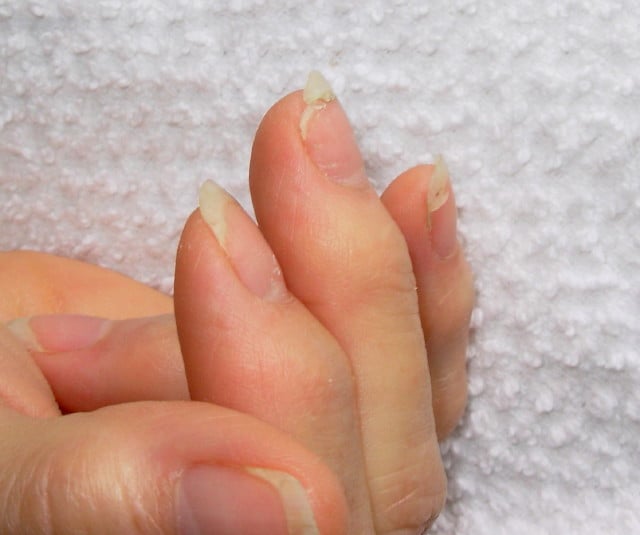
DSCN4758aWhat Are Brittle Nails?

[dropcap]B[/dropcap]rittle nails are abnormalities of the nail plate that are characterized by poor nail structure affecting all fingernails and toenails seen as thin, dry nails that easily chip, split, and are difficult to maintain a clean edge. Usually longitudinal ridging occurs from the nail base to the tips.

Q: What is the nail plate?

A: The nail plate is the hard keratin cover protecting the finger tip and toe tip. The nail plate (non-living tissue) is produced by the nail matrix (living tissue) at the base of the nail plate under the lunula (moon), which is the site of brittle nail development.

Nail Anatomy. A. Nail plate; B. lunula; C. root; D. sinus; E. matrix; F. nail bed; G. hyponychium; H. free margin. Courtesy Wikipedia.org

Poor nail structure affecting all nails may be a feature of nutritional deficiency in poor diet or malabsorption such as occurs in celiac disease.

Some other causes are: idiopathic (unknown cause), the result of aging, the effects of certain drugs, or an association with systemic autoimmune disorders such as vitiligo, alopecia areata (with pitting), psoriasis (with pitting), and lichen planus. 

External (non-nutritional or disease) causes of dry, brittle nails, such as detergents and cleaners, would only affect fingernails but not toenails.

Note: It has been shown that working with your hands in water or soaking them through activities like swimming does not cause dry, brittle nails but will worsen them.

What Are Brittle Nails In Celiac Disease and/or Gluten Sensitivity?

Apathy

Apathy celiac disease symptomWhat Is Apathy?

[dropcap]A[/dropcap]pathy is an abnormal emotional state that is characterized by indifference to things which others find interesting, moving or exciting, and diminished motivation to perform regular daily activities.

The neural mechanisms of apathy are postulated to involve the brainstem and forebrain circuits that regulate goal-directed behavior.1

What Is Apathy In Celiac Disease and/or Gluten Sensitivity?

Sources:
  1. Marin RS. Apathy: Concept, Syndrome, Neural Mechanisms, and Treatment. Semin Clin Neuropsychiatry. 1996 Oct; 1(4):304-314. []

Anxiety, Chronic

AnxietyWhat Is Anxiety?

[dropcap]A[/dropcap]nxiety or worry is a distressing emotional state of mind or mood that is characterized by a vague uneasiness, unpleasant feelings of apprehension or anticipation of danger and by interference with normal functioning, ranging from mild qualms and easy startling to occasional panic.

Q: What causes anxiety?

A: Anxiety can be a normal response to stress such as making an important decision, illness, divorce, problems at work or preparing for an exam.

In a dangerous situation, profound physiological changes rapidly prepare us for a “fight or flight” response by release of adrenalin hormone. Adrenalin speeds up metabolism to make available quick energy, tightens muscles in readiness, and speeds up the heartbeat and breathing so that more oxygen is made available to the brain and muscles.

Anxiety becomes a maladaptive disorder when it is excessive, unrealistic, or not provoked and impairs the ability to lead a normal life.

Anxiety that is part of a person’s personality is called “trait anxiety.” Anxiety that comes and goes is “state anxiety,” as in state of mind, and is usually due to unresolved stress or an underlying health problem.

What Is Chronic Anxiety in Celiac Disease?

Insomnia

insomnia gluten celiac disease symptomWhat Is Insomnia?

[dropcap]I[/dropcap]nsomnia is a distressing sleep disorder that includes inability to fall asleep, inability to stay asleep, and inability to get deep sleep depending on the type of insomnia.

Q: What are the types of insomnia?

A: There are two types of insomnia: primary or secondary which have different causes.

1. Primary insomnia is characterized by sleeplessness due to reduction of synthesis of neurotransmitters (brain chemicals) in the central nervous system (brain) required for sleep, especially melatonin. Melatonin is produced during the night hours by the pineal gland from tryptophan, an essential amino acid derived from food.

Neurotransmitters are released when the axon terminal of a presynaptic neuron (nerve cell) is stimulated and acts by stimulating or inhibiting a target nerve cell.

2. Secondary insomnia has many causes. It can be a feature of malnutrition, lack of exercise, heartburn, mental disorders such as dementia and psychosis, emotional disorders such as depression and anxiety, guilt, worry, many conditions that involve itchiness, pain, disability, and a side effect of certain medications.

What Is Insomnia In Celiac Disease and/or Gluten Sensitivity?