Skip to content

Celiac Disease After Childbirth (Puerperium)  

erythema elevatum diutinum of forearmWhat Is Erythema Elevatum Diutinum?

[dropcap]E rythema elevatum diutinum is a rare leucocytoclastic vasculitis thought to be caused by an immune response that is characterized by inflammation, a rash, and scarring of small blood vessels of the skin.

A characteristic poorly defined rash develops symmetically in the skin of extremities where the vessels are inflamed. Nodules and plaques are yellowish red and crust on healing, leaving darkened areas (hyperpigmentation).

Q: What is leucocytoclastic vasculitis?

A: Leucocytoclastic vasculitis is the most common form of vasculitis (inflammation of blood vessels) of the skin and usually results from deposition of immune complexes at the vessel wall. It presents in different forms and in association with different diseases. Diagnosis is made by skin biopsy with immunofluorescence.1

Erythema elevatum diutinum may be caused by inflammatory disease, certain infections such as HIV, immunological disease, malignancy, and drugs.

Corticosteroids are indicated when there are signs of incipient skin necrosis or when the disease is severe. Otherwise, treatment is with Colchicine or Dapsone medications.2

What Is Erythema Elevatum Diutinum In Celiac Disease and/or Gluten Sensitivity?

Sources:
  1. Sunderkötter C, Bonsmann G, Sindrilaru A, Luger T. Management of leukocytoclastic vasculitis. J Dermatolog Treat. 2005;16(4):193-206. []
  2. Sunderkötter C, Bonsmann G, Sindrilaru A, Luger T. Management of leukocytoclastic vasculitis. J Dermatolog Treat. 2005;16(4):193-206. []

Down Syndrome

Crohnie_sores_4[1]What Is Erythema Nodosum?

[dropcap]E rythema nodosum is an inflammatory disorder involving the deep dermis layer of skin and subcutaneous fat septa that underlies the skin. It is characterized by eruptions of recurrent or persistent multiple painful, red nodules under the skin that leave a bruised appearance when healing and do not scar.

The lower legs are most affected, but sores can appear anywhere there is subcutaneous fat.

Q: How do the nodules develop in erythema nodosum?

A: The edges of nodules are poorly defined, and the nodules vary from 2-6 cm.

During the first week of eruption, nodules become tense, hard, and painful. During the second week, they change color from bright red to bluish or livid and may become soft, but do not ulcerate. As absorption progresses, the color gradually fades to a yellowish hue, resembling a bruise. This disappears in 1 or 2 weeks as the overlying skin sloughs off and is replaced.1

The eruptive phase of erythema nodosum begins with flulike symptoms of fever and generalized aching followed by a painful rash within 1-2 days.  Aching legs and swelling ankles may occur and precede the eruption or appear during the eruptive phase and may persist for weeks.2

Currently, the most common cause of erythema nodosum is streptococcal infection in children and streptococcal infection and sarcoidosis in adults.3 Most sores in infection-induced erythema nodosum heal within 7 weeks, but active disease may last up to 18 weeks.

In contrast, 30% of idiopathic erythema nodosum cases may last more than 6 months. Idiopathic means that the cause is not known.

What Is Erythema Nodosum In Celiac Disease and/or Gluten Sensitivity?

Sources:
  1. http://emedicine.medscape.com/article/1081633-clinical#a0217 []
  2. http://emedicine.medscape.com/article/1081633-clinical []
  3. http://emedicine.medscape.com/article/1081633-overview#a0199 []

Glycogenic Acanthosis (Esophageal Plaques)

What Is Intraepithelial Lymphocytosis In Normal Small Bowel Samples? [dropcap]I ntraepithelial lymphocytosis is characterized by an abnormal increase in the numbers of intraepithelial lymphocytes (IELs) that are present in the small intestinal mucosa. Q: What… 

Bronchoalveolitis Leading to Bronchitis and Pneumonia

Constipation in a young child as seen on X-ray. Lowest circle shows hard feces in the pelvis. Source, James Heilman, MD.

What Is Chronic Constipation?

[dropcap]C hronic constipation is an intestinal motility disorder characterized by abnormal stool formation, consistency, and evacuation.

Motility disorder means the normal rhythmic movement of intestinal muscles, called peristalsis, that moves food matter through the gut is hampered or dysfunctional.

Studies show that methane gas present in the colon induces constipation by delaying transit time, which is the time it takes for stool to pass through the colon.

Researchers investigating the relationship between methane and constipation found that methane positivity was detected in 75% of patients with slow transit, 44% of patients with normal transit and and 28% of the patients who were controls. However, methane positivity was not related with stool consistency.1

Other researchers investigating the total amount of methane produced found that there was significantly more methane production in patients with constipation (21.1 ppm vs. 6.1 ppm, respectively) than in controls without constipation.2

Q. How does methane get into the colon?

A. Methane is produced in the colon by intestinal methanogens (microbes) that metabolize hydrogen, one of the end products of normal anaerobic (meaning without oxygen) bacterial fermentation.  Fermentation of the undigested starchy part of carbohydrates produces hydrogen in the intestine which is the substrate (food) for methane production by intestinal methanogens.

Hydrogen and methane are excreted in the flatus and in breath giving the opportunity to indirectly measure their production using breath testing. Methane is detected in 30%-50% of the healthy adult population worldwide.3

Other common causes of constipation include not getting enough exercise, not drinking enough fluids, not eating enough fiber in the diet, not eating foods that supply microbes needed by the colon (probiotics), not eating foods that nourish the good microbe population (prebiotics) and supply minerals needed for healthy movement of stool, and food sensitivities. Too much cows milk is a common cause of stool that forms into balls.

Who is Affected in the General Population? Chronic constipation is a remarkably common and costly condition that can negatively impact the quality of life and result in a major social and economic burden. Based on the definition, either self-reported or using Rome criteria, chronic constipation can affect up to 27% of the population. There is strong evidence that constipation occurs more frequently in women.4

What Is Chronic Constipation In Celiac Disease and/or Gluten Sensitivity?

Sources:
  1. Triantafyllou K, Chang C, Pimentel M. Methanogens, Methane and Gastrointestinal Motility. J Neurogastroenterol Motil. 2014 Jan;20(1):31-40. Epub 2013 Dec 30. []
  2. Triantafyllou K, Chang C, Pimentel M. Methanogens, Methane and Gastrointestinal Motility. J Neurogastroenterol Motil. 2014 Jan;20(1):31-40. Epub 2013 Dec 30. []
  3. Triantafyllou K, Chang C, Pimentel M. Methanogens, Methane and Gastrointestinal Motility. J Neurogastroenterol Motil. 2014 Jan;20(1):31-40. Epub 2013 Dec 30. []
  4. Sanchez MI, Bercik P. Epidemiology and burden of chronic constipation. Can J Gastroenterol. 2011 Oct;25 Suppl B:11B-15B. []

Pneumococcal Septicemia 

Endoscopic image of Crohn'sDisease showing deep ulceration in sigmoid colon.
Endoscopic Image of Crohn’s Disease Showing Deep Ulceration in the Sigmoid Colon.

What Is Crohn’s Disease?

[dropcap]C rohn’s disease is an inflammatory bowel disease characterized by patchy inflamed areas involving the full thickness of the intestinal wall that can occur anywhere in the intestinal tract, in addition to, mucosal disease.

In Crohn’s disease there is ongoing immune activation which produces inflammation and ulceration but the cause is not known and the severity varies among patients. At diagnosis of Crohn’s disease, factors predictive of subsequent 5-year aggressive disease are an age below 40 years, the presence of perianal disease, and the initial requirement for steroids.1

Dysbiosis is a factor that develops in and worsens Crohn’s disease and stress is a factor in both of these conditions. Psychological stress activates multiple physiological processes aimed at maintaining balance within the body. These physiological processes also have the capacity to influence the composition of microbial communities in the digestive tract, and research now indicates that exposure to stressful stimuli leads to gut microbiota dysbiosis.2

While the relative abundance of many different bacterial types can be altered during stressor exposure, findings in nonhuman primates and laboratory rodents, as well as humans, indicate that bacteria in the genus Lactobacillus are consistently reduced in the gut during stress.2

Q: Is there a cure for Crohn’s disease?

A: Presently, Crohn’s disease cannot be cured. This condition has a course of remissions, when symptoms subside, and flares, when symtpoms get worse. Treatment is aimed to reduce flares and promote remission.

What Is Crohn’s Disease In Celiac Disease and/or Gluten Sensitivity?

Sources:
  1. Beaugerie L, Seksik P, Nion-Larmurier I, Gendre JP, Cosnes J. Predictors of Crohn’s disease. Gastroenterology. 2006;130:650–656. []
  2. Galley JD, Bailey MT. Impact of stressor exposure on the interplay between commensal microbiota and host inflammation. Gut Microbes. 2014 May 1;5(3):390-396. Epub 2014 Apr 1. [] []

Late Menarche (Start of Periods)

Courtesy quizlet.com

What Is Diffuse Alopecia?

[dropcap]D iffuse alopecia is characterized by abnormal hair loss or baldness.

Hair loss usually develops gradually and may be patchy or all over (diffuse). The average scalp contains about 100,000 hairs. Roughly 100 hairs are shed from the head every day.

Diffuse baldness not related to male pattern or heredity can be related to aging, nutritional deficiencies, some froms of dermatitis, radiation, endocrine disorders, especially thyroid hormone imbalance and diabetes, and undue stress.

Q: Can sudden stress cause hair loss?

A: A sudden physical or emotional stress may cause one-half to three-quarters of the hair throughout the scalp to shed. Other causes that need to be evaluated include use of common medications such as birth control pills, blood thinners, and anti-inflammatory pain drugs, and continued exposure to environmental chemicals such cleaning products.

What Is Diffuse Alopecia In Celiac Disease and/or Gluten Sensitivity?

Dysgeusia (Impaired Taste)

DyspareuniaWhat Is Autoimmune Thyroiditis (Hypothyroidism)?

[dropcap]A utoimmune thyroiditis, also called Hashimoto’s thyroiditis or Hashimoto’s Disease, is an autoimmune destruction of thyroid tissue characterized by insufficient thyroid hormone circulating in the body that causes formation of a goiter (enlarged thyroid gland) and hypothyroidism.

Hypothroidism refers to the condition of markedly reduced secretion of thyroid hormone. There are other causes of hypothyroidism besides Hashimoto’s thyroiditis.

Hashimoto’s thyroiditis is often associated with other autoimmune diseases such as celiac disease.

In Hashimoto’s thyroiditis, a profusion of antibodies are produced, which build up in the blood. Left untreated so that much of the thyroid gland is destroyed, this condition may progress to the very serious and life-threatening condition called myxedema.

Note: In myxedema, protein, electrolytes, and water abnormally accumulate in between cells which produce firm, inelastic puffy skin that is cool, dry, rough, scaly, and may appear yellow; in some people, areas such as the ankles become crusty with a look of tree bark. Many systemic changes develop shown by significant slowing of mental and physical functions. Please see below.

Q: What thyroid tissue is targeted for destruction?

A: In Hashimoto’s thyroiditis, high levels of autoantibodies target thyroglobulin and thyroid peroxidase, leading to inflammation and destruction of the thyroid gland. The resulting fibrosis or scarring of the gland results in lack of thyroid hormone production.

The thyroid gland consists of a large number of closed vesicles that contain a homogenous substance called colloid, which contains the thyroglobulin. Thyroglobulin is an iodine-containing protein secreted by the thyroid gland and stored within its colloid, from which the thyroid hormones thyroxine (T4) and triiodothyroinine (T3) are derived.1

T3 is the active hormone and is made from T4. Thyroid hormones affect metabolism, brain development, breathing, heart and nervous system functions, body temperature, muscle strength, skin dryness, menstrual cycles, weight, and cholesterol levels.

Thyroid hormone production is regulated by thyroid-stimulating hormone (TSH), which is made by the pituitary gland in the brain. Normally, when thyroid hormone levels in the blood are low, the pituitary releases more TSH. When thyroid hormone levels are high, the pituitary decreases TSH production.

Hashimoto’s disease, with or without the development of hypothyroidism, is treated with synthetic thyroxine, which is man-made T4. Health care providers prefer to use synthetic T4, such as Synthroid® (Levothyroxine), rather than synthetic T3, because T4 stays in the body longer, ensuring a steady supply of thyroid hormone throughout the day. The thyroid preparations made with animal thyroid are not considered as consistent as synthetic thyroid.2

What Is Autoimmune Thyroiditis In Celiac Disease and/or Gluten Sensitivity?

Sources:
  1. Taber’s Cyclopedic Medical Dictionary. 19th ed. F.A. Davis Company. Philadelphia, PA. []
  2. National Endocrine and Metabolic Diseases Information Service. []

Early Menopause or Ovarian Failure

Hair Follicles.
Hair Follicles.

What Is Fine Hair With Rough Texture?

[dropcap]F ine hair (lower diameter across the width) with rough texture is an abnormal hair shaft feature altered from the normal diameter and smooth quality of hair.

Q: What is the normal diameter and smooth quality of hair?

A: Although hair may appear to be a simple structure, it is actually a complex part of the anatomy whose biology is only partially understood. Hair grows from small organs (follicles) located within the complex microenvironment of the skin which has multiple layers of tissue, three glands whose secretions bathe hair, and multiple vascular systems.1

An individual hair is a thread-like shaft made up of cornified cells. It consists of the outermost layer, or cuticle, the cortex which is a horny component, and the medulla which is the central part.

Hairs receive nourishment from capillaries via the papilla at the base of their follicles (roots). Since the number of hair follicles are determined at birth, it is important to properly nourish them so they remain healthy.

What Is Fine Hair with Rough Texture In Celiac Disease and/or Gluten Sensitivity?

Sources:
  1. Harkey MR. Anatomy and physiology of hair. Forensic Sci Int. 1993 Dec;63(1-3):9-18. []

PMS (Premenstrual Syndrome) 

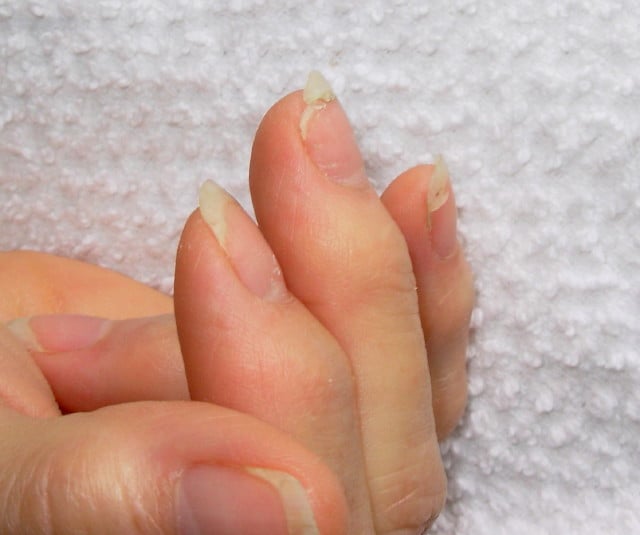
DSCN4758aWhat Are Brittle Nails?

[dropcap]B rittle nails are abnormalities of the nail plate that are characterized by poor nail structure affecting all fingernails and toenails seen as thin, dry nails that easily chip, split, and are difficult to maintain a clean edge. Usually longitudinal ridging occurs from the nail base to the tips.

Q: What is the nail plate?

A: The nail plate is the hard keratin cover protecting the finger tip and toe tip. The nail plate (non-living tissue) is produced by the nail matrix (living tissue) at the base of the nail plate under the lunula (moon), which is the site of brittle nail development.

Nail Anatomy. A. Nail plate; B. lunula; C. root; D. sinus; E. matrix; F. nail bed; G. hyponychium; H. free margin. Courtesy Wikipedia.org

Poor nail structure affecting all nails may be a feature of nutritional deficiency in poor diet or malabsorption such as occurs in celiac disease.

Some other causes are: idiopathic (unknown cause), the result of aging, the effects of certain drugs, or an association with systemic autoimmune disorders such as vitiligo, alopecia areata (with pitting), psoriasis (with pitting), and lichen planus. 

External (non-nutritional or disease) causes of dry, brittle nails, such as detergents and cleaners, would only affect fingernails but not toenails.

Note: It has been shown that working with your hands in water or soaking them through activities like swimming does not cause dry, brittle nails but will worsen them.

What Are Brittle Nails In Celiac Disease and/or Gluten Sensitivity?

Bone Pain

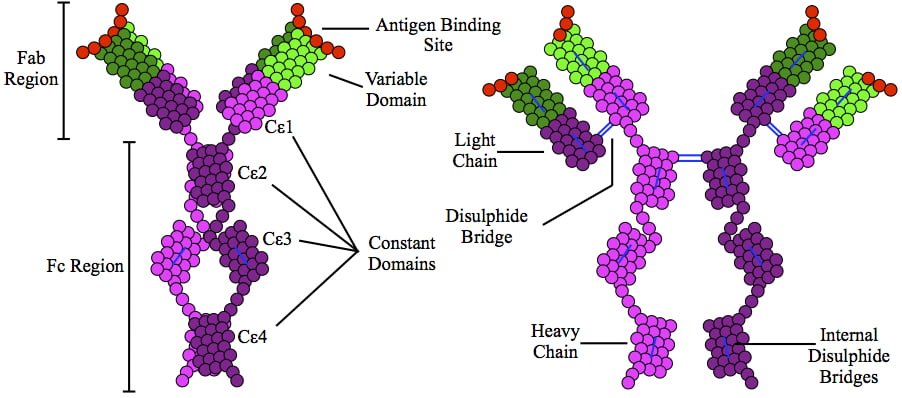
This is a depiction of immunoglobulin E (IgE) antibody which is elevated in allergic reactions.

What Is Allergic Rhinitis?

[dropcap]A llergic rhinitis is an immune disorder characterized by inflammation of the nasal mucosa by an IgE antibody reaction to an allergen.

An allergen is something that triggers an allergic immune response.

Q: What is the immune response?

A: Implicated in the response is an increase in T gamma-delta intraepithelial lymphocytes (IELs), which is a subset of pro-inflammatory T-cells located in the respiratory mucosa.  Lymphocytes are white blood cells.

When a person with allergic rhinitis breathes in an allergen such as pollen or dust, the body releases chemicals, including histamine that cause allergy symptoms. For example, hay fever involves an allergic reaction to pollen. A similar reaction occurs with allergy to mold, animal dander, dust, and other allergens that are breathed in.

What Is Allergic Rhinitis In Celiac Disease and/or Gluten Sensitivity?