Skip to content

Hyperprolactinemia (Excess Prolactin Hormone)
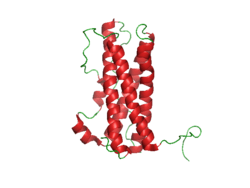
Prolactin Structure. Courtesy Boris TM at Wikipedia.

What Is Hyperprolactinemia?

[dropcap]H[/dropcap]yperprolactinemia is an excess secretion of prolactin hormone causing an elevated blood level that is characterized by its effects on reproduction: in females causing  amenorrhea and in males causing reduced sexual potency.

Q: What is prolactin?

A: Prolactin is a hormone produced by the the anterior pituitary gland that is transported by the bloodstream to stimulate androgen hormone production in male and estrogen hormone production in female sex glands. However, too much prolactin inhibits hormone production of estrogen in women and testosterone in men.

In pregnant females upon delivery of a baby, prolactin stimulates breast development and milk production for the purpose of feeding the infant. Sucking by the infant stimulates the release of prolactin which keeps the milk supply adequate.

Prolactin also promotes autoimmune mechanisms. Prolactin interferes specifically with B cell tolerance induction, enhances proliferative response to antigens and mitogens and increases the production of immune globulins, cytokines and autoantibodies.1

Other conditions that can stimulate prolactin release include nutritional deficiencies, thyroid stimulating hormone (TSH) produced by the pituitary gland, stress, exercise, and anterior pituitary tumors.

What Is An Elevated Prolactin Level In Celiac Disease and/or Gluten Sensitivity?

Sources:
  1. Shelly S, Boaz M, Orbach H. Prolactin and autoimmunity. Autoimmun Rev. 2012 May;11(6-7):A465-70. doi: 10.1016/j.autrev.2011.11.009. []

Cholesterol, Low 

Model of cholesterol molecule.

What Is Low Cholesterol?

[dropcap]L[/dropcap]ow cholesterol found in blood indicates an abnormal blood level of this essential lipid (fat) that is characterized by decreased production of steroid hormones and bile.

Cholesterol is a soft, fat-like substance found in the bloodstream and is an essential structural component in all body cells. It is required for membrane fluidity and permeability of cells. Within the cell membrane, cholesterol also functions in intracellular transport, cell signaling and nerve conduction.

Cholesterol is required for these essential body processes:

  1. Cholesterol is converted to bile by the liver and stored in the gallbladder until needed for digestion of fats in the small intestine.  
  2. Cholesterol is used by the adrenal glands to produce the steroid hormones cortisol and aldosterone.
  3. Cholesterol is used by the sex glands to make progesterone, estrogen, and testosterone and their derivatives.
  4. Cholesterol is needed for the production of vitamin D.

Q: What makes cholesterol bad for you?

A: There are different forms of cholesterol that can be bad or good depending on the level. In blood vessels, low-density lipoprotein (LDL or ‘bad’) cholesterol can abnormally join with fats and other substances to build up in the inner walls of arteries. The arteries can become clogged and narrow, and blood flow is reduced. This is atherosclerosis which can lead to stroke, heart attack and thrombosis.

High-density lipoprotein (HDL or ‘good’) carries harmful cholesterol away from the arteries and helps protect from heart attack and stroke.1

What Is Low Cholesterol In Celiac Disease and/or Gluten Sensitivity?

Sources:
  1. http://watchlearnlive.heart.org/CVML_Player.php?moduleSelect=hdlldl []

Psoriasis: definition

A chronic relapsing dermatosis characterized by scaling, erythema (redness), and less commonly pustulation that is an associated disorder of celiac disease involving deficiencies of omega-3 fatty acids, vitamin D, and zinc – features of malnutrition.… 

Arthritis, Psoriatic: definition

A joint manifestation of psoriasis, a systemic autoimmune disease, characterized by asymmetric involvement in one or more joints, especially affecting the distal phalangeal joints of fingers and toes at tips.

Linoleic Acid (LA) Deficiency

nutsWhat Is Linoleic Acid?

[dropcap]L[/dropcap]inoleic acid is an essential omega-6 fatty acid that comes from plant sources. Essential means the body must have it to maintain health and life sustaining functions. Omega-6 fatty acids are polyunsaturated.

Among its many vital roles in the body, linoleic acid composition of intestinal membranes is important for epithelial cell function and disturbances may contribute to the pathophysiology of celiac disease.1

Q: What are epithelial cells?

A: Epithelial cells make up the surface mucosa of the digestive tract and also the respiratory tract, urinary tract and genital tract.

Linoleic acid is an important building material for the eicosanoids, a large group of highly bioactive hormone-like substances including prostaglandins, leukotrienes, and thromboxanes that are involved in blood clotting, inflammation, and vasoconstriction.2

What Is Linoleic Acid Deficiency in Celiac Disease?

Sources:
  1. Steel DM, Ryd W, Ascher H, Strandvik B. Abnormal fatty acid pattern in intestinal mucosa of children with celiac disease is not reflected in serum phospholipids. J Pediatr Gastroenterol Nutr. 2006 Sep; 43(3):318-23. []
  2. Richardson AJ. The importance of omega-3 fatty acids for behavior, cognition, and mood. Scandinavian Journal of Nutrition. 2003; 47(2):92-8 []

Hyperthyroidism – Grave’s Disease 

hypokalemia gluten celiac disease symptomWhat Is Hypokalemia?

[dropcap]H ypokalemia means the level of potassium in the bloodstream is too low to meet metabolic needs of the body for this mineral and is characterized by metabolic acidosis, altered nerve conduction and muscle contraction.

Rapid potassium loss can result in life-threatening hypokalemic rhabdomyolysis which is destruction of muscle tissue that results in kidney damage.1

Q: What are metabolic needs of the body for potassium?

A: The metabolic needs of the body for potassium are great because this mineral is crucial for life and especially for normal nerve and muscle function.

Most potassium is intracellular, meaning it is found within cells while sodium, its opposing mineral (both electrolytes), is found in the fluid surrounding cells. In muscle contraction, exchange of potassium and sodium takes place so that potassium moves out of muscle cells and sodium moves into them. With muscle relaxation, potassium moves back into the cells and sodium moves out.

What Is Hypokalemia In Celiac Disease and/or Gluten Sensitivity?

Sources:
  1. Williams SG, Davison AG, Glynn MJ. Hypokalaemic rhabdomyolsis: an unusual presentation of celiac disease. European Journal of Gastroenterology and Hepatology. Feb 1995;7(2):183-4. []