
Hair Loss (Diffuse Alopecia): definition
Diffuse alopecia is characterized by abnormal hair loss or baldness.
An open sore of the lining of the stomach. Also called stomach ulcer.

With Restaurant Week upon us in Washington DC I can’t help but think about how far the restaurant industry has come in the past few years when it comes to serving gluten-free customers! Between the increase in demand for gluten-free products from the celiacs, the gluten intolerant and the fad dieters to the efforts of nonprofits like National Foundation For Celiac Awareness, Celiac Disease Foundation and the Gluten Intolerance Group, people living gluten-free can enjoy the delicious foodie culture that has spread across the country!
Which star chefs and popular restaurants have joined the gluten-free bandwagon? A lot!

Each year, Gluten Free Travel Site names one location, based on reviews, on which they bestow the honor of being named “World’s Most Celiac-Friendly Destination”.
This year, that honor goes to

Trader Joe’s has added to its ever growing line of gluten-free products with the recent addition of gluten-free Joe-Joe’s, or cream filled chocolate cookies. Growing up, Oreo’s were one of my favorite cookies, so I was excited to see if Trader Joe’s version lived up to my childhood favorite.

GERD is an upper digestive disorder that is characterized by a decrease in lower esophageal sphincter pressure (LES,) which allows the abnormal reflux or backflow of stomach contents into the esophagus. It is also called erosive esophagitis or reflux esophagitis and is the most common disorder of the esophagus.
The esophagus is a muscular tube that transports swallowed substances to the stomach. It begins at the cricoid cartilage (Adam’s apple) as a continuation of the pharynx and ends at the lower esophageal sphincter (LES).
The lower esophageal sphincter is located at the junction of the esophagus and the stomach. It functions like a circular band to tighten after food is ingested in order to prevent its going back up the esophagus.
Q: How does reflux damage the esophagus?
A: Damage to the lining of the esophagus is induced by the caustic, chemical action of acid and pepsin in gastric juice and, in severe cases, also bile salts, that back upwards from the stomach through an impaired LES. Gastric acid combined with pepsin or bile salts seems to be more harmful to the esophageal epithelial layers than gastric acid alone.1
Pepsin is normally produced by the stomach to dissolve protein in swallowed food. Unfortunately, when the esophagus is inflamed, pepsin will act on it to break down the protein in its sore wall. These sores are called erosions.
Importantly, refluxate to the esophagus in patients with acid suppression therapy is different from those in patients without. Higher levels of secondary bile acids are detected in patients with acid suppression therapy. Even if acid suppression is successful, weakly acidic reflux with bile acids can damage the esophagus.1
Damage starts at the luminal surface (inside where food passes through) of the squamous epithelium (tough surface cells) and progresses through the underlying layers into the submucosa.
One of the primary functions of the esophageal epithelium is to protect the underlying tissue from mechanical and chemical damage by acting as a barrier. The epithelial layers of the distal esophagus need to withstand reflux from the stomach and its contents. When the epithelium fails to protect the underlying tissue from this damage, it leads to erosions, esophagitis, and may lead to Barrett’s esophagus.1
Barrett’s esophagus and esophageal small cell cancer are severe complications of GERD that can be fatal.
GERD can result from too much, or more commonly, too little stomach acid.

The below Dear Abby letter is my take on someone who has just been diagnosed with Celiac Disease and doesn’t understand that the gluten-free diet is not a death sentence. I personally think that the gluten-free diet is a blessing of sorts…
I have spent the last few months visiting several doctors trying to figure out what is wrong with me. I’ve experienced everything from extreme irritability (causing several fights with my husband), to running to the bathroom over ten times a day! The state of my health was really starting to affect other aspects of my life.
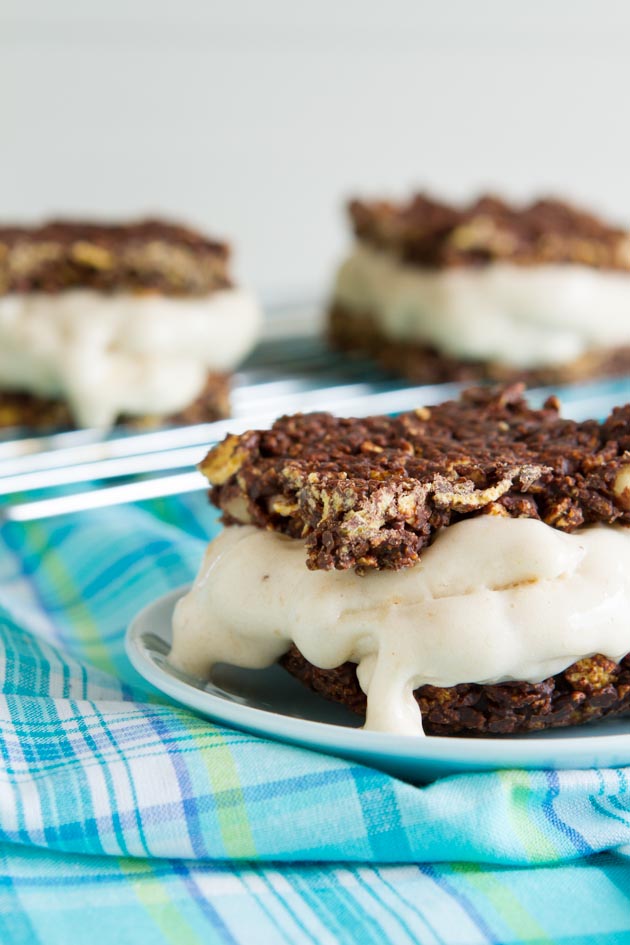
I’ve been going through an (unplanned) dessert recipe detox since the launch of my dessert cookbook earlier this year.
It’s not that I’ve been avoiding desserts, I just haven’t been interested in making them as much. But, realizing that the last sweet treat I shared with you was this Cherry Chunk Protein Ice Cream on June 18, I knew that something had to be done.

When I read an article that Kyotofu Bakery in New York was using Thomas Keller’s Cup4Cup gluten-free flour to create gluten-free versions of their Japanese inspired desserts I was quite intrigued. These desserts are all soybean based (contain tofu) and stray from the ordinary with their intriguing flavor combinations and

Kids love this creamy delicious high protein “banilla” smoothie. There’s a lot of nutritional value in this 5-minute busy morning gluten and dairy free smoothie. Use a frozen banana for extra creamy texture.
Prep Time: 5 minutes
Total Time: 5 minutes
Yield: 2 servings
Ingredients: