Contents
 What Is Attention Deficit Hyperactive Disorder (ADHD)?

[dropcap]A ttention deficit hyperactive disorder (ADHD) is a maladaptive behavioral disorder characterized by a persistent pattern of inattention and impulsivity, or both, that are developmentally (age) inappropriate. For these problems to be diagnosed as ADHD, they must be out of the normal range for a child’s age and development.
Inattention results from difficulty concentrating which gives the impression of not listening. The person’s speech or writing, such as when telling stories, can be disorganized.
Most children with ADHD also have at least one other developmental or behavioral problem. Depression, lack of sleep, learning disabilities, tic disorders, and behavior problems may be confused with, or appear with, ADHD. Every child suspected of having ADHD should be carefully examined by a doctor to rule out possible other conditions or reasons for the behavior.
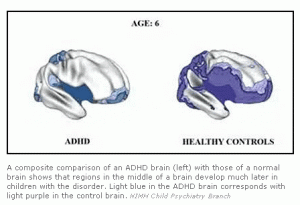
An MRI (magnetic resonance imaging) study investigating whole-brain cortical thickness (outer layer of the brain) in male and female children, adolescents, and adults with ADHD supports the hypothesis that brain abnormalities in ADHD represent abnormal brain development rather than developmental delay.
Q: What is the abnormal development problem?

A: Differences occur in the right side of the brain only. Reduced cortical thickness in people of all ages with ADHD was observed predominantly in the frontoparietal region (forehead and top). However, increased cortical thickness was observed predominantly in the occipital lobe (back). The brain thickness differences were correlated with severity of ADHD.1
ADHD is the most commonly diagnosed behavioral disorder of childhood. It affects about 3 – 5% of school aged children and is diagnosed much more often in boys than in girls.2
What Is ADHD In Celiac Disease and/or Gluten Sensitivity?
- Relationship between ADHD and celiac disease. ADHD is a behavioral disorder associated with malabsortion in celiac disease and may be a presenting feature of untreated celiac disease.
- Relationship between ADHD and occurrence in celiac disease. Data indicate that ADHD-like symptoms are markedly overrepresented among untreated celiac disease patients and that a gluten-free diet improves symptoms significantly within a short period of time.3,4
- Relationship between ADHD and diet. There is a statistically significant decrease in the incidence of inattention, chronic fatigue, and headache in children compliant with a gluten free diet compared to children at diagnosis and children who were not compliant.5
- Relationship between ADHD and damaged small intestinal mucosa. Patients with potential celiac disease (latent) turning into overt (active) celiac disease had a higher incidence of headache and inattention compared with potential celiacs showing normal mucosa.6
How Prevalent Is ADHD In Celiac Disease and/or Gluten Sensitivity?
First prevalence study shows rate of 20.3% for female patients with untreated celiac disease and 21.2% for male patients with untreated celiac disease vs.10.5% in controls.7
What Are The Symptoms Of ADHD?
ADHD is marked by low frustration levels, intolerance for changes in immediate environment, and failure to respond to discipline, especially in a group setting. Temper tantrums and negativity appear in young children and restlessness and carelessness in older children.
The symptoms of ADHD fall into three groups: Lack of attention (inattentiveness), Hyperactivity, Impulsive Behavior (impulsivity).
1) Inattentive symptoms:
- Fails to give close attention to details or makes careless mistakes in schoolwork.
- Has difficulty keeping attention during tasks or play.
- Does not seem to listen when spoken to directly.
- Does not follow through on instructions and fails to finish schoolwork, chores, or duties in the workplace.
- Has difficulty organizing tasks and activities.
- Avoids or dislikes tasks that require sustained mental effort (such as schoolwork).
- Often loses toys, assignments, pencils, books, or tools needed for tasks or activities.
- Is easily distracted.
- Is often forgetful in daily activities.
2) Hyperactivity symptoms:
- Fidgets with hands or feet or squirms in seat.
- Leaves seat when remaining seated is expected.
- Runs about or climbs in inappropriate situations.
- Has difficulty playing quietly.
- Is often “on the go,” acts as if “driven by a motor,” talks excessively.
3) Impulsivity symptoms:
- Blurts out answers before questions have been completed.
- Has difficulty awaiting turn.
- Interrupts or intrudes on others (butts into conversations or games).
The American Academy of Pediatrics (AAP) has issued guidelines to bring more clarity to this issue. The diagnosis is based on very specific symptoms, which must be present in more than one setting. Children should have at least 6 attention symptoms or 6 hyperactivity/impulsivity symptoms, with some symptoms present before age 7. The symptoms must be present for at least 6 months, seen in two or more settings, and not caused by another problem. The symptoms must be severe enough to cause significant difficulties in many settings, including home, school, and in relationships with peers.
How Does ADHD In Celiac Disease and/or Gluten Sensitivity Develop?
- Etiology is unclear whether accumulative effects of nutritional, immunologic, or inflammatory factors might play some role on learning disorders or attention span or that the effect is indirect.7
- Probably neurotransmitter abnormalities are due to malabsorption in celiac disease. Deficiencies include niacin, iron, EPA (omega-3 fatty acid), and protein.
Does ADHD Respond To Gluten-Free Diet?
Yes. Celiac disease-related ADHD improves on gluten free diet.7
Gluten-free diet has a positive impact on inattention. There is a statistically significant decrease in the incidence of inattention in children compliant with a gluten free diet for 6 months compared to children at diagnosis and children who were not compliant with restricting gluten from their diet.5,3
6 Steps To Improve ADHD In Celiac Disease and/or Gluten Sensitivity:
- [dropcap]1 Remove the Trigger. Maintain a Strict, Nutritious Gluten Free Diet:
[box type=”shadow” ]Treatment. This condition responds to the complete elimination of gluten, which is the required treatment that improves both ADHD and gut health.
- Gut health is the foundation to restore ALL health. Restored health will enable you to maintain a strict gluten free diet, just as other life tasks will be easier.
- A strict gluten free diet means removing 100% of wheat, barley, rye and oats from the diet.
- Cutting out bread and other obvious sources of gluten is not good enough for recovery. Even 1/8th teaspoon of flour or bread crumb is enough to sustain the inflammation that is damaging your small intestine, causing increased permeability (leaky gut) and allowing undigested gluten to enter your body where it can damage structures and function, and instigate immune inflammatory responses.
Correct Your Individual Nutritional Needs.
- Eat foods that can replenish missing nutrients. Find them under NUTRIENT DEFICIENCIES.
- Take nutritional supplements as needed. Find them under NUTRIENT DEFICIENCIES.
Recovery. You should begin to feel better within a week and notice more energy as inflammation subsides and the absorbing cells that make up the surface lining of your small intestine are better able to function.
- Intestinal lining cells are replaced every 5 days. The healing process is like sunburn where the damaged surface layer of skin sloughs off and is replaced with new normal cells.
- Leaky gut normally resolves in two month after starting a gluten free diet and brings about a big improvement in health. Improvement in intestinal permeability precedes morphometric recovery (cell appearance and structure) of the small intestine in celiac disease.8
- The intestinal lining may take up to a year to heal.[/box]
- [dropcap]2 Reduce Inflammation. Foods to Eat and Foods Not to Eat:
Because gluten is inflammatory, eliminate OTHER inflammatory foods from your diet to reduce an additive effect to gluten. At the same time, try to eat foods that reduce inflammation (anti-inflammatory).
[box type=”shadow” ]Here Are Major Inflammatory Food Types That Reduce Healing:
- Damaging Foods. In susceptible persons, includes corn, dairy (cow), and soy. Lactose, the sugar in any animal milk disrupts intestinal permeability causing leaky gut.9
- Allergenic Foods. Includes foods that trigger the immune sytem to produce IgE antibodies. Allergy testing is the usual way to discover these offending foods.
- Shelf Stable Processed Foods. Includes any that contain additives and preservatives. Look for them on the nutrition label of the box or package. Additives and preservatives also disrupt intestinal permeability causing leaky gut.9
- Fats. Limit deep fried foods, trans-fats, saturated fats (animal fat/butter), and EXCESSIVE omega-6 fatty acid oils like corn oil. Rancid fats, sodium caprate (a medium chain fat), and sucrose monester fatty acid (a food grade surfactant) induce significant disruption of the intestinal barrier that causes leaky gut.9.
- Excessive Refined White Flours (bran layer removed). Includes products made from them such as cookies, bread, cakes, pies. Bran contains the vitamins and minerals that metabolize grains and slows the otherwise rapid entry of sugar from their digestion into the bloodstream. Also disrupt intestinal permeability causing leaky gut.9
- Refined Sugars. Includes white sugar, corn fructose and high fructose corn syrup.
- Certain Spices. Includes paprika and cayenne pepper which disrupt intestinal permeability causing leaky gut.9
- Alcohol and Caffeine. Disrupt intestinal permeability causing leaky gut.9[/box]
[box type=”shadow” ]Here Are Important Anti-Inflammatory Food Types to Promote Health:
- Fruits. Contain ample amounts of vitamins, minerals and phytochemicals which are naturally occuring components in plants that detoxify toxins, carcinogens (reducing the risk by 50%) and mutagens.
- Non-Starchy Vegetables. Support intestinal integrity and provide ample amounts of vitamins, minerals and phytochemicals. Includes lettuce, kale, onion, broccoli, garlic, and others.
- High Quality Complex Carbohydrates. Provide vitamins, minerals, and fiber while boosting serotonin levels to help you relax and feel calm. Includes whole grains, legumes, and root vegetables such as carrots, parsnips, sweet potatoes, turnips, red beets, and others.
- Antioxidants. Protect the body from inflammatory oxidant molecules that continually occur and help us handle stress and reduce irritability. Includes vitamin C-containing foods such as lemon, grapefruit, apricot, Brussels sprouts and strawberries, and others. Also, includes vitamin E-containing foods such as nuts, seeds, avocado, olive oil, and others. Cocoa is good, too.
- Omega-3 Fatty Acids. Balance opposing omega-6 fatty acids and bad fats. Fish sources includes tuna, salmon, cod, and others. Plants sources include flax, chia seeds, canola oil, and others.
- Probiotics. Supply normal microbes needed for colon health and health of the body such as these fermented foods: yogurt, kefir, and unpasteurized apple cider vinegar.
- Prebiotics/ High Fiber Foods. Food with fiber keeps our population of colonic microbes healthy.
- Protective Herbs and Spices. See below #6 below for examples.[/box]
- [dropcap]3 Information Sheet You Can Take to Your Doctor or Other Health Professional:
Click here.
- [dropcap]4 Manage Your Medications Safely:
[box type=”shadow” ]
Certain prescription drugs can cause nutritional deficiencies of niacin (vitamin B3), iron, EPA (omega-3 fatty acid), and protein that promote ADHD. Ask your doctor or pharmacist about this possible adverse effect if you are taking any of the drugs listed below. Do not stop prescribed medications without supervision.
This is not a complete listing.
FEMALE HORMONES disrupt intestinal permeability.
- Oral Contraceptives (Norinyl®, Ortho-Novum®, Triphasil®, and others) deplete vitamin B3 and others.
ANTI-INFLAMMATORIES disrupt intestinal permeability.
- Aspirin and Salicylates deplete Iron, and others.
ANTIBIOTICS disrupt intestinal permeability.
- Tetracyclines deplete Iron and others.
ANTACIDS / ULCER MEDICATIONS
- Pepcid®, Tagamet®, Zantac® deplete Iron, and others.
- Magnesium and Aluminum Antacid preparations (Gaviscon®, Maalox®, Mylanta®) deplete Iron, and others.[/box]
- [dropcap]5 Nutritional Supplements To Help Correct Deficiencies:
[box type=”shadow” ]
The type and quantity of nutritional supplements that may be needed depend on which nutrients are deficient.
- Multivitamin/mineral combination once a day is useful to improve overall nutrient levels. This is a safe dose, but always check with your doctor to avoid interactions with medications. Includes niacin.
- Ferrous fumarate as prescribed following a blood test for iron status.
- Niacinimide as prescribed to restore nicain status.
- EPA supplement.
Storage Note: Store container tightly sealed, away from heat, moisture and direct light to avoid loss of potency. That is, in a safe kitchen cabinet – not in the bathroom or on the kitchen table. Fish oil must be refrigerated.[/box]
- [dropcap]6 Manage Natural Remedies:
[box type=”shadow” ]Hydration:
- Eight glasses of water are recommended per day unless there is a contraindication such as kidney or heart disease. The Institute of Medicine recommends approximately 2.7 liters (91 ounces) of total water, from all beverages and foods, each day for women and 3.7 liters (125 ounces) daily of total water for men.
- If you are thirsty, drink water. Add fresh, squeezed lemon to water. Lemon is anti-inflammatory, alkalizing and provides vitamin C.
- Hydration Test: Urine should be pale yellow. Fingertips should be plump, without pruning but this may not be reliable when fingers are swollen with edema. Lips should be plump, without puckering. The feeling of thirst can be unreliable.
- What is wrong with soda, coffee, tea, and alcohol? These drinks are dehydrating, increase acid, and deplete nutrients.[/box]
[box type=”shadow” ]Carminatives. The following anti-inflammatory plant sources called carminitives help heal the digestive tract. They also tone the digestive muscles which improves peristalsis, thus aiding in the expulsion of gas from the stomach and intestine to relieve digestive colic and gastric discomfort.
Carminative Food Remedies:
- Raspberry.
- Carrot is also a cleansing digestive tonic.
- Grape is also bile stimulating and a cleansing remedy for sluggish digestion and laxative.
- Redbeets also stimulate and improve digestion and are easily digested.
- Cabbage also stimulates and improves digestion and is also a liver decongestant.
- Lettuce also stimulates and improves digestion and is also an alterative, meaning it improves the function of organs involved with the digestion and excretion of waste products to bring about a gradual change.
- Potatoes are antispasmodic (due to atropine like properties) and a liver remedy.
Carminative Herb Remedies:
- Sage is also a digestive, astringent, bile stimulant and energy tonic that heals the mucosa. Drink as tea or use in cooking.
- Chamomile, lemon balm, and fennel, (as a tea) also help relieve nervous tension.
- Parsley also relieves indigestion.
- Rosemary as a tea and in cooking also is a nervous system tonic for stress and fatigue, bile stimulant, and can relieve headaches and indigestion.
- Thyme is also soothing remedy useful for stimulating digestion of rich, fatty foods.
Carminative Spice Remedies:
- Cloves are also antispasmodic.
- Nutmeg is also useful for indigestion.
- Ginger.[/box]
[box type=”shadow” ]Exercise Helps:
Exercise improves circulation and rids the body of toxins.
- Walking is aerobic exercise that reconditions the whole body to improve stamina. Read more about Exercise and Fitness.
- Weight training builds muscle. Read more about Exercise and Fitness.
- Stretching improves flexibilty. Read more about Exercise and Fitness.
Note: Exercise is important, but the amount and type of exercise undertaken depends on your health. Your first priority is to heal. [/box]
What Do Medical Research Studies Tell About ADHD In Celiac Disease and/or Gluten Sensitivity?
RESEARCH STUDY SUMMARIES
“Brain cortical thickness in ADHD: age, sex, and clinical correlations.” This study investigating whole-brain cortical thickness in male and female children, adolescents, and adults with ADHD compared with whole-brain cortical thickness in matched control participants found that the data collected support the hypothesis that anatomical abnormalities in ADHD represent abnormal development rather than developmental delay.
Longitudinal magnetic resonance imaging (MRI) studies have shown reduced cortical thickness in individuals with ADHD, but this abnormality disappears with age, suggesting developmental delay. However, cross-sectional MRI studies have shown reduced cortical thickness, suggesting abnormal development. MRI scans were performed on ADHD and control participants. Cortical thickness data revealed differences in right hemisphere only. Reduced cortical thickness was observed predominantly in the frontoparietal region. However, increased cortical thickness was observed predominantly in the occipital lobe.
The cortical thickness differences were correlated with severity of ADHD. Analysis of sex differences revealed that location, number, and magnitude of CT differences were different between males and females in each age group.10
“The Pediatric Symptom Checklist as screening tool for neurological and psychosocial problems in a paediatric cohort of patients with coeliac disease.” This study investigating neurological and behavioral disorders in a pediatric group of patients with newly diagnosed celiac disease compared with treated patients in order to detect possible differences related to compliance with gluten-free diet found that gluten-free diet had a positive impact on inattention.
A cohort of 139 patients was divided into three groups: A (40 patients with newly diagnosed celiac disease), B (54 patients with celiac disease in remission after gluten-free diet) and C (45 patients with potential celiac disease). Patients first underwent a screening neurological visit, detecting signs associated with celiac disease, and then were evaluated with Pediatric Symptom Checklist (PSC), a psychosocial screen for cognitive, emotional and behavioural problems.
In the group B as compared to group A, there was a statistically significant decrease (p < 0.05) in the incidence of chronic fatigue, headache and inattention. The same applied to patients compliant to gluten-free diet vs. non-compliant. Potential celiacs turning into overt CD had a higher incidence of headache and inattention compared with potential celiacs showing normal mucosa. The PSC mean score in group A was statistically higher than in group B.5
“Association of attention-deficit/hyperactivity disorder and celiac disease: a brief report.” This study investigating whether a gluten-free diet could alleviate the behavioral symptoms in patients with celiac disease and ADHD found that after initiation of the gluten-free diet, patients or their parents reported a significant improvement in their behavior and functioning compared to the period before celiac diagnosis and treatment.
Sixty-seven subjects aged 7 to 42 years (mean = 11.4 years) with ADHD were enrolled in the study in South Tyrol, Italy, from 2004 to 2008. Hypescheme, an operational criteria checklist that incorporates DSM-IV and ICD-10 criteria, was used to assess ADHD-like symptomatology. Additionally, blood serum levels of all subjects were assessed for possible celiac disease by examining antigliadine and antiendomysium antibodies. A gluten-free diet was initiated for at least 6 months in celiac disease-positive patients with ADHD.
Of the 67 patients with ADHD, 10 were positive for celiac disease. After initiation of the gluten-free diet, patients or their parents reported a significant improvement in their behavior and functioning compared to the period before celiac diagnosis and treatment, which was evident in the overall mean score on the Hypescheme questionnaire (t = 4.22, P = .023).
Celiac disease is markedly overrepresented among patients presenting with ADHD. A gluten-free diet significantly improved ADHD symptoms in patients with celiac disease in this study. The results further suggest that celiac disease should be included in the ADHD symptom checklist.3
“A preliminary investigation of ADHD symptoms in persons with celiac disease.” This study investigating a possible association of celiac disease with psychiatric and psychological disturbances, such as ADHD, found that the data indicate that ADHD-like symptomatology is markedly overrepresented among untreated celiac disease patients and that a gluten-free diet may improve symptoms significantly within a short period of time.
132 participants from 3 to 57 years of age affected by celiac disease for the possibility of an associated ADHD-like symptomatology were assessed using the Conner Scale Hypescheme, a behavioral scale similar to the Conners Rating Scales, before their gluten-free diet was started and 6 months later.
The overall score improves significantly as well as most of the ADHD-like symptomatology specific features. The results of this study also suggest that celiac disease should be included in the list of diseases associated with ADHD-like symptomatology.11
“Range of Neurologic Disorders in patients with celiac disease.” This study screening for a wide spectrum of both hard and soft neurologic disorders, including ADHD in children and young adults who have Celiac Disease, demonstrated that patients with Celiac Disease are more prone to develop ADHD then controls.7
Sources:- Almeida Montes LG, Prado Alcántara H, Martínez García RB, De La Torre LB, Avila Acosta D, Duarte MG. Brain cortical thickness in ADHD: age, sex, and clinical correlations. J Atten Disord. 2013 Nov;17(8):641-54. doi: 10.1177/1087054711434351. [↩]
- http://www.ncbi.nlm.nih.gov/pubmedhealth/PMH0002518/ [↩]
- Niederhofer H. Association of attention-deficit/hyperactivity disorder and celiac disease: a brief report. Prim Care Companion CNS Disord. 2011;13(3). pii: PCC.10br01104. doi: 10.4088/PCC.10br01104. [↩] [↩] [↩]
- Niederhofer H, Pittschieler K. A preliminary investigation of ADHD symptoms in persons with celiac disease. J Atten Disord. 2006 Nov;10(2):200-4. [↩]
- Terrone G, Parente I, Romano A, Auricchio R, Greco L, Del Giudice E. The Pediatric Symptom Checklist as screening tool for neurological and psychosocial problems in a paediatric cohort of patients with coeliac disease. Acta Paediatr. 2013 Jul;102(7):e325-8. doi: 10.1111/apa.12239. [↩] [↩] [↩]
- Terrone G, Parente I, Romano A, Auricchio R, Greco L, Del Giudice E. The Pediatric Symptom Checklist as screening tool for neurological and psychosocial problems in a paediatric cohort of patients with coeliac disease. Acta Paediatr. 2013 Jul;102(7):e325-8. doi: 10.1111/apa.12239. [↩]
- Zelnick N, Pacht A, Obeid R, Lerner A. Range of Neurologic Disorders in patients with celiac disease. Pediatrics. Jun 2004;113(6):1672-1676. [↩] [↩] [↩] [↩]
- Cummins AG, Thompson FM, Butler RN, et al. Improvement in intestinal permeability precedes morphometric recovery of the small intestine in coeliac disease. Clinical Science. Apr 2001;100(4):379-86. [↩]
- Farhadi A, Banan A, Fields J, Keshavarzian A. Intestinal barrier: an interface between health and disease. Journal of Gastroenterology and Hepatology. 2003;18:479-91. [↩] [↩] [↩] [↩] [↩] [↩]
- Almeida Montes LG, Prado Alcántara H, Martínez García RB, De La Torre LB, Avila Acosta D, Duarte MG. Brain cortical thickness in ADHD: age, sex, and clinical correlations. J Atten Disord. 2013 Nov;17(8):641-54. doi: 10.1177/1087054711434351. [↩]
- Bonferroni-corrected, paired-sample t tests). Niederhofer H, Pittschieler K. A preliminary investigation of ADHD symptoms in persons with celiac disease. J Atten Disord. 2006 Nov;10(2):200-4. [↩]