Skip to content

Over 300 Symptoms Linked to Gluten and Celiac Disease. How Is This Possible?
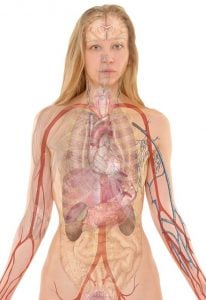
Survey: What Were the Symptoms That Made You Search for an Answer? Did They Improve Once You Went Gluten-Free?In 2007, Gluten Free Works published “Recognizing Celiac Disease,” the first work to present over 300 signs, symptoms, associated disorders and complications gathered from documented medical research from around the world.

The book proved that researchers were finding hundreds of health problems associated with celiac disease and gluten.

This list is now being used by celiac disease centers, national celiac organizations and health organizations to help identify at risk patients and determine whether patient symptoms are consistent with celiac disease.

But how can one disorder cause so many problems?

Here’s a look at one way…nutritional deficiencies.

Celiac Disease Q & A: Common Nutrition and Celiac Disease Questions

The following questions and answers were developed by the Beth Israel Deaconess Medical Center at Harvard Medical School:

Q. What is it like for a person you see who is newly diagnosed with Celiac Disease?
A. The gluten-free diet requires more preparation, taking food with you when you travel, making sure that you are safe in dining-out situations or when you are visiting with family or friends. So for some, it is very simple and straight forward and they are already experimenting with new grains like amaranth, buckwheat, millet, sorghum, and teff. But some people are

Did you Know – Who Has Celiac Disease?

Who has celiac disease? While you cannot tell just by looking at a person, there are some common issues that can point doctors in the direction of celiac disease. Here is a list of 8… 

Heal Your Gut

Celiac Disease (CD) is not curable, but it is manageable by eating a strict gluten free diet.  That may not be enough.

Many suffering from CD still feel ill even after being faithful to a gluten free diet.  Celiac Disease is an autoimmune disease which causes your body to attack and destroy the microvilli and villi in your small intestines.  These are key to the absorption of nutrients from food and are also where many enzymes used in digestion are made.  When these are destroyed, the ability to absorb nutrients decreases and can lead to malnutrition.

This is not all that happens in a damaged intestine.  Gluten can cause the tight junctions, spaces between cells lining the intestines, to be damaged or destroyed allowing larger molecules such as proteins and even microorganisms to pass into the blood stream.

Under normal circumstances, the intestinal wall only permits small particles to pass through the intestinal wall and into the blood stream. When these larger molecules make it through into the blood stream our bodies do not recognize these  larger molecules and an autoimmune response begins.  It is these autoimmune responses that may be the cause of you still feeling ill.  What needs to happen to feel well again, is to heal the gut.

Celiac Disease Public Service Announcement

[Editor’s Note: This video is from 2007, but it is still true. Celiac Disease research still lags other, less prevalent conditions. Yet, it is the easiest to treat, requiring a gluten-free diet and nutrient replenishment. The focus has been on the Gluten-Free Diet. Let’s shift it back.]


Doctors are missing over 95% of people with celiac disease – over 3 million in the United States.  That’s more people than autism or Type 1 Diabetes, yet celiac disease receives a fraction of the funding of these diseases.  Lives are being destroyed every day, when a simple change in diet could cure them.  Let’s get the word out…

Celiac Disease and Gluten Free Diet Educational Videos

Cheryl Harris Gluten Free Works

Finding out you have Celiac Disease is a big transition. Often it’s a good one that leads to feeling great, yet initially it’s a lot of information to take in at once to understand what you need to do for your health. Much of it is because we’re been eating one way for 15, 30, 50 or more years and it can be overwhelming to to instantly unlearn everything we’ve done and change overnight. Wouldn’t life be easier if you could take a doctor or dietitian home as a portable reminder of the basics? And so the Celiac Disease Video Project was born.

See below for videos of Dr. John Snyder, Chief of the Department of Gastroenterology at CNMC in DC, Dr. Gary Kaplan, Medical Director of Kaplan Center for Integrative Medicine and Cheryl Harris, MPH, RD Registered Dietitian and Nutritionist discussing testing, diagnosis and follow-up, eating a gluten-free diet and a short segment on when it’s not Celiac. Though there are an increasing number of videos out there on people’s stories of diagnosis and ways to make a gluten-free pie, this is the first of its kind to do a run-down of the medical and diet basics by healthcare professionals. The Celiac Sprue Association has been kind enough to support the project.

Shocking Facts About Celiac Disease

celiac awareness month
Photo credit: Celiac Disease Awareness Month

May is National Celiac Disease Awareness Month, so it seems appropriate to share some medical facts about this autoimmune disease that just might shock you.

These facts come from Dr. Tom O’Bryan who is is a nationally recognized speaker and workshop leader specializing in gluten sensitivity and celiac disease.  Dr. O’Bryan’s specialty is in teaching the many manifestations of gluten sensitivity and celiac disease as they occur inside and outside of the

May is Celiac Disease Awareness Month. Spread the Word!

celiac disease awarenessCeliac disease awareness is desperately needed – now more than ever. 
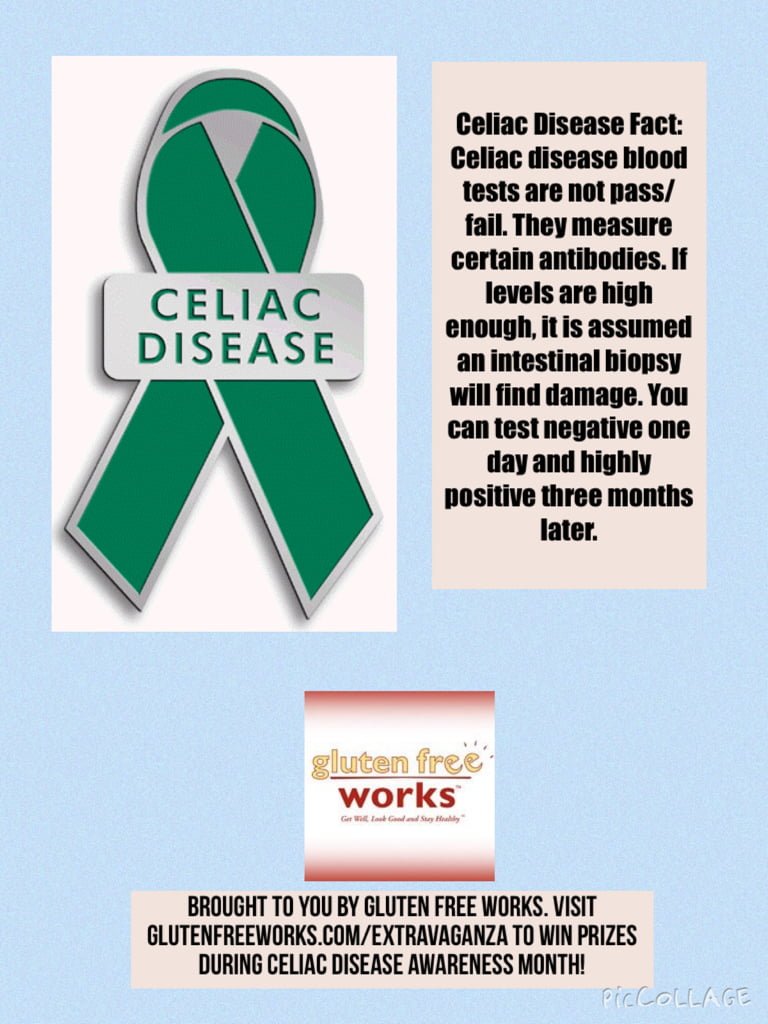
While the gluten-free diet has exploded in popularity, celiac disease remains massively under-diagnosed.

Why? Two Reasons: 

1. The public has shifted its focus to the gluten-free diet and away from celiac disease due to the media. The media likes diets. Diets sell. Oddly named diseases that are difficult to describe in catchy sound bites don’t sell.

2. Doctors do not have the information they need to recognize, diagnose and treat this common disorder. The information exists but there is no authority that actively ensures