Probiotics are friendly bacteria that live in our intestines. When our level of bad bacteria overbalance the good bacteria, we get a condition called dysbiosis. The following video describes three probiotics that decrease inflammation and make…
Wouldn’t it be great to show your doctor how your symptoms are related, or which nutrient deficiencies are affecting your treatment, while you are sitting right there in his office? What about those disbelieving family members who say it’s all in your head, but suffer from symptoms you know stem from celiac disease? (We all know what that is like!)
Now you can show them the answers – and the best part is you don’t have to memorize a thing.
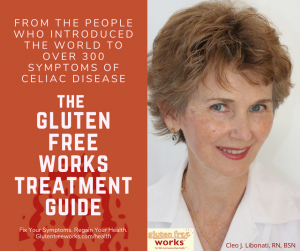
The Gluten Free Works Treatment Guide is fully responsive, meaning you can pull it up on your phone or tablet while you are sitting in your doctor’s office to show him or her information. You can print out any information in printer friendly forms with a click. This means you can print out symptom information for family members or the medical citations listed on each page so your doctor can research further.
The following questions concern whether villous atrophy can be caused by milk and whether anemia can result from milk ingestion. The answer is yes: bovine beta casein enteropathy can cause both. See full explanation below.…
A five year old Canadian boy, diagnosed with severe autism, was cured when the true cause of his mental disorder was found to be celiac disease and he was treated with a gluten-free diet and nutritional supplements.
Photo originally posted to Flickr as “Jack”
His autism was cured because he was never really autistic in the first place. He had celiac disease, an immune response to wheat, barley, rye and oats that damages the intestines leading to malabsorption of nutrients.
Gluten-restricted diets have become increasingly popular among parents seeking treatment for children diagnosed with autism.(1)
What if certain children who are diagnosed with autism actually have celiac disease?
Neurological disorders stemming from celiac disease have been widely documented in medical literature. Some of these conditions include poor balance, tremors, migraines, chronic fatigue, schizophrenia, epilepsy, apathy, depression, insomnia, behavioral disorders, inability to concentrate and anxiety.(2)
Many of these issues are due to nutritional deficiencies resulting from the intestinal damage that celiac disease causes. If caused by celiac disease, they improve once gluten is removed from the diet and the intestine heals and functions properly.
Genuis and Bouchard, researchers at the University of Alberta, recently published the case of the 5-year-old boy who had been diagnosed with severe autism at a specialty clinic for autistic spectrum disorders. After an initial investigation suggested underlying celiac disease and varied nutrient deficiencies, a gluten-free diet was instituted.(1) His diet and supplements were adjusted to secure nutritional sufficiency.
The patient’s gastrointestinal symptoms rapidly resolved, and signs and symptoms suggestive of autism progressively abated.(1)
This case is an example of a common malabsorption syndrome (celiac disease) associated with central nervous system dysfunction and suggests that in some cases, nutritional deficiency may be a cause of developmental delay.
Genuis and Bouchard recommended that all children with neurodevelopmental problems
The Gluten Free Works Treatment Guide Subscription is now Lifetime, so you never have to worry about renewing. The Treatment Guide is our one of a kind online resource that quickly and efficiently helps you…
When you see gluten-free fruit and nut bars in the airport newsstand, you know we’ve come a long way in our society’s awareness of food sensitivities. In my mere two years without gluten, I’ve gone from stuffing my suitcase with Larabars to ensure I don’t starve while away, to, well, still packing them, but knowing that I likely won’t be completely reliant on them the whole trip.
In addition to newsstand snack options, I recently discovered a Dallas/Fort Worth International Airport restaurant having a gluten-free menu. I was thrilled! I would sooner have expected to see a glatt kosher dining area!
The dramatic increase in gluten-free offerings makes me wonder: why the recent influx of news about gluten? Is it that so many more people are getting tested for celiac disease? Are more people questioning their ailing guts and attributing it to gluten?
Hey, I would like to share a very important message with you.
The gluten-free diet is the main treatment for gluten sensitivity and celiac disease. However, removing gluten is not the only thing we must do to regain our health.
Here are the top three things people miss when they go gluten-free. You must do these things in order to achieve good health:
Reduce Inflammation
Inflammation is one of the main causes of disease. In celiac disease and gluten sensitivity, gluten is regarded as the trigger for inflammation. However, inflammation may persist if gluten has caused a dysfunction that is now triggering its own
Low stomach acid is common in celiac disease and dermatitis herpetiformis. It is also common in the general population, as well, affecting 50% of people age 60 years and about 80% by age 85 years. Nevertheless, low stomach acid is not generally looked for as a cause of acute and chronic disorders that rob health with far-reaching effects.
Is Low Stomach Acid New?
No. Low stomach acid (hypochlorhydria), has been well investigated much of the past century in both the general population and those with gluten sensitivity. For example, a 1985 study investigating gastric acid secretion in 116 subjects with dermatitis herpetiformis found that 41% had low stomach acid and 26% were achlorhydric (no acid). Of those older than 50 years, 47% were achlorhydric. When compared to subjects with celiac disease, the frequency of achlorhydria was significantly higher in those with dermatitis herpetiformis than in those with coeliac disease. There was no correlation between achlorhydria and small intestinal villous atrophy (damage).
Why Is Low Stomach Acid Overlooked?
Failure to understand nutrition and malabsorption…an area of science that is barely taught in medical schools is a big factor. Also,
Low iron levels have been associated with increased severity of restless leg syndrome. The following medical case report discusses four patients with low iron and restless leg syndrome who were tested positive for celiac disease…
Do you know someone who bruises easily? Do the marks develop into dark bluish swellings that hurt and take a long time to go away? If you have celiac disease, perhaps you had this problem before starting the gluten-free diet.
Easy bruising is a type of ecchymosis, or superficial bleeding under the skin or mucous membrane, common in untreated celiacs – and may be the only symptom of celiac disease. While always a sign of an underlying problem,









 Low stomach acid is common in celiac disease and dermatitis herpetiformis. It is also common in the general population, as well, affecting 50% of people age 60 years and about 80% by age 85 years. Nevertheless, low stomach acid is not generally looked for as a cause of acute and chronic disorders that rob health with far-reaching effects.

 Do you know someone who bruises easily? Do the marks develop into dark bluish swellings that hurt and take a long time to go away? If you have celiac disease, perhaps you had this problem before starting the gluten-free diet.