Skip to content

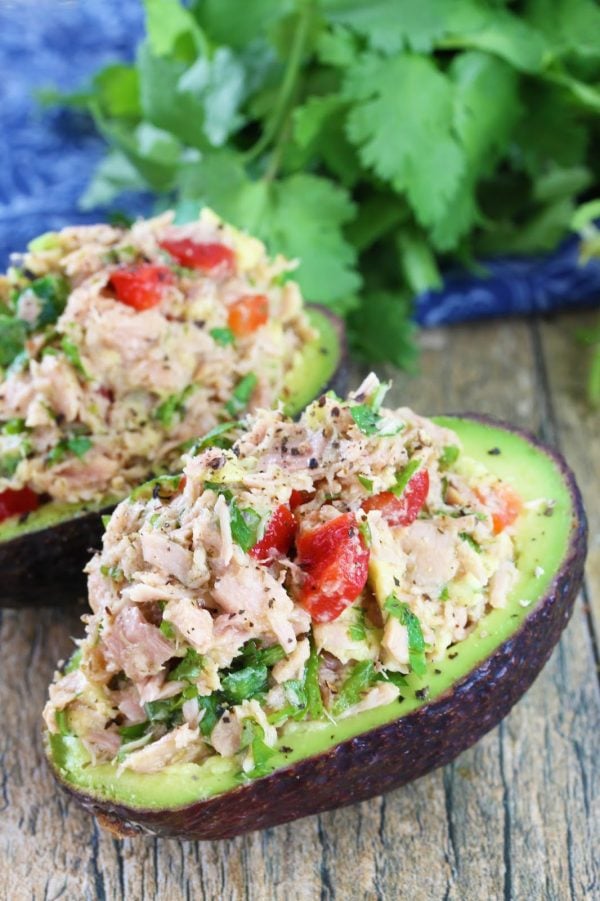
Healthy Tuna Stuffed Avocado – Video Recipe

Rachel, The Stay at Home Chef, dishes up this super nutritious gluten-free recipe! This Healthy Tuna Stuffed Avocado is stuffed with a flavorful southwest mixture of tuna, bell pepper, jalapeno, and cilantro. You can adapt… 

Fast Food Chain Shake Shack Now Offers Gluten-Free Buns

The days of driving past all the fast food joints because NOBODY offers gluten-free buns are over!

Shake Shack just announced they are carrying gluten-free buns at all their locations besides stadiums and ballparks.

Get Your FREE Gluten-Free Holiday Cookbooks

Beyond Celiac has three FREE cookbooks to help you have a Merry Christmas, Happy Hanukkah and Happy New Year!

Whether it’s your first gluten-free holiday season, or if you’ve been doing this for years, you’ll find helpful information here.

German Researchers Create More Reliable Method for Measuring Gluten In Food

gluten-free-diet1The options for gluten-free foods are growing for for people with celiac disease, non-celiac gluten sensitivity, and wheat allergy. German scientists, reporting in the American Chemical Society’s Journal of Agricultural and Food Chemistry, have developed a more reliable way for manufacturers to detect gluten in purified wheat starch, a common ingredient in foods labeled gluten-free.1

Sources:
  1. https://www.eurekalert.org/pub_releases/2016-10/acs-tid101216.php []

Chipotle Mexican Grill Gluten-Free Menu

480px-chipotle_mexican_grill_logo-svg1Chipotle Mexican Grill is a fast food chain with over 2,000 locations in the United States, United Kingdom, Canada, Germany, and France. The company specializes in tacos and burritos and has released a mission statement called Food with Integrity, which highlights its efforts in using naturally-grown ingredients, and serves more naturally raised meat than any other restaurant chain.

The only gluten-containing food on Chipotle’s menu is their flour tortilla, but according to Chipotle’s website, “If you avoid gluten, don’t eat our flour tortillas. If you are highly sensitive to gluten and would like us to change our gloves, just let us know at the start of your order. You should be aware items containing corn, including corn tortillas (chips, soft corn, and crispy corn tortillas) and corn salsa, may have a small amount of gluten from potentially co-mingling with gluten-containing grains in the field.”

Tennis Star Novak Djokovic Is Gluten-Free and Even Cooks for Himself

496589-novak-djokovic-us-open-2016-afp[1]Novak Djokovic is a dominating force on the world tennis stage, having won 11 Grand Slam titles, 26 Masters and five world tour titles. Now he is playing in the 2016 US Open and ranked No. 1.

But in 2009, Djokovic thought his career was over, almost before it began. Plagued by fatigue, breathing difficulties and stomach spasms, Djokovic could barely get through a match.

A nutritionist, Dr. Igor Cetojevic, noticed his poor play and tested him for food sensitivities. Gluten, dairy, and tomatoes came up positive and Djokovic changed his diet to avoid those foods. Within two weeks, he started feeling better and more energetic. He grew leaner, stronger and the wins started piling up. 

Celiac Disease: definition

Before and after photos of repair of web neck in Turner's syndrome. Courtesy Wikimedia
Before and after photos of repair of web neck in Turner’s syndrome. Courtesy Wikimedia

What Is Turner Syndrome?

T urner syndrome is a sex chromosome abnormality in females characterized by failure of the ovaries to respond to pituitary hormone stimulation as a consequence of having complete or partial absence of the two sex (X) chromosomes.

Q: How does Turner syndrome affect the body?

A: Immature ovaries result in amenorrhea, or failure to menstruate, because puberty does not occur.

Turner syndrome is associated with various abnormalities and adults have a reduced life expectancy, mainly related to structural abnormalities of the heart and aorta and an increased risk of atherosclerosis.1

What Is Turner Syndrome In Celiac Disease and/or Gluten Sensitivity?

Sources:
  1. Freriks K, Timmermans J, Beerendonk CC, Verhaak CM, Netea-Maier RT, Otten BJ, Braat DD, Smeets DF, Kunst DH, Hermus AR, Timmers HJ. Standardized multidisciplinary evaluation yields significant previously undiagnosed morbidity in adult women with Turner syndrome. J Clin Endocrinol Metab. 2011 Sep;96(9):E1517-26. doi: 10.1210/jc.2011-0346. []

DHA (Docosahexaenoic Acid) Deficiency

Smoked Salmon...Brain Food that's Good for the Eyes!
Salmon…Brain Food That’s Good for Your Eyes, Heart, Blood Vessels, Blood Sugar, Liver, Muscles, and Fights Inflammation!

What Is DHA?

Docosahexaenoic acid (DHA) is an essential omega-3 fatty acid that is abundant in the brain, being crucial in brain structure. As such DHA is a key component of neuronal membranes together with arachidonic acid (a major opposing omega-6 fatty acid), making up 15-20% of the brain’s dry mass.

This polyunsaturated fatty acid is obtained from fish sources of food.

In healthy human volunteers, positron emission tomography (PET) has shown that the normal human brain consumes 4.6 mg/day of DHA.1

DHA is particularly concentrated in highly active membranes such as nerve synapses (junctions) and photoreceptors in the eye (retina).

Q: How much DHA is in the retina?

A: DHA makes up more than 30% of the retina.2

In other roles, DHA is an  important building material for the eicosanoids, a large group of highly bioactive hormone-like substances including prostaglandins, leukotrienes, and thromboxanes that are involved in blood clotting, inflammation, and vasoconstriction.

DHA has been shown to increase insulin sensitivity as opposed to the opposite problem of insulin resistance, to improve muscle mass, and protect against non-alcoholic fatty liver disease.3

Egert et al. in a study of people aged 19 to 43 years with normal cholesterol showed that DHA intake significantly increased serum HDL (good) cholesterol. Also, DHA significantly decreased fasting serum triglycerides.4

What Is DHA Deficiency In Celiac Disease and/or Gluten Sensitivity?

Sources:
  1. Rapoport SI. Brain arachidonic and docosahexaenoic acid cascades are selectively altered by drugs, diet and disease. Prostaglandins Leukot Essent Fatty Acids. 2008 Sep-Nov;79(3-5):153-6. Epub 2008 Oct 29. []
  2. Richardson AJ. The importance of omega-3 fatty acids for behavior, cognition, and mood. Scandinavian Journal of Nutrition. 2003;47(2):92-8 []
  3. Espinosa A, Valenzuela R, González-Mañán D, D’Espessailles A, Guillermo Gormaz J, Barrera C, Tapia G. Prevention of liver steatosis through fish oil supplementation: correlation of oxidative stress with insulin resistance and liver fatty acid content. Arch Latinoam Nutr. 2013 Mar;63(1):29-36. []
  4. Egert S, Kannenberg F, Somoza V, et al. Dietary alpha-linolenic acid, EPA, and DHA have differential effects on LDL fatty acid composition but similar effects on serum lipid profiles in normolipidemic humans. J Nutr. 2009;139:861–868. doi: 10.3945/jn.108.103861 []

EPA (Eicosapentaenoic Acid) Deficiency

Macherel...
Macherel…EPA Rich!

What Is EPA?

EPA (eicosapentaenoic acid) is an essential omega-3 fatty acid that is crucial for fetal brain and retina development and the child’s subsequent neurodevelopment among very many other activities in people of all ages.

Omega-3 fatty acids  are polyunsaturated long chain fatty acids which must be obtained from animal foods since they do not occur in plants.

In all ages, EPA is essential for normal brain function.

Q: Why is EPA essential to the way the brain works?

A: EPA helps nerve cells in the brain to communicate with each other.

In pregnancy, EPA may also play a role in determining the length of gestation and in preventing perinatal depression in the mother.1 and is essential for normal growth in children.

EPA is important building material for the eicosanoids, a large group of highly bioactive hormone-like substances including prostaglandins, leukotrienes, and thromboxanes that are involved in blood clotting, inflammation, and vasoconstriction. Its many important functions are described below.

What Is EPA Deficiency?

Sources:
  1. Coletta JM, Bell SJ, and Roman AS. Omega-3 Fatty Acids and Pregnancy. Rev Obstet Gynecol. 2010 Fall; 3(4): 163–171 []

How Gluten Causes Alopecia Areata

Alopecia-Areata-wikimedia-227x300[3]Do you recognize this circular hair loss pattern? It is called alopecia areata. According to the National Alopecia Areata Foundation, “no FDA approved treatment or cure exists yet.”

No cure, eh? It is amazing how many times I hear this “no cure” declaration when I KNOW people who have been cured of the condition in question, in this case, alopecia areata. Maybe they mean no DRUG exists that cures it.

I was recently shopping at a department store to pick up some new exercise shorts when the security guard walked past me.

He was a young man, about twenty-five, medium height with a thick build, pale skin and short cropped black hair. I noticed several round spots where hair was missing from the side and back of his head. It looked like he had taken an electric razor and buzzed those places bare.

I said hi. He replied with a smile and a hello. I told him I didn’t mean to pry, but I noticed the bald spots and asked whether he got them in an accident. He said no, they just started appearing a few years ago and he’s tried everything to get the hair to grow back.

I asked if he was taking zinc supplements. He said no and asked why…

I looked up hair disorders in our Gluten Free Works Health Guide.

According to the Health Guide, alopecia areata is caused by an immune reaction and targets the area and zinc deficiency. The immune reaction can be caused by gluten and the zind deficiency by either not eating enough, or more likely, by malabsorption of zinc – a common problem in people with celiac disease who are not on a gluten-free diet. Taking zinc and following a gluten-free diet can turn around alopecia areata so that the hair grows back.

The guard thanked me about ten times. He was ecstatic to discover that he might have hope of getting his hair back after all.

Now, I don’t know how smart it is to walk up to a stranger and start advising them on their hair loss, but in this case I already knew a number of people whose alopecia areata resolved after they went gluten free.

This is why we gathered medical information from around the world to create the Gluten Free Works Health Guide. So, everyone, no matter where they live, can access it and find out what is causing their symptoms and the steps they need to take to fix them. So, they could discover which of their medications might be depleting the nutrients they need and which foods or supplements they need to ingest to replete their levels. So, they could connect the dots and take charge of their health. So, they could get healthy and stay that way.