Skip to content

Magnesium Deficiency

magnesium
Bananas Are a Good Source of Natural Magnesium.

What Is Magnesium?

Magnesium is an essential mineral predominantly found in the body within cells, where it is vital for their functions.

Here is a summary of what magnesium does in our body:

  1. Co-factor for over 300 enzymes involved in the metabolism of food components and synthesis of many compounds.
  2. Required for nerve transmission.
  3. Required for muscle activity (acts to relax muscles in opposition to calcium which acts to contract).
  4. Acts to maintain heart rhythm.
  5. Required for membrane transport and interactions.
  6. Required for glucose metabolism and energy production within cells.
  7. Component of bone mineralization and tooth formation.
  8. Plays a key role in calcium and phosphorus metabolism and management by parathyroid hormone.
  9. Maintains the structural and functional integrity of vital eye tissues such as lens.1

Only 1% of magnesium is found in blood, but the body must keep blood levels of magnesium constant.

What Is Magnesium Deficiency In Celiac Disease and/or Gluten Sensitivity?

Sources:
  1. Agarwal R, Iezhitsa I, Agarwal P, Spasov A. Magnesium deficiency: does it have a role to play in cataractogenesis? Exp Eye Res. 2012 Aug; 101:82-9. doi: 10.1016/j.exer.2012.05.008. []

Vitamin B3 (Niacin) Deficiency

SumptuousTuna For Niacin.
Sumptuous Tuna For Niacin.

What Is Vitamin B3 (Niacin)?

Niacin is an essential water-soluble B vitamin that is required by all cells of the body.

During digestion of food containing it, niacin (the form in food) is changed in the small intestines to the active form niacinamide (niacin plus an amide group), which is then absorbed into the bloodstream. 

Niacinamide is converted by the body into co-enzymes which are present in all cells. These are niacinimide adenine dinucleotide (NAD) and NADP. NADP is formed when the body adds a phosphate to NAD.

Q: How do these enzymes work?

A: These enzymes function in oxidation-reduction reactions essential for release of energy from carbohydrates, fats, and proteins and are needed as components for more than 200 enzymes involved in metabolism.

In addition to producing energy, niacinamide is essential for healthy skin and the mucosal lining of the digestive tract, normal functioning of the brain and nervous system, and production of steroid hormones in adrenal glands and hormones in sex glands.  Functions are more fully described below.

Urinary excretion of niacin cannot be detected when vitamin intake is below the required levels. On the other hand, when intake exceeds saturation in the body, the vitamin and/or its metabolites are actively excreted into urine to prevent excessive toxicity of the vitamins.1

What Is Niacin Deficiency In Celiac Disease and/or Gluten Sensitivity?

Sources:
  1. Shibata K, Hirose J, Fukuwatari T. Relationship Between Urinary Concentrations of Nine Water-soluble Vitamins and their Vitamin Intakes in Japanese Adult Males. Nutr Metab Insights. 2014 Aug 5;7:61-75. doi: 10.4137/NMI.S17245. eCollection 2014. []

Zinc Deficiency

Oysters Have Mega Zinc!

What Is Zinc?

Zinc is an essential trace mineral that is involved in numerous aspects of cellular metabolism, being essential for activation of almost 200 enzymes that have vital roles in the body.

Q: What happens when enzymes do not get activated?

A: When enzymes do not get activated, they cannot perform their necessary functions which, in turn, damages health.

Zinc promotes healthy skin, hair, immunity, fertility, and growth.

A daily intake of zinc is required to maintain a steady state because the body has no specialized zinc storage system.1 Functions are more fully described below.

What Is Zinc Deficiency in Celiac Disease?

Sources:
  1. http://ods.od.nih.gov/factsheets/Zinc-HealthProfessional/ []

Vitamin B6 (Pyridoxine) Deficiency

Lots of Pyridoxine In This Pie...Chicken, Cheese,Spinach, Tomato
Lots of Pyridoxine In This Pie…Chicken, Cheese,Spinach, Tomato

What Is Vitamin B6 (Pyridoxine)?

Pyridoxine is an essential vitamin that is required for the health of nerves, bones, blood, arteries, blood sugar, the immune system and metabolism of proteins.

Two important functions of pyridoxine involve coenzymes that are involved in regulating the metabolism of proteins like methionine and tryptophan and their intermediate amino acid building blocks.

In total, the coenzymic form of vitamin B-6, pyridoxal phosphate (PLP), serves as a coenzyme for over 140 enzymes in human metabolism.1  Functions are more fully described below.

Magnesium is required for pyridoxine to actually attach to enzymes dependent on it.

Because pyridoxine is excreted from the body by the kidneys, urinary excretion of it cannot be detected when vitamin intake is below the required levels. On the other hand, when intake exceeds saturation in the body, the vitamin and/or its metabolites are actively excreted into urine to prevent excessive toxicity of the vitamins.2

Smoking blocks use of pyridoxine.

What Is Pyridoxine Deficiency In Celiac Disease and/or Gluten Sensitivity?

Sources:
  1. Gregory JF 3rd1, Park Y, Lamers Y, Bandyopadhyay N, Chi YY, Lee K, Kim S, da Silva V, Hove N, Ranka S, Kahveci T, Muller KE, Stevens RD, Newgard CB, Stacpoole PW, Jones DP. Metabolomic analysis reveals extended metabolic consequences of marginal vitamin B-6 deficiency in healthy human subjects. PLoS One. 2013 Jun 11;8(6):e63544. doi: 10.1371/journal.pone.0063544. []
  2. Shibata K, Hirose J, Fukuwatari T. Relationship Between Urinary Concentrations of Nine Water-soluble Vitamins and their Vitamin Intakes in Japanese Adult Males. Nutr Metab Insights. 2014 Aug 5;7:61-75. doi: 10.4137/NMI.S17245. []

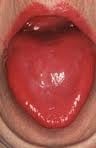
Tongue – Fiery Red, Smooth, Burning

niacin deficiencyWhat Is A Fiery Red, Smooth, Burning Tongue?

A fiery red, smooth, burning tongue is an alteration in tongue tissue that is characteristic of advanced niacin deficiency.1

Q: How does niacin deficiency cause the tongue to be red and sore?

A: Niacin is an essential B vitamin that is required for a healthy tongue and by all body cells as well. Deficiency first shows in tissues with rapid cellular turnover, such as mucosal cells of the tongue.

When absorbed from the small intestines, niacin (the form in food) becomes the active form niacinamide. Niacinamide is converted by the body into co-enzymes which are present in all cells. These enzymes function in oxidation-reduction reactions essential for release of energy from carbohydrates, fats, and proteins and are needed as components for more than 200 enzymes involved in metabolism.

In addition to producing energy, niacinamide is essential for healthy skin and the mucosal lining of the digestive tract, normal functioning of the brain and nervous system, and production of steroid hormones from adrenal glands and hormones from sex glands.

What Is A Fiery Red, Smooth, Burning Tongue In Celiac Disease and/or Gluten Sensitivity?

Sources:
  1. Krause’s Food, Nutrition, & Diet Therapy. 10th Edition. Kathleen Mahan, Sylvia Escott-Stump. 2000. W.B. Saunders Company. []

Vitamin B12 Deficiency Anemia

What Is Vitamin B12 Deficiency Anemia? Vitamin B12 deficiency anemia is a megaloblastic anemia that is characterized by defective DNA synthesis of red blood cells due to a lack of vitamin B12. Vitamin B12 is essential… 

Geographic Tongue

Geographic Tongue Due to Riboflavin Deficiency.

 What Is Geographic Tongue?

Geographic tongue is a painful alteration in tongue tissue that is characteristic of riboflavin (vitamin B2) deficiency.1

Q: How does the tongue surface appear?

A: Areas of inflamed tissue with flattened papillae develop among areas of normal tissue, giving a map-like appearance to the tongue surface. There are often swollen papillae that hurt or sting, such as is seen in the photo to the left.

A diet that does not provide adequate amounts of riboflavin and any condition that 1) interferes with riboflavin absorption from the gut, 2) depletes the vitamin from the body, 3) overuses the vitamin in the body, or 4) adversely affects its use in the body will result in riboflavin deficiency causing geographic tongue.

Riboflavin is essential for converting foodstuffs into energy, maintaining the normal lifespan of red blood cells and maintaining healthy skin, eyes, hair, and nervous system. Riboflavin is converted into its active forms, flavin adenine dinucleotide (FAD) and flavin mononucleotide (FMN). These enzymes are primarily involved as co-factors in oxidation reduction reactions that are essential for cellular energy production and respiration.

Riboflavin is required for the conversion of pyridoxine (vitamin B6) to its functional form and the production of niacin (vitamin B3) from the amino acid tryptophan. Riboflavin has a role in antioxidant status by activating glutathione reductase, which regenerates used glutathione, a powerful antioxidant.

Respiratory infection, exercise, certain diseases, drugs and hormones can adversely influence riboflavin status.2 Stress is a major depleter of riboflavin.

What Is Geographic Tongue In Celiac Disease and/or Gluten Sensitivity?

Sources:
  1. Krause’s Food, Nutrition, & Diet Therapy. 10th Edition. Kathleen Mahan, Sylvia Escott-Stump. 2000. W.B. Saunders Company. []
  2. Lakshmi AV. Riboflavin metabolism–relevance to human nutrition. Indian J Med Res. 1998 Nov;108:182-90. []

Understanding Riboflavin (Vitamin B2) Deficiency in Celiac Disease

Riboflavin is a micronutrient, also known as Vitamin B2, which performs many important functions in the body. Riboflavin is a water-soluble vitamin that releases energy from carbohydrates, amino acids, and lipids. It plays a key role in specific amino acid production and provides antioxidant protection. Riboflavin is essential for growth and production of red blood cells and maintaining healthy skin, eyes, hair, and nervous system.

Riboflavin Deficiency

More than 34% of Americans get less than the RDA because, unlike other vitamins, riboflavin is not found in many foods.

Riboflavin depletion and/or deficiency is common before starting the gluten-free diet treatment. It frequently results from malabsorption due to damage to the small intestinal lining, but can also be depleted by excretion through diarrhea, excessive sweating or excessive urination. It is important to note that riboflavin deficiency can result from low serum proteins, which is a common occurrence in untreated celiac disease.

When riboflavin deficiency appears after starting the gluten-free diet, it is usually due to