Phosphorus is an essential mineral present in every cell of the body mostly in the form of phosphate.
About 85% of phosphorus is present in bone making up a major component of bone formation. As a component of calcium phosphate, phosphorus constitutes 45% of skeletal bone weight while calcium constitutes 40% to support the body.1.
Phosphorus is required for normal tooth development. Inadequate phosphorus in early childhood development makes for defective tooth enamel in permanent teeth.
Phosphorus is crucial for the production of ATP (adenosine triphosphate), a molecule within cells that the body uses to store energy, and is required for production of phosphocreatine to power muscles. Functions are more fully described below.
One gram of protein in food provides approximately 15 mg of phosphorus. In an adult, the body content of phosphorus ia about 700 grams.
What Is Phosphorus Deficiency In Celiac Disease and/or Gluten Sensitivity?
Potassium is a mineral that is crucial for life being essential for every cell, especially nerve and muscle function.
Most potassium is intracellular, meaning it is found within cells while sodium, its opposing mineral (both electrolytes), is found in the fluid surrounding cells.
In muscle contraction, exchange of potassium and sodium takes place so that potassium moves out of muscle cells and sodium moves into them.
With muscle relaxation, potassium moves back into the cells and sodium moves out. Functions are described below.
Importantly, a recent study investigating the association between the metabolic syndrome and potassium intake in the general population found a significant inverse association between potassium intake and metabolic syndrome in adults. That is, the lower the potassium intake, the greater the odds of developing metabolic syndrome. After adjusting for various lifestyle and dietary confounders, subjects in the highest quartile of potassium intake had 39% lower odds for metabolic syndrome compared to those in the lowest quartile. This association was consistent for both sexes. Among the components of metabolic syndrome, potassium intake was inversely related to abdominal obesity and fasting hyperglycemia in multivariate analysis.1
What Is Potassium Deficiency In Celiac Disease and/or Gluten Sensitivity?
Sources:
Shin D, Joh HK, Kim KH, Park SM. Benefits of potassium intake on metabolic syndrome: The fourth Korean National Health and Nutrition Examination Survey (KNHANES IV). Atherosclerosis. 2013 Sep;230(1):80-5. doi: 10.1016/j.atherosclerosis.2013.06.025. [↩]
Proptosis and Lid Retraction are Features of Grave’s Disease, or Hyperthyroidism.
What Is Grave’s Disease (Hyperthyroidism)?
G rave’s disease, or hyperthyroidism, is an autoimmune thyroid disease characterized by diffuse nontender goiter, elevated thyroxine hormone levels (T4, T3), suppressed thyroid stimulating hormone (TSH), and presence of thyroid receptor antibodies in the blood.
The autoantibodies involved are anti-thyroid peroxidase and anti-thyroglobulin antibodies. They bind to the thyroid stimulating hormone receptors, causing thyroid stimulation. These antibodies are detected by blood tests.
Q: What happens to the thyroid gland in Grave’s disease?
A: The thyroid gland is located in the front of the neck. This butterfly shaped gland consists of a large number of closed vesicles that contain a homogenous substance called colloid, which contains the thyroglobulin. Thyroglobulin is an iodine-containing protein secreted by the thyroid gland and stored within its colloid, from which the thyroid hormones thyroxine (T4) and triiodothyroinine (T3) are derived.1
Thyroxine molecule. Atoms are represented as spheres with conventional color coding: hydrogen (white), carbon (grey), oxygen (red), nitrogen (blue), iodine (purple).
T3 is the active hormone and is made from T4. Thyroid hormones are released into the bloodstream as needed to control metabolism, brain development, breathing, heart and nervous system functions, body temperature, muscle strength, skin dryness, menstrual cycles, weight, and cholesterol levels.
Thyroid hormone production is regulated by thyroid-stimulating hormone (TSH), which is made by the pituitary gland in the brain. Normally, when thyroid hormone levels in the blood are low, the pituitary releases more TSH in response to stimulation by the nearby hypothalamus which is continually monitoring levels of thyroxin. When thyroid hormone levels are high, the pituitary decreases TSH production. So in Grave’s disease, release of TSH by the pituitary gland is suppressed by the hypothalamus because thyroid hormone is elevated. Goiter develops from growth stimulation by thyroid stimulating autoantibodies.
What Is Grave’s Disease In Celiac Disease and/or Gluten Sensitivity?
Sources:
Taber’s Cyclopedic Medical Dictionary. 19th ed. F.A. Davis Company. Philadelphia, PA. [↩]
F ollicular hyperkeratosis is an abnormal skin condition characterized by disordered overgrowth of the horny layer of the epidermis with horny plugs filling the openings of hair follicles. The plugs look like bumps in hair follicles.
Follicular hyperkeratosis with corkscrew hairs (coiled hairs in the follicles) appears in scurvy, which is advanced vitamin C deficiency.1
Typical hyperkeratotic papules first appear on the extensor surfaces of the extremities (e.g. the back of upper arms), shoulders, and buttocks.
Phrynoderma is a distinctive form of follicular hyperkeratosis with papule formation in dilated hair follicles believed to be a manifestation of severe malnutrition.
Q: Why does hyperkeratosis develop?
A: Follicular hyperkeratosis develops from lack of necessary nutrients to support healthy skin. Although originally thought to represent only vitamin A deficiency or vitamin C in the case of scurvy, several studies have demonstrated deficiencies of B vitamins and vitamin E. General malnutrition seems to be the strongest association. The clinical picture typically improves with enhanced nutritional status.2
What Is Follicular Hyperkeratosis In Celiac Disease and/or Gluten Sensitivity?
Maronn M, Allen DM, Esterly NB. Phrynoderma: a manifestation of vitamin A deficiency?… The rest of the story. Pediatr Dermatol. 2005 Jan-Feb;22(1):60-3. [↩]
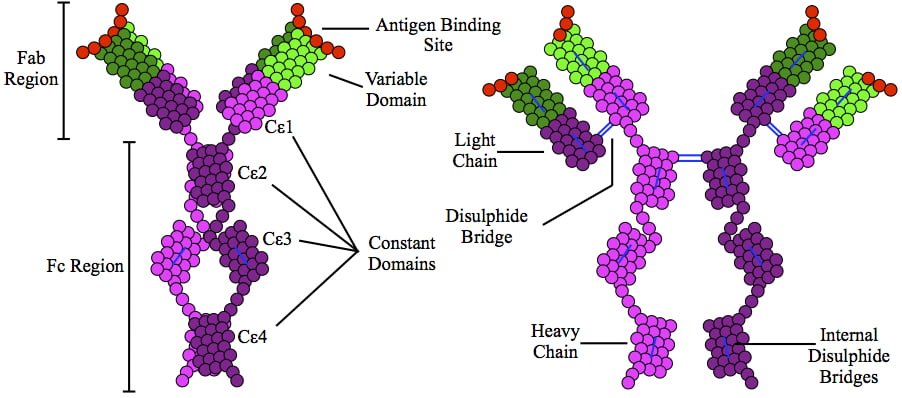
This is a depiction of immunoglobulin E (IgE) antibody which is elevated in allergic reactions.
What Is Allergic Rhinitis?
A llergic rhinitis is an immune disorder characterized by inflammation of the nasal mucosa by an IgE antibody reaction to an allergen.
An allergen is something that triggers an allergic immune response.
Q: What is the immune response?
A: Implicated in the response is an increase in T gamma-delta intraepithelial lymphocytes (IELs), which is a subset of pro-inflammatory T-cells located in the respiratory mucosa. Lymphocytes are white blood cells.
When a person with allergic rhinitis breathes in an allergen such as pollen or dust, the body releases chemicals, including histamine that cause allergy symptoms. For example, hay fever involves an allergic reaction to pollen. A similar reaction occurs with allergy to mold, animal dander, dust, and other allergens that are breathed in.
What Is Allergic Rhinitis In Celiac Disease and/or Gluten Sensitivity?
A metabolic bone disorder characterized by diminished bone mass (density) with retention of normal cell appearance, but fragile strength, and high bone turnover caused by deficiency of calcium and vitamin D in particular and other…
Elevated level of prolactin hormone in blood signifies too much prolactin, which is produced by the anterior pituitary gland and causes impaired estrogen production in females and impaired androgen production in males.
As baby boomers segue from child-rearing to retirement, they find themselves bombarded by the media with information about osteoporosis. It makes sense, considering that more than 44 million American men and women age 50 and older have osteoporosis or its precursor, osteopenia. So between news articles about calcium and vitamin D, Sally Field promoting the drug Boniva on TV commercials and the now-ubiquitous term “weight-bearing exercise,” we are all hearing a great deal about this epidemic.
Yet controversy abounds, with new findings questioning the benefits of calcium as well as the risks versus benefits of osteoporosis medications. The conflicting information is enough to overwhelm even the most media-savvy consumer. But the one continuously advocated method of addressing the condition is exercise. Not only does exercise help to maintain and build strong bones, but it can improve balance and reflexes and thereby prevent falls, the most dangerous threat to those with fragile bones. According to the International Osteoporosis Foundation, 60 percent of those who fracture a hip still cannot walk independently a year later. Clearly, the goal should be to stay strong, agile and upright.
Cancel your subscription?
We're sorry to see you go.
Please select a reason for cancellation.
Please provide additional details.
Your subscription is cancelled
You won't be billed again. If you change your mind, you can subscribe again at any time.
Cancelled
Cancellation request submitted
We've received your request. Your subscription remains active while we process it. We'll email you once it's confirmed.
Cancellation pending
Pause subscription
Your subscription payments will be paused. Your existing access will remain active while your subscription is paused.
Please choose a valid future date.
Resume subscription
Your subscription payments will resume on the normal billing schedule.
Access Content
Affiliate Terms
By joining our Affiliate Program, you agree to the following terms:
1. Eligibility: You must be 18 years or older to participate. We reserve the right to refuse service to anyone for any reason at any time.
2. Promotional Guidelines: Affiliates must not engage in misleading advertising or spam. Promotions must accurately represent our brand and products.
3. Affiliate Links: You must use your unique tracking link to receive credit for referred sales.
4. Prohibited Use: You may not use our branding in a way that may confuse customers or misrepresent your relationship with us.
5. Termination: We reserve the right to terminate your account at any time for breach of these terms.
6. Changes to Agreement: We may update these terms at any time. Continued participation implies acceptance of any changes.
By continuing, you agree to the terms of this Affiliate Agreement.

 What Is Phosphorus?