Small Bowel Volvulus Caused the Enlarged Dark Loops. Courtesy African Journal of Pediatric Surgery.
What Is Volvulus?
V olvulus is twisting of a loop(s) of bowel onto itself which effectively closes it thus preventing digested matter from passing and causing engorgement of the closed loop with gas and fluid.
Q: How does the bowel get untwisted?
A: This condition usually necessitates surgical correction although some do return to their proper position.
The danger is that there may develop necrosis of the twisted loop(s) in which case, if left untreated,death will ensue.
What Is Volvulus In Celiac Disease and/or Gluten Sensitivity?
Tissue Changes in Hyperparathyroidism Causing Brown Tumor. Courtesy Quizlet.com
P rimary hyperparathyroidism is a parathyroid disorder characterized by excessive secretion of parathyroid hormone by one or more parathyroid glands for more than 6 months.
In primary hyperparathyroidism, blood calcium levels are high while phosphorus levels are decreased due to the action of parathyroid hormone.
Parathyroid hormone is produced by the four pea sized parathyroid glands that are located on the thyroid gland in the front of the neck. Partly because the thyroid and parathyroid glands share the same anatomic place in the body and partly because they have similar names, they are often confused although they have completely different actions.
Parathyroid hormone normally keeps calcium and the opposing mineral phosphorus levels in balance by drawing calcium as needed from bones to increase it in blood and releasing excess phosphorus through the kidneys to decrease blood levels.
Primary hyperparathyroidism is commonly caused by an adenoma (tumor) in a parathyroid gland (80%) or 15% due to hyperplasia of gland tissue (overgrowth). It is seldom associated with autoimmune disorders. However, cancer is a possibility.
Q: What is a parathyroid adenoma?
A: A parathyroid adenoma is usually a solitary, well circumscribed, soft, tan reddish-brown nodule with a capsule. Gland tissues outside of the adenoma are normal or slightly shrunken (not needed anymore).1
Untreated, primary hyperparathyroidism results in cyst formations in bone marrow (osteitis fibrosa cystica) and brown tumors in bone tissue. Cysts contain large amounts of fibrous tissue with areas of hemorrhage. Brown tumors contain aggregates of osteoclasts (bone cells), hemorrhage and giant cells resembling neoplasms.2
Here is the symptomatolgy: “Painful Bones, Renal Stones, Abdominal Groans, and Mental Moans.”
What Is Primary Hyperparathyroidism In Celiac Disease and/or Gluten Sensitivity?
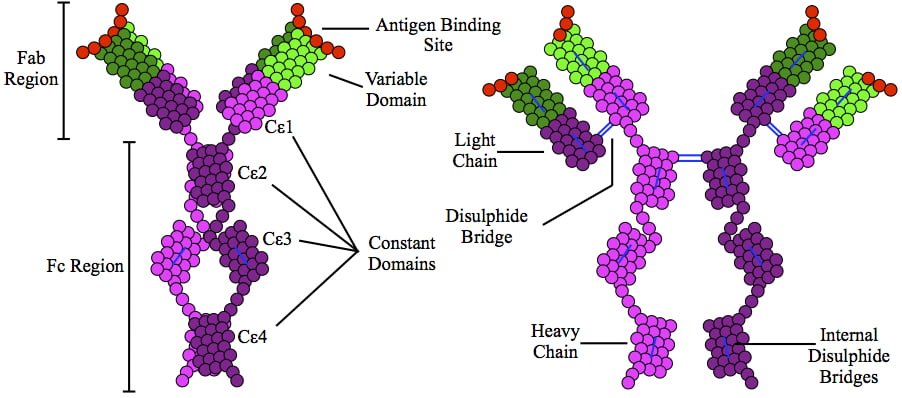
This is a depiction of immunoglobulin E (IgE) antibody which is elevated in allergic reactions.
What Is Allergic Rhinitis?
A llergic rhinitis is an immune disorder characterized by inflammation of the nasal mucosa by an IgE antibody reaction to an allergen.
An allergen is something that triggers an allergic immune response.
Q: What is the immune response?
A: Implicated in the response is an increase in T gamma-delta intraepithelial lymphocytes (IELs), which is a subset of pro-inflammatory T-cells located in the respiratory mucosa. Lymphocytes are white blood cells.
When a person with allergic rhinitis breathes in an allergen such as pollen or dust, the body releases chemicals, including histamine that cause allergy symptoms. For example, hay fever involves an allergic reaction to pollen. A similar reaction occurs with allergy to mold, animal dander, dust, and other allergens that are breathed in.
What Is Allergic Rhinitis In Celiac Disease and/or Gluten Sensitivity?
C hronic diarrhea is an intestinal motility disorder characterized by 1) alteration in stool formation causing loose to fluid movements and quantity of movements with or without abdominal pain and 2) interference with normal carbohydrate salvage by the intestinal microbe population.
The severity of diarrhea is determined by the frequency and quantity of fluid lost.
Q: What is carbohydrate salvage by microbes in the colon?
A: Carbohydrate salvage in the colon is the necessary process whereby billions of microbes normally present in the colon work to breakdown undigestible carbohydrate foodstuffs such as fiber that continually arrive from the small intestine.
The microbial action releases energy to the body that would otherwise be lost with defecation, generates short-chain fatty acids, and stimulates sodium and fluid absorption. In this important process, butyrate and proprionate are produced which nourish the colonocytes (cells that line the colon), and acetate is produced for the liver.
While diarrhea may be a common symptom of small bowel mucosal disease, the consequent malabsorption can lead to substantial malnutrition and nutrient deficiencies. The small intestine, unlike the colon, has been relatively inaccessible, and systematic evaluation is often necessary to identify and treat small intestinal mucosal diseases that lead to diarrhea. All patients with severe diarrhea or diarrhea associated with features suggestive of malabsorption may have a disease of the small intestinal mucosa that requires careful evaluation and targeted management.1
What Is Chronic Diarrhea In Celiac Disease and/or Gluten Sensitivity?
Sources:
Murray JA1, Rubio-Tapia A. Diarrhoea due to small bowel diseases. Best Pract Res Clin Gastroenterol. 2012 Oct;26(5):581-600. doi: 10.1016/j.bpg.2012.11.013. [↩]
Baby with Allergic Reaction to Peanuts. GFW photo.
What Is Food Allergy?
F ood allergy is an abnormal immune response to food proteins that may damage the small intestinal lining and produce malabsorption of food. The reaction is usually delayed which makes it difficult to identify the offending food that is causing symptoms.
Q: How does food allergy develop?
A: The gastrointestinal tract serves not only to digest and absorb foodstuffs but also to protect the body from unwanted substances. When allergic food substances are eaten, the immune response that is triggered in the gut produces inflammation with symptoms such as pain, vomiting and loose bowels.
Inflammation causes swelling of the gut lining that can interfere with the passage of nutrients through it to the body which results in malabsorption. Malabsorption deprives the body of nutrients needed for normal function.
Symptoms other than digestive may involve skin rashes, hives, and respiratory difficulties that can be distressing and life-threatening.
What Is Food Allergy In Celiac Disease and/or Gluten Sensitivity?
Bristol Stool Chart Showing Normal and Abnormal Stool.
What Is Chronic Constipation Alternating With Diarrhea?
Chronic constipation alternating with diarrhea is an intestinal motility disorder, or irregularity, characterized by alteration in stool formation, consistency, and evacuation which results in a bowel movement that consists of some hard or balled stool along with some loose stool that can cause leakage.
Q: How do irregular movement patterns develop in the colon?
A: The colon produces irregular movements as a result of problems that originate in the colon (large intestine) itself and/or the small intestine which then affects function of the colon.
Here are listed the many types of problems or diseases that cause these abnormal bowel movements:
Disorders that adversely affect the colon, an organ which must propel stool, remove excess water, absorb electrolytes, ferment undigested food material that passes into it, and produce nutrients from the fermentation process:
Poor diet that does not contain adequate nutrition, fiber, probiotics, prebiotics, and water to form normal stool.
Diet that contains irritating, toxic or allergenic food that cause spasms.
Diseases that inflame the mucosa lining such as collagenous colitis, altering the proper absorption of water and electrolytes.
Diseases that damage and swell the colon walls, such as Crohn’s disease, ulcerative colitis, and diverticulitis.
Diseases that obstruct the lumen or passageway so that stool passes with difficulty.
Diseases that hamper normal peristalsis (muscle action), such as irritable bowel syndrome (IBS), diabetes and thyroid disease.
Disorders that adversely affect the small intestine, an organ which must digest and absorb nutrients needed by the body while passing unabsorbed food material to the colon:
Diet that conatins too much fat, sugar or artifical sweeteners, causing diarrhea.
Disorders that result in malabsorption, such as gluten enteropathy, milk enteropathy, steatorrhea (fat malabsorption), lactose intolerance, sucrose intolerance, maltose intolerance, and bacterial overgrowth, passing abnormal amounts of undigested food material to the colon where it is fermented producing excessive gas, diarrhea and spasm.
Disorders that impair peristalsis, such as active celiac disease, diabetes, scleroderma, and thyroid disease.
Tumors like cancer and lymphoma impair regular passage of material to colon.
Drugs that impair peristalsis, such as iron supplements, aluminum containing antacids, narcotics, some anti-depressants, some anti-seizure, and some diuretics.
What Is Chronic Constipation Alternating With Diarrhea In Celiac Disease and/or Gluten Sensitivity?
Anorexia or loss of appetite is a reduced desire to eat which can cause unintentional weight loss.
Anorexia is a feature of many disorders caused by malutrition such as celiac disease and aging or gastrointestinal problems such as chronic gastroenteritis, and dysgeusia (loss of taste).
Q: Are there other conditions that cause anorexia?
A: Other underlying problem include medication side effects, infection, chronic pain, depression, grief, dehydration, hormonal dysfunction such as thyroid disease, primary hyperparathyroidism, or Addison’s disease, autoimmune mechanisms such as sarcoidosis, and cancer growth.
What Is Anorexia In Celiac Disease and/or Gluten Sensitivity?
Malnourished Infant With Acute Diarrhea and Swollen Belly.
What Is Acute Diarrhea?
Acute diarrhea is a small intestinal motility disorder characterized by excessively rapid movement of intestinal contents through the small intestine with excessive loss of fluid and electrolytes that leads rapidly to a life threatening hypokalemia (low potassium blood level) and acidosis.
Q: What is hypokalemia?
A: Hypokalemia is characterized by dehydration that may result in vascular collapse, muscular malfunction that may result in paralytic ileus (bowels do not move), paralysis (cannot stand), and respiratory hypoventilation (shallow breathing) or failure, metabolic acidosis resulting from diarrhea, and impaired nerve conduction.1
While diarrhea may be a common symptom of small bowel mucosal disease, the consequent malabsorption can lead to substantial malnutrition and nutrient deficiencies. The small intestine, unlike the colon, has been relatively inaccessible, and systematic evaluation is often necessary to identify and treat small intestinal mucosal diseases that lead to diarrhea. All patients with severe diarrhea or diarrhea associated with features suggestive of malabsorption may have a disease of the small intestinal mucosa that requires careful evaluation and targeted management.2
What Is Acute Diarrhea In Celiac Disease and/or Gluten Sensitivity?
Murray JA1, Rubio-Tapia A. Diarrhoea due to small bowel diseases. Best Pract Res Clin Gastroenterol. 2012 Oct;26(5):581-600. doi: 10.1016/j.bpg.2012.11.013. [↩]
Cancel your subscription?
We're sorry to see you go.
Please select a reason for cancellation.
Please provide additional details.
Your subscription is cancelled
You won't be billed again. If you change your mind, you can subscribe again at any time.
Cancelled
Cancellation request submitted
We've received your request. Your subscription remains active while we process it. We'll email you once it's confirmed.
Cancellation pending
Pause subscription
Your subscription payments will be paused. Your existing access will remain active while your subscription is paused.
Please choose a valid future date.
Resume subscription
Your subscription payments will resume on the normal billing schedule.
Access Content
Affiliate Terms
By joining our Affiliate Program, you agree to the following terms:
1. Eligibility: You must be 18 years or older to participate. We reserve the right to refuse service to anyone for any reason at any time.
2. Promotional Guidelines: Affiliates must not engage in misleading advertising or spam. Promotions must accurately represent our brand and products.
3. Affiliate Links: You must use your unique tracking link to receive credit for referred sales.
4. Prohibited Use: You may not use our branding in a way that may confuse customers or misrepresent your relationship with us.
5. Termination: We reserve the right to terminate your account at any time for breach of these terms.
6. Changes to Agreement: We may update these terms at any time. Continued participation implies acceptance of any changes.
By continuing, you agree to the terms of this Affiliate Agreement.