Skip to content

Smell, Loss of  

Courtesy encyclopedia.lubopitko-bg.com

What Is Loss of Smell?

[dropcap]L[/dropcap]oss of smell is a disorder that is characterized by impaired olfactory sense, or olfaction.

Partial or complete loss of smell can result from malnutrition, chronic rhinitis, polyps, chronic sinusitis, medications, old age, head trauma, Alzheimer’s disease and Parkinson’s disease.

Q: How do we smell things?

A: The sense of smell is complex. It involves specialized olfactory cells that are chemoreceptors, that is, they detect odor molecules in the air we breathe in through our nose and transmit the information to the olfactory area of our brain, called the olfactory cortex, by way of the olfactory tract.   Olfactory cells are located in the top of the nasal cavity.

The ability to smell strongly contributes to the ability to taste, so that individuals with loss of smell have great difficulty in perceiving the taste of food. The result is loss of the appetite for and pleasure from food.
What Is Loss of Smell In Celiac Disease and/or Gluten Sensitivity?

Allergic Rhinitis

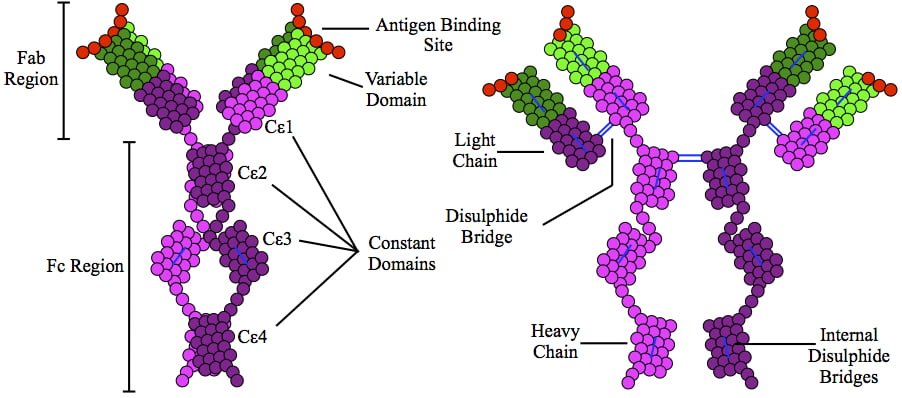
This is a depiction of immunoglobulin E (IgE) antibody which is elevated in allergic reactions.

What Is Allergic Rhinitis?

[dropcap]A[/dropcap]llergic rhinitis is an immune disorder characterized by inflammation of the nasal mucosa by an IgE antibody reaction to an allergen.

An allergen is something that triggers an allergic immune response.

Q: What is the immune response?

A: Implicated in the response is an increase in T gamma-delta intraepithelial lymphocytes (IELs), which is a subset of pro-inflammatory T-cells located in the respiratory mucosa.  Lymphocytes are white blood cells.

When a person with allergic rhinitis breathes in an allergen such as pollen or dust, the body releases chemicals, including histamine that cause allergy symptoms. For example, hay fever involves an allergic reaction to pollen. A similar reaction occurs with allergy to mold, animal dander, dust, and other allergens that are breathed in.

What Is Allergic Rhinitis In Celiac Disease and/or Gluten Sensitivity?