Skip to content

Infertility In Males
P6080044-False-colour_SEM_of_human_seminiferous_tubules-SPLWhat Is Infertility in Males?

[dropcap]I[/dropcap]nfertility in males is characterized by inability to either produce sperm or to produce viable sperm or mobile sperm resulting in prohibiting fertilization of the female ovum (egg).

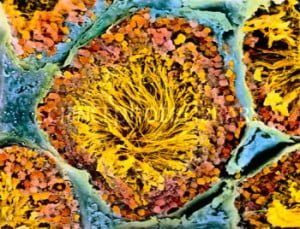
To the left is a false-colour scanning electron micrograph of seminiferous tubules in the human testis (cross section), the site of production and maturation of sperm.

Round undifferentiated cells lining the tubule wall (brown, pink) become sperm by halving their chromosome number, and transforming in a process which takes about two months. During this time the cells move toward the centre of the tubule and develop tails (orange). Mature sperm migrate up the cavity of the tubule and are stored in the epididymis. 200-300 million sperm are released in an average ejaculation. Courtesy of Professor P. Motta, Dept.of Anatomy, University of Rome Science Photo Library.

Male androgen hormones control the development and maintenance of male sex organs and masculine secondary sex characteristics and are required for health, especially bone health.

Testosterone is the major andogen hormone. While most of this steroid is produced by the testes, some is also produced by the adrenal glands.
What Is Infertility In Males In Celiac Disease and/or Gluten Sensitivity?

Hyperprolactinemia (Excess Prolactin Hormone)

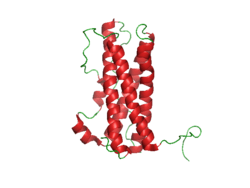
Prolactin Structure. Courtesy Boris TM at Wikipedia.

What Is Hyperprolactinemia?

[dropcap]H[/dropcap]yperprolactinemia is an excess secretion of prolactin hormone causing an elevated blood level that is characterized by its effects on reproduction: in females causing  amenorrhea and in males causing reduced sexual potency.

Q: What is prolactin?

A: Prolactin is a hormone produced by the the anterior pituitary gland that is transported by the bloodstream to stimulate androgen hormone production in male and estrogen hormone production in female sex glands. However, too much prolactin inhibits hormone production of estrogen in women and testosterone in men.

In pregnant females upon delivery of a baby, prolactin stimulates breast development and milk production for the purpose of feeding the infant. Sucking by the infant stimulates the release of prolactin which keeps the milk supply adequate.

Prolactin also promotes autoimmune mechanisms. Prolactin interferes specifically with B cell tolerance induction, enhances proliferative response to antigens and mitogens and increases the production of immune globulins, cytokines and autoantibodies.1

Other conditions that can stimulate prolactin release include nutritional deficiencies, thyroid stimulating hormone (TSH) produced by the pituitary gland, stress, exercise, and anterior pituitary tumors.

What Is An Elevated Prolactin Level In Celiac Disease and/or Gluten Sensitivity?

Sources:
  1. Shelly S, Boaz M, Orbach H. Prolactin and autoimmunity. Autoimmun Rev. 2012 May;11(6-7):A465-70. doi: 10.1016/j.autrev.2011.11.009. []

Hyperprolactinemia: definition

Elevated level of prolactin hormone in blood signifies too much prolactin, which  is produced by the anterior pituitary gland and causes impaired estrogen production in females and impaired androgen production in males.