Peptic Ulcer: definition
A sore in the lining of the esophagus, stomach, or duodenum, usually caused by the bacterium Helicobacter pylori. An ulcer in the stomach is a gastric ulcer; an ulcer in the duodenum is a duodenal…
A sore in the lining of the esophagus, stomach, or duodenum, usually caused by the bacterium Helicobacter pylori. An ulcer in the stomach is a gastric ulcer; an ulcer in the duodenum is a duodenal…
The number of cases of a disease present in a specified population at a given time.
A narrowing of the opening between the stomach and the small intestine.
The process by which muscles in the intestines move food and wastes through the body.
A ringlike band of muscle that opens and closes an opening in the body. An example is the muscle between the esophagus and the stomach known as the lower esophageal sphincter.
A severe complication of celiac disease causing ulcerations and strictures of the small intestine.

[dropcap]O ccipital lobe epilepsy with cerebral calcifications is a seizure disorder that develops from calcium deposits in the brain.
This condition is characterized by repetitive abnormal electrical discharges within the brain that may manifest as paroxysmal, or sudden recurrence of, visual disturbances.
Q: Where is the occipital lobe?
A: The occipital lobe is one of four lobes of the cerebrum, or upper brain. It comprises the lower rear portion of the cerebrum and mainly processes visual images coming to it from the eyes through the optic nerve.
In this image of the left side of the brain, the occipital lobe is pink. From Wikimedia. 
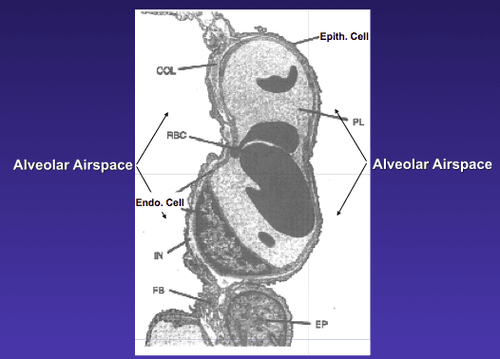
[dropcap]I ncreased pulmonary permeability is a mucosal defect in the lung characterized by alteration of the normally tight epithelial blood-air barrier in the lung apparently caused by inflammation.
Q: What is the blood-air barrier in the lung?
A: This blood-air barrier in the lung consists of the alveolar epithelium (surface cells of the alveoli), the underlying capillary endothelium (surface cells of the capillaries), their basement membranes and the interstitial space between the cell layers.
Alveoli are also called “air sacs.” The exchange of oxygen breathed into air sacs from air on inspiration and carbon dioxide breathed out from capillary blood on expiration occurs between air sacs and capillaries.
The capillary endothelium prevents proteins in blood from leaking (permeating) into the air sacs while allowing water and small molecules to pass. This is why breath has moisture in it.
Little is known about the interactions between the alveolar and the blood compartment.1

[dropcap]B one fractures, or broken bones, are breaks in skeletal bones that occur usually from trauma to the bone itself or by a sudden violent contraction of muscle attached to it.
Q: Are there other causes of bone fractures besides trauma?
A: Fractures may occur spontaneously without trauma in certain pathological disorders such as osteoporosis, osteonecrosis, osteomalacia, osteomyelitis, syphilis, and cancer affecting the bone.
Bone fractures are a major public health problem with treatment costs in the billions of dollars and lead to subsequent disability for many patients.
Hip fractures, for example, may be complicated by infection at the surgical site, pneumonia, decubitus ulcer from lack of movement, and deep vein thrombosis making hip fractures the second leading cause of nursing home admissions in the USA.
Improvement of bone health and reducing risk factors such as smoking, caffeinated drinks (coffee, tea and sodas), and use of alcohol are key to preventing bone fractures.
Bone strength is easily measured by testing bone mineral density (BMD). BMD is evaluated by DEXA scan (dual-energy X-ray absorptiometry). DEXA at the femoral neck and lumbar spine is considered the gold standard to confirm the diagnosis of osteoporosis. Results are expressed as T and Z scores. T scores compare the result with a 20 to 40 year old helathy person while Z scores compare the result with persons in the same age group. Both are measured in standard deviations (SD).
According to WHO criteria (World Health Organization), a T-score of -1 SD or greater denotes normal bone, a T-score between −1 to −2.5 SD denotes osteopenia, and a T-score of −2.5 or more denotes osteoporosis.1
 What Is Early Menopause?
[dropcap]E arly menopause is the permanent cessation of menstruation in females before the age of 40 years characterized by vasomotor instability (hot flashes/cold episodes), psychologic and emotional symptoms and profound changes in the lower genital tract.
The most severe forms present with absent pubertal development and primary amenorrhea termed primary ovarian failure (50% of these cases due to ovarian dysgenesis), whereas forms with post-pubertal onset are termed secondary ovarian failure and are characterized by disappearance of menstrual cycles associated with premature follicular depletion.1
Q: What is ovarian failure?
A: Ovarian failure is dysfunction of the ovaries to continue developing its eggs until about 51 years of age and to produce female hormones which results in infertility. Ovarian failure is diagnosed by this criteria:
The hypothalamus located in the brain is continually monitoring blood levels of estrogen so that when levels are low, it stimulates the nearby pituitary, or master gland, to secrete follicle stimulating hormone (FSH). FSH in turn stimulates the ovaries in females to produce estrogen. In ovarian failure, the ovaries do not respond to FSH.
Some causes in the general population of women include cigarette smoking, viral infections, surgical removal of ovaries, chemotherapy, and autoimmune disorders such as celiac disease, Addison’s disease, hypoparathyroidism, diabetes mellitus, vitiligo, and pernicious anemia.
Who is Affected in the General Population? This heterogeneous disorder affects approximately 1% of women.2