Skip to content

Autism and Learning Disabilities

Child with autism stacking cans. Courtesy Wikimedia.

What Is Autism and Learning Disabilities?

[dropcap]A[/dropcap]utism and learning disabilities constititute a non-progressive psychiatric syndrome appearing in childhood characterized by withdrawal from communication with others often accompanied by repetitive or primitive behaviors.

Primary gastrointestinal pathology may play an important role in the inception and clinical expression of autism.

Autistic children often manifest complex biochemical and immunological abnormalities.1 Following are four  main features involving the digestive tract:

1) Brain dysfunction from an abnormal gut. Common characteristics of hepatic encephalopathy (brain dysfunction caused by liver disease) and a form of autism associated with developmental regression and immune caused gastrointestinal pathology (abnormal) in an apparently healthy child, have led to the proposal that there may be similar mechanisms of toxic brain dysfunction caused by gluten and casein proteins.

Gluten in wheat and casein in cow milk are called exomorphines because they act like morphine (opioid) in the brain. Aberrations in opioid biochemistry are common in autism.

2) Characteristic intestinal pathology. Many autistic children with gut symptoms have ileocolonoic lymphoid nodular hyperplasia and inflammation of the intestinal lining. The colon lesion consisting of a mucosal infiltrate of yo T cells and Celiac Disease8+ T cells and crypt cell proliferation is enhanced significantly, and the basement membrane is thicker than in normal or disease groups. Neutrophil and eosinophil mucosal infiltration and absence on colonic epithelium of HLA-DR antigen suggests a T-helper -2 dominated immune response.

The corresponding small intestinal lesion also shows a distinct inflammatory reaction in which immune-mediated epithelial cell damage is predominant and blood anitibodies of the IgG type colonizes with complement. 

3) Intestinal permeability abnormalities. A subset of children with autism were found to display increased immune reactivity to gluten, the mechanism of which appears to be distinct from that in celiac disease. The increased anti-gliadin antibody response and its association with gastrointestinal symptoms points to a potential mechanism involving immunologic and/or intestinal permeability abnormalities in affected children.2

4) Secondary dysbiosis. Anaerobic dysbiosis develops in the colon caused by fermentation of the overload of undigested food arriving from the small intestine. Billions of microbes in the colon normally breakdown undigested food, however,  in autism, the process is dysfunctional and produces byproducts that are toxic to the brain resulting in encephalopathy.

What Is Autism and Learning Disabilities In Celiac Disease and/or Gluten Sensitivity?

Sources:
  1. Wakefield AJ, Puleston M, Montgomery SM, Anthony A, O’Leary JJ, Murch SH. Review Article: the concept of entero-colonic encephalopathy, autism, and opioid receptor ligands. Aliment Parmacol Ther. 2002; 16:663-674. []
  2. Lau NM, Green PH, Taylor AK, Hellberg D, Ajamian M, Tan CZ, Kosofsky BE, Higgins JJ, Rajadhyaksha AM, Alaedini A. Markers of Celiac Disease and Gluten Sensitivity in Children with Autism. PLoS One. 2013 Jun 18;8(6):e66155. Print 2013. []

Insomnia

insomnia gluten celiac disease symptomWhat Is Insomnia?

[dropcap]I[/dropcap]nsomnia is a distressing sleep disorder that includes inability to fall asleep, inability to stay asleep, and inability to get deep sleep depending on the type of insomnia.

Q: What are the types of insomnia?

A: There are two types of insomnia: primary or secondary which have different causes.

1. Primary insomnia is characterized by sleeplessness due to reduction of synthesis of neurotransmitters (brain chemicals) in the central nervous system (brain) required for sleep, especially melatonin. Melatonin is produced during the night hours by the pineal gland from tryptophan, an essential amino acid derived from food.

Neurotransmitters are released when the axon terminal of a presynaptic neuron (nerve cell) is stimulated and acts by stimulating or inhibiting a target nerve cell.

2. Secondary insomnia has many causes. It can be a feature of malnutrition, lack of exercise, heartburn, mental disorders such as dementia and psychosis, emotional disorders such as depression and anxiety, guilt, worry, many conditions that involve itchiness, pain, disability, and a side effect of certain medications.

What Is Insomnia In Celiac Disease and/or Gluten Sensitivity?

Xerophthalmia

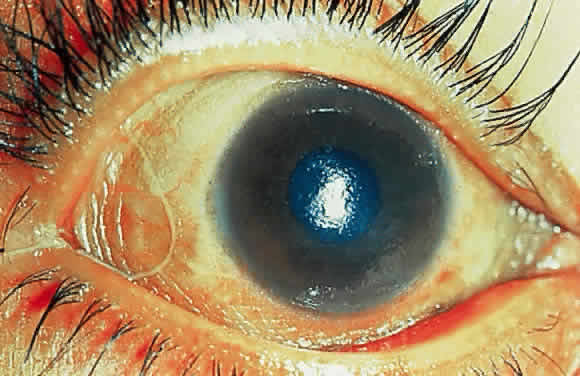
Marked conjunctival and corneal xerosis. The entire bulbar conjunctiva is dry and thickened and almost skinlike. (Sommer A, Sugana T, Djunaedi E, Green R: Vitamin A-responsive panocular xerophthalmia in a healthy adult. Arch Ophthalmol 96:1630, 1978)

What Is Xerophthalmia?

[dropcap]X[/dropcap]erophthalmia is a serious condition of extreme drying and thickening of the conjunctiva following chronic inflammation and failure to make tears, characterized by hazy, dry cornea.

Vitamin A is obtained from the diet and is required in the cornea for maintaining epithelial (surface cell) health.1

Xerophthalmia is most often associated with malnutrition involving chronic, severe vitamin A deficiency and may develop from chronic liver disease, intestinal disorders such as celiac disease, pancreatitis, and extensive bowel surgery that cause malabsorption.

It may also develop in autoimmune diseases such as Sjogrens syndrome.

Q: What is the prognosis for xerophthalmia?

A: Xerophthalmia has the potential to rapidly advance to corneal necrosis (keratomalacia) and blindness.

What Is Xerophthalmia In Celiac Disease and/or Gluten Sensitivity?

Sources:
  1. Alwitry A. Vitamin A deficiency in coeliac disease. Br J Ophthalmol. 2000 September; 84(9): 1075. doi:  10.1136/bjo.84.9.1075e []

Schizophrenia

schizophrenia gluten
PET scan showing schizophrenia. Courtesy Wikimedia.

What Is Schizophrenia?

[dropcap]S[/dropcap]chizophrenia is a thought disorder characterized by psychotic symptoms and inappropriate and bizarre behavior.

Schizophrenia involves dysfunction in any of these areas:

  • Cognition which are thinking skills that include intellect, language, mathematical ability, memory, perception, reasoning, judgment, learning, and imagination.
  • Interpersonal relationships.
  • Ability to work or attend education.
  • Ability to take care of physical and financial needs.

Q: What are psychotic symptoms?

A: In psychosis the symptoms vary but include loss of contact with reality shown by hallucinations, delusions, disorganized speech, and disorientation. Some may be depressed or manic. Some may be withdrawn and mute while others may become violent if frustrated or thwarted.

In hallucinations, affected persons see what is not real such as a burgler in the process of robbing them but which is not really happening or hear voices that are not real.

In delusions, affected persons may express strange ideas, claim to read minds or that they are a famous person living or dead.

Early-onset schizophrenia with onset before age 18 is defined by the same diagnostic criteria as in adults because it is continuous with adult schizophrenia. The onset before age 12 years comprises less than 1% of adult cases, and onset from age 12–18 years constitutes about 12–33% of all adult cases of schizophrenia.1

What Is Schizophrenia In Celiac Disease and/or Gluten Sensitivity?

Sources:
  1. Pagsberg AK, Tarp S, Glintborg D, Stenstrøm AD, Fink-Jensen A, Correll CU, Christensen R. Antipsychotic treatment for children and adolescents with schizophrenia spectrum disorders: protocol for a network meta-analysis of randomised trials. BMJ Open. 2014 Oct 10;4(10):e005708. doi: 10.1136/bmjopen-2014-005708. []

Blepharitis, Non-Infectious (Swollen Eyelids)

Photo showing swollen eyelids in blepharitis. Courtesy Wikimedia
Swollen Eyelids in Blepharitis. Courtesy Wikimedia

What Is Non-Infectious Blepharitis?

[dropcap]N[/dropcap]on-infectious blepharitis is an inflammatory condition of the eyelids that is NOT caused by an invading organism but rather nutritional deficiencies. It is characterized by non-ulcerative inflammation of the hair follicles and lacrimal glands along the eyelid edges.

Q: What  is the difference between inflammation and an invading organism which causes inflammation?

A: An invading organism such as Staphylococcus aureus, a common bacteria on the body’s surface, is called a stye. Styes are treated with antibiotics and resolve. Whereas, non-infectious blepharitis does not respond to antibiotics because there is no infection.

The eyelids are an important structural defense against infection and threats to the eye through blinking and tear production. Their continual pattern of blinking every few seconds sweeps away debris and keeps the eye moistened with tears.

Tears are made by the meibomian glands in the eyelids and consist of fatty acids, water and mucous and also contain anti-microbial substances.

Failure of the meibomian glands to function properly, called meibomian gland dysfunction or MGD, is a chronic, diffuse abnormality characterized by terminal duct obstruction (plugs) and/or changes in the amount or quality of the glandular secretion called meibom (tears). This may result in alteration and/or insufficiency of the tear film, symptoms of eye irritation, clinically apparent inflammation, and disease of the eye surface.

What Is Non-Infectious Blepharitis In Celiac Disease and/or Gluten Sensitivity?

Blurred Vision, Unexplained

blurred visionWhat Is Unexplained Blurred Vision?

[dropcap]U[/dropcap]nexplained blurred vision is unclear or distorted vision that is not caused by allergy, poor refraction (eye test), medication side effects, metabolic disorders, or defects in any part of the eyeball, optic nerve, or in the occipital area of the brain resulting from such problems as calcifications, aneurysm, or tumors.

What Is Unexplained Blurred Vision In Celiac Disease and/or Gluten Sensitivity?

PMS (Premenstrual Syndrome) 

PMSWhat Is PMS (Premenstrual Syndrome)?

[dropcap]P[/dropcap]remenstrual syndrome is a menstrual disorder that occurs regularly during the last week of the luteal phase of the menstrual cycle and starts to subside a few days before menstruation begins and is absent the week following menstruation. It is characterized by distressing mental, emotional, and physical features.

Symptoms must occur most months in the year previous to diagnosis. Currently, the American Psychiatric Association terms this disorder “premenstrual dysphoric disorder” (PMDD).

What Is Premenstrual Syndrome In Celiac Disease and/or Gluten Sensitivity?

Edema

Pitting edema. Right photo shows that indent remains from pressing. Courtesy wikimedia.

What Is Edema?

[dropcap]E[/dropcap]dema is an abnormal swollen condition of the skin characterized by excess extracellular fluid volume, meaning there is an increase of the fluid that normally surrounds cells. Edema may be hardly noticeable or it can become extensive.

Edema can have various appearances and can develop from various causes.

Q: What are the appearances and causes of edema?

A: Here are the appearances of edema:

  • Pitting edema. It is called pitting edema if when the skin is pressed with a finger, the indent remains. This edema results from fluid leaking out of the bloodstream into the surrounding tissues. Pitting edema can be a feature of many disorders including heart disease, kidney disease, vascular disease, cancer, and malnutrition.
  • Myxedema is a firm swelling or thickening of subcutaneous skin that does not pit, as seen in thyroid disease.

Here are causes of edema:

  • Local edema as a response to trauma or infection.
  • Lower extremity edema from poor circulation and malnutrition.
  • Edema in the lungs from right sided heart disease.
  • Abdominal edema from liver disease, intestinal disease.
  • Body wide edema from heart disease, kidney disease, thyroid disease.

What Is Edema In Celiac Disease and/or Gluten Sensitivity?

Ichthyosis, Acquired  

Acquired Icthyosis.
Acquired Icthyosis.

What Is Acquired Ichthyosis?

[dropcap]A[/dropcap]cquired ichthyosis is an uncommon, nonhereditary cutaneous disorder characterized by dry, rough skin with prominent symmetrical scaling that involves significant portions of the body.

Most microscopic studies of acquired ichthyosis exhibit hyperkeratosis (thickened skin) with a reduced or absent granular layer.1

Q: What is the granular layer of skin?

A: The granular layer is the third cell layer  (of five)  composing the epidermis, or outer surface of skin.

Acquired icthyosis has been associated with internal disease including malignancies, autoimmune/inflammatory, metabolic, endocrine, and infectious diseases, and medication use.

What Is Acquired Ichthyosis In Celiac Disease and/or Gluten Sensitivity?

Sources:
  1. Patel N, Spencer LA, English JC 3rd, Zirwas MJ. Acquired ichthyosis. J Am Acad Dermatol. 2006 Oct;55(4):647-56. []

Psoriasis: definition

A chronic relapsing dermatosis characterized by scaling, erythema (redness), and less commonly pustulation that is an associated disorder of celiac disease involving deficiencies of omega-3 fatty acids, vitamin D, and zinc – features of malnutrition.…