Skip to content

Early Menopause or Ovarian Failure

fimbria_ovaricaWhat Is Early Menopause?

[dropcap]E[/dropcap]arly menopause is the permanent cessation of menstruation in females before the age of 40 years characterized by vasomotor instability (hot flashes/cold episodes), psychologic and emotional symptoms and profound changes in the lower genital tract.

The most severe forms present with absent pubertal development and primary amenorrhea termed primary ovarian failure (50% of these cases due to ovarian dysgenesis), whereas forms with post-pubertal onset are termed secondary ovarian failure and are characterized by disappearance of menstrual cycles associated with premature follicular depletion.1

Q: What is ovarian failure?

A: Ovarian failure is dysfunction of the ovaries to continue developing its eggs until about 51 years of age and to produce female hormones which results in infertility.  Ovarian failure  is  diagnosed by  this criteria:

  • High levels in the blood of follicle stimulating hormone secreted by the pituitary gland, and
  • Low levels of estrogen secreted by the ovaries.

The hypothalamus located in the brain is continually monitoring blood levels of estrogen so that when levels are low, it stimulates the nearby pituitary, or master gland, to secrete follicle stimulating hormone (FSH). FSH in turn stimulates the ovaries in females to produce estrogen. In ovarian failure, the ovaries do not respond to FSH. 

Some causes in the general population of women include cigarette smoking, viral infections, surgical removal of ovaries, chemotherapy, and autoimmune disorders such as celiac disease, Addison’s disease, hypoparathyroidism, diabetes mellitus, vitiligo, and pernicious anemia.

Who is Affected in the General Population? This heterogeneous disorder affects approximately 1% of women.2
What Is Early Menopause in Celiac Disease?

Sources:
  1. Beck-Peccoz P, Persani L. Premature ovarian failure. Orphanet J Rare Dis. 2006 Apr 6;1:9. []
  2. Beck-Peccoz P, Persani L. Premature ovarian failure. Orphanet J Rare Dis. 2006 Apr 6;1:9. []

Hyperprolactinemia (Excess Prolactin Hormone)

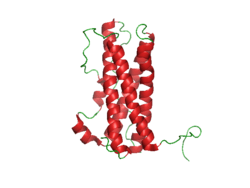
Prolactin Structure. Courtesy Boris TM at Wikipedia.

What Is Hyperprolactinemia?

[dropcap]H[/dropcap]yperprolactinemia is an excess secretion of prolactin hormone causing an elevated blood level that is characterized by its effects on reproduction: in females causing  amenorrhea and in males causing reduced sexual potency.

Q: What is prolactin?

A: Prolactin is a hormone produced by the the anterior pituitary gland that is transported by the bloodstream to stimulate androgen hormone production in male and estrogen hormone production in female sex glands. However, too much prolactin inhibits hormone production of estrogen in women and testosterone in men.

In pregnant females upon delivery of a baby, prolactin stimulates breast development and milk production for the purpose of feeding the infant. Sucking by the infant stimulates the release of prolactin which keeps the milk supply adequate.

Prolactin also promotes autoimmune mechanisms. Prolactin interferes specifically with B cell tolerance induction, enhances proliferative response to antigens and mitogens and increases the production of immune globulins, cytokines and autoantibodies.1

Other conditions that can stimulate prolactin release include nutritional deficiencies, thyroid stimulating hormone (TSH) produced by the pituitary gland, stress, exercise, and anterior pituitary tumors.

What Is An Elevated Prolactin Level In Celiac Disease and/or Gluten Sensitivity?

Sources:
  1. Shelly S, Boaz M, Orbach H. Prolactin and autoimmunity. Autoimmun Rev. 2012 May;11(6-7):A465-70. doi: 10.1016/j.autrev.2011.11.009. []

Menopause, Early: definition

The permanent cessation of menstruation beginning 2 to 4 years earlier in celiac women characterized by vasomotor instability, psychologic and emotional symptoms and profound changes in the lower genital tract. Early menopause is a symptom… 

Hyperprolactinemia: definition

Elevated level of prolactin hormone in blood signifies too much prolactin, which  is produced by the anterior pituitary gland and causes impaired estrogen production in females and impaired androgen production in males.