[dropcap]P[/dropcap]rolonged prothrombin time (PT) is a laboratory blood test result showing that blood clots too slowly which makes the patient subject to abnormal bleeding.
Q: What does the prothrombin time (PT) test measure?
A: The prothrombin test measures the clotting ability of blood protein factors I, II (prothrombin), V, VII, and X. If any of these factors are too low, it takes longer than normal for the blood to clot. Prothrombin is a vitamin K dependent factor meaning a deficiency of vitamin K will cause low prothrombin.
Blood is drawn into a blood collection tube with a light blue stopper which has a buffering additive. Tubes must be completely filled.
What Is Prolonged Prothrombin Time In Celiac Disease and/or Gluten Sensitivity?
This is a model of Immunoglobulin-G Antibody (IgG)
What Are Anti-Gliadin Antibodies?
[dropcap]A[/dropcap]nti-gliadin antibodies (AGA) are produced by the body as an immune response against partially digested gliadin peptides (fragments) that have abnormally entered the body from the intestinal tract. Gliadin is a protein in wheat grain.
Anti-gliadin antibodies circulating in blood are measured by laboratory testing on blood that is drawn. The antibodies are both immunoglobulin A (IgA) and immunoglobulin G (IgG) types, which are termed AGA-IgA and AGA-IgG.
The presence of anti-gliadin antibodies in blood is an abnormal laboratory finding. That is, when the intestinal lining is healthy and able to keep out undigested matter from the body, there are no molecules of gliadin present to trigger the immune system for defense.
Q: Who produces anti-gliadin antibodies?
A: Persons, with or without celiac disease, can produce anti-gliadin antibodies if and when leaky gut (increased intestinal permeability) develops that then allow gliadin peptides to get into the bloodstream.
Gliadin itself causes leaky gut, but there are other causes such as various foods, intestinal infections, medications, and other diseases of the gastrointestinal tract. Whatever the cause of leaky gut, if poorly digested gliadin is present, it can slip through the leaky lining and enter the bloodstream where it can trigger an antibody response by anti-gliadin antibodies.
What Are Anti-Gliadin Antibodies In Celiac Disease and/or Gluten Sensitivity Or Non-Celiac Gluten Sensitivity?
[dropcap]E[/dropcap]levated bone alkaline phosphatase (BALP) is a laboratory result that indicates an abnormal blood level of this bone enzyme.
A bone alkaline phosphatase blood level is one of the most frequently used biochemical markers of bone formation.
Q: Why is the purpose of bone alkaline phosphatase?
A: Bone alkaline phosphatase is produced by bone cells called osteoclasts in normal bone maintenance for the purpose of breaking down old or damaged bone so that other bone cells called osteoblasts can fill in the excavated areas with new bone. This process keeps bone stong and healthy.
Elevated bone alkaline phosphatase shows that more bone is being broken down than is being replaced. It can be caused by hyperparathyroidism, bone tumors from cancer, and malnutrition.
What Is Elevated Bone Alkaline Phosphatase (BALP) In Celiac Disease and/or Gluten Sensitivity?
[dropcap]H[/dropcap]ypokalemia means the level of potassium in the bloodstream is too low to meet metabolic needs of the body for this mineral and is characterized by metabolic acidosis, altered nerve conduction and muscle contraction.
Rapid potassium loss can result in life-threatening hypokalemic rhabdomyolysis which is destruction of muscle tissue that results in kidney damage.1
Q: What are metabolic needs of the body for potassium?
A: The metabolic needs of the body for potassium are great because this mineral is crucial for life and especially for normal nerve and muscle function.
Most potassium is intracellular, meaning it is found within cells while sodium, its opposing mineral (both electrolytes), is found in the fluid surrounding cells. In muscle contraction, exchange of potassium and sodium takes place so that potassium moves out of muscle cells and sodium moves into them. With muscle relaxation, potassium moves back into the cells and sodium moves out.
What Is Hypokalemia In Celiac Disease and/or Gluten Sensitivity?
Sources:
Williams SG, Davison AG, Glynn MJ. Hypokalaemic rhabdomyolsis: an unusual presentation of celiac disease. European Journal of Gastroenterology and Hepatology. Feb 1995;7(2):183-4. [↩]
[dropcap]H[/dropcap]ypertransaminasemia is a chronic condition of elevated blood liver transaminase enzymes, commonly called “liver enzymes,” that signifies hepatocellular (liver) injury.
Q: What are serum transaminases?
A: Transaminases are the liver enzymes ALT and AST. ALT is the abbreviation for alanine aminotransferase enzyme and AST is the abbreviation for aspartate aminotransferase enzyme.
Transaminases are commonly measured in routine blood tests to determine liver function. Elevated ALT and AST transaminases indicate inflammation of the liver. Other specific tests must follow to determine the cause of inflammation.
What Is Hypertransaminasemia In Celiac Disease and/or Gluten Sensitivity?
Testing Thigh Strength. Courtesy Charlie Goldberg, M.D., UCSD School of Medicine
What Is Hypophosphatemia?
[dropcap]H[/dropcap]ypophosphatemia means the level of phosphates in the bloodstream is too low to meet metabolic needs of the body for this mineral.
Q: How important is phosphorus in metabolism?
A: Phosphorus is crucial to life, being present in every cell of the body and constitutes 45% of skeletal bone weight along with 40% calcium needed to support the body as a framework.
A low blood phosphate level is characterized by alterations in blood acid-alkaline balance and serious neuromuscular, hematologic, renal, skeletal, and dental abnormalities.
Symptoms result primarily from decreased production of adenosine triphosphate (ATP), the main energy source in cells, and phosphocreatine, a secondary energy source for muscle contraction.
Acute phosphorus deficiency may precipitate rhabdomyolysis which is destruction of muscle.
Nervous system dysfunction is observed in severe hypophosphatemia.
Chronic phosphorus deficiency causes proximal myopathy (upper arms and thighs).1
Severe phosphorus deficiency has widespread and ultimately fatal consequences.
What Is Hypophosphatemia In Celiac Disease and/or Gluten Sensitivity?
Sources:
Takeda E, Ikeda S, Nakahashi O. Lack of phosphorus intake and nutrition. Clin Calcium. 2012 Oct;22(10):1487-91. [↩]
[dropcap]M[/dropcap]acroamylasemia is an acquired enzyme disorder that causes elevated levels of the enzyme amylase (hyperamylasaemia) in the bloodstream. It is characterized by altered amylase molecules that have become abnormally bound with plasma proteins in the bloodstream, commonly IgG (immunoglobulin G) and/or IgA (immunoglobulin A).
The resulting molecule is too large to be properly filtered by the kidneys and excreted in the urine as would be normal unbound amylase, causing sustained elevation of amylase levels in the plasma.
With normal kidney function, a hyperamylasemia without an increase in urine amylase suggests the diagnosis of macroamylasemia, and is confirmed by identifying the macromolecular components.1
Amylase is a an enzyme produced by the pancreas and the parotid glands to digest starch in the diet. Comparatively small amounts are also produced by other organs.
Q: How do the pancreas and parotid glands deliver their amylase for digestion of starch?
A: The parotid glands deliver their amylase into the mouth. The action of amylase in the mouth starts the breakdown of starch as it is chewed and moistened with saliva.
After the starchy food is liquified in the stomach, the mass empties into the duodenum. Here pancreatic amylase is delivered through the common bile duct into the duodenum where it turns starch into maltose sugar. The next step to final digestion of starch is carried out by enzymes in the small intestinal lining that split maltose into its component sugar which is glucose.
Glucose is a simple sugar that can be absorbed into the bloodstream for use in the body. Humans cannot live without adequate glucose.
Distinquishing macroamylasemia from hyperamylasemia due to pancreatic disease is necessary to prevent needless treatment and investigation for pancreatitis.2
What Is Macroamylasemia In Celiac Disease and/or Gluten Sensitivity?
Sources:
Torrent Vernetta A, Segarra Cantón O, Soler Palacín P, Segura Cardona RM, Infante Pina D. Macroamylasaemia in paediatrics. An Pediatr (Barc). 2008 Nov;69(5):439-41. [↩]
Isham CA, Ridgeway NA, Hedrick R, Cate JC 4th. Screening for macroamylase in a community hospital. Clin Chem. 1984 May;30(5):741-2. [↩]
Lipase Enzyme. Courtesy Johnson Matthey Catalysts.
What Is Macrolipasemia?
[dropcap]M[/dropcap]acrolipasemia is a rare enzyme disorder characterized by altered molecules of lipase, a pancreatic enzyme needed to digest fats, that are abnormally bound with serum antibody proteins. These antibodies are commonly immunoglobulin G (IgG) and/or less likely immunoglobulin A (IgA).
Q: What happens when lipase is bound to immunoglobulins (IgA and/or IgG)?
A: The resulting molecule is too large to be filtered by the kidneys and excreted in the urine, consequently these abnormal molecules build up in the plasma causing sustained elevation of lipase levels called macrolipasemia.
Macrolipasemia occurs with or without macroamylasemia, which is the binding of immunoglobulin A and/or G to amylase, a pancreatic enzyme needed to digest starches.1
What Is Macrolipasemia In Celiac Disease and/or Gluten Sensitivity?
Sources:
La Villa G, Pantaleo P, Tarquini R, Cirami L, Perfetto F, Mancuso F, Laffi G. Multiple immune disorders in unrecognized celiac disease: a case report. World J Gastroenterol. 2003;9(6):1377-1380, Available at: http://www.wjgnet.com/1007-9327/9/1377.asp. Accessed Jan 3, 2005. [↩]
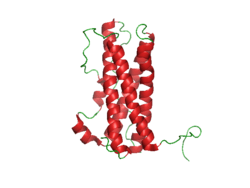
Prolactin Structure. Courtesy Boris TM at Wikipedia.
What Is Hyperprolactinemia?
[dropcap]H[/dropcap]yperprolactinemia is an excess secretion of prolactin hormone causing an elevated blood level that is characterized by its effects on reproduction: in females causing amenorrhea and in males causing reduced sexual potency.
Q: What is prolactin?
A: Prolactin is a hormone produced by the the anterior pituitary gland that is transported by the bloodstream to stimulate androgen hormone production in male and estrogen hormone production in female sex glands. However, too much prolactin inhibits hormone production of estrogen in women and testosterone in men.
In pregnant females upon delivery of a baby, prolactin stimulates breast development and milk production for the purpose of feeding the infant. Sucking by the infant stimulates the release of prolactin which keeps the milk supply adequate.
Prolactin also promotes autoimmune mechanisms. Prolactin interferes specifically with B cell tolerance induction, enhances proliferative response to antigens and mitogens and increases the production of immune globulins, cytokines and autoantibodies.1
Other conditions that can stimulate prolactin release include nutritional deficiencies, thyroid stimulating hormone (TSH) produced by the pituitary gland, stress, exercise, and anterior pituitary tumors.
What Is An Elevated Prolactin Level In Celiac Disease and/or Gluten Sensitivity?
Sources:
Shelly S, Boaz M, Orbach H. Prolactin and autoimmunity. Autoimmun Rev. 2012 May;11(6-7):A465-70. doi: 10.1016/j.autrev.2011.11.009. [↩]
A blood test result showing that blood clots too slowly due to vitamin K deficiency. It is an atypical symptom of celiac disease. Click for full description.
 What Is Prolonged Prothrombin Time?