Before and after photos of repair of web neck in Turner’s syndrome. Courtesy Wikimedia
What Is Turner Syndrome?
[dropcap]T[/dropcap]urner syndrome is a sex chromosome abnormality in females characterized by failure of the ovaries to respond to pituitary hormone stimulation as a consequence of having complete or partial absence of the two sex (X) chromosomes.
Q: How does Turner syndrome affect the body?
A: Immature ovaries result in amenorrhea, or failure to menstruate, because puberty does not occur.
Turner syndrome is associated with various abnormalities and adults have a reduced life expectancy, mainly related to structural abnormalities of the heart and aorta and an increased risk of atherosclerosis.1
What Is Turner Syndrome In Celiac Disease and/or Gluten Sensitivity?
Jaundice, or yellowing of the skin and sclera of eyes, is a symptom of autoimmune hepatitis.
What Is Autoimmune Hepatitis?
[dropcap]A[/dropcap]utoimmune hepatitis is an autoimmune attack against liver cells that is characterized by inflammation and results in chronic liver disease which includes low blood albumin and cirrhosis.
Autoimmune hepatitis is diagnosed by detection of autoantibodies in blood and liver biopsy.
Q: What is cirrhosis?
A: Cirrhosis is a degenerative process of the liver that can be fatal. Normal lobular liver structure is distorted and replaced with nodules of regenerating liver cells separated by bands of fibrous tissue that cannot properly carry out liver function and block the necessary flow of blood through the liver, ending in liver failure.
The liver is the largest organ within the body and lies mostly in the upper part of the abdomen on the right side just under the diaphragm. About 70% of liver tissue is made up of cube shaped cells called hepatocytes that do the main work of the liver. Other cells form structure and are arranged in single layers around blood vessels, sinusoids, and bile ducts.
Bile ducts carry bile, a greenish brown liquid made by the liver, to the gall bladder for storage until needed to aid in the digestion and absorption of fat from the small intestine. Bile emulsifies fat eaten in the diet so that the pancreatic enzyme called lipase can break it down into its fatty acid and glycerol components.
The liver is a very busy organ, carrying out over 500 metabolic processes! Nutritionally, it is the first to receive all the blood carrying nutrients freshly absorbed from the digestive tract. Hepatocytes then convert the nutrients to provide the body with energy, a host of amino acids as building blocks for numerous cell activities, and proteins such as albumin and fibrinogen. In fact, hepatocytes build the structural proteins for the liver itself. Imagine the array of nutrients the liver uses and keeps at its disposal for its metabolic functions. Included in liver storage are vital vitamins and minerals such as vitamin A and vitamin B12.
As a detoxifier, Kupffer cells located in the sinusoids act like amoebas to engulf and digest unwanted matter. As a blood cleanser, the liver removes waste products produced by normal metabolism and toxic substances and rids it by preparing these substances for elimination in urine, such as ammonia converted to urea, and/or excreting them in bile for eventual elimination in stool. Bile is continually made by the liver from phospholipids salt, cholesterol, aging blood cells it removes from circulation.
Autoimmune hepatitis is classified into several types. Type 1 autoimmune hepatitis is the most common form in North America. Type 1 can occur at any age; however, it most often starts in adolescence or young adulthood. People with type 1 autoimmune hepatitis commonly have other autoimmune disorders (see listed below).
Type 2 autoimmune hepatitis is less common and occurs more often in children than adults. People with type 2 can also have any of the autoimmune disorders (see listed below).
Both types of autoimmune hepatitis are treated with prednisone, a corticosteroid hormone to control inflammation and reduce the body’s immune activity against the liver.1
What Is Autoimmune Hepatitis In Celiac Disease and/or Gluten Sensitivity?
Sources:
National Digestive Diseases Information Clearinghouse [↩]
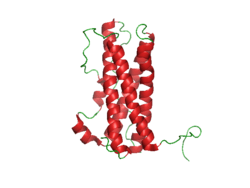
Prolactin Structure. Courtesy Boris TM at Wikipedia.
What Is Hyperprolactinemia?
[dropcap]H[/dropcap]yperprolactinemia is an excess secretion of prolactin hormone causing an elevated blood level that is characterized by its effects on reproduction: in females causing amenorrhea and in males causing reduced sexual potency.
Q: What is prolactin?
A: Prolactin is a hormone produced by the the anterior pituitary gland that is transported by the bloodstream to stimulate androgen hormone production in male and estrogen hormone production in female sex glands. However, too much prolactin inhibits hormone production of estrogen in women and testosterone in men.
In pregnant females upon delivery of a baby, prolactin stimulates breast development and milk production for the purpose of feeding the infant. Sucking by the infant stimulates the release of prolactin which keeps the milk supply adequate.
Prolactin also promotes autoimmune mechanisms. Prolactin interferes specifically with B cell tolerance induction, enhances proliferative response to antigens and mitogens and increases the production of immune globulins, cytokines and autoantibodies.1
Other conditions that can stimulate prolactin release include nutritional deficiencies, thyroid stimulating hormone (TSH) produced by the pituitary gland, stress, exercise, and anterior pituitary tumors.
What Is An Elevated Prolactin Level In Celiac Disease and/or Gluten Sensitivity?
Sources:
Shelly S, Boaz M, Orbach H. Prolactin and autoimmunity. Autoimmun Rev. 2012 May;11(6-7):A465-70. doi: 10.1016/j.autrev.2011.11.009. [↩]
Elevated level of prolactin hormone in blood signifies too much prolactin, which is produced by the anterior pituitary gland and causes impaired estrogen production in females and impaired androgen production in males.
Cancel your subscription?
We're sorry to see you go.
Please select a reason for cancellation.
Please provide additional details.
Cancellation request submitted
We've received your request. Your subscription remains active while we process it. We'll email you once it's confirmed.
Cancellation pending
Access Content
Affiliate Terms
By joining our Affiliate Program, you agree to the following terms:
1. Eligibility: You must be 18 years or older to participate. We reserve the right to refuse service to anyone for any reason at any time.
2. Promotional Guidelines: Affiliates must not engage in misleading advertising or spam. Promotions must accurately represent our brand and products.
3. Affiliate Links: You must use your unique tracking link to receive credit for referred sales.
4. Prohibited Use: You may not use our branding in a way that may confuse customers or misrepresent your relationship with us.
5. Termination: We reserve the right to terminate your account at any time for breach of these terms.
6. Changes to Agreement: We may update these terms at any time. Continued participation implies acceptance of any changes.
By continuing, you agree to the terms of this Affiliate Agreement.