
Simple Mills Gluten-Free Crackers Deal
If you haven’t tried them yet, these Simple Mills gluten-free crackers made from almond flour are AMAZING! Free 1 day shipping with Amazon Prime. Yum. Click Variety Pack 2, 3 or 4 when ordering to change…
If you haven’t tried them yet, these Simple Mills gluten-free crackers made from almond flour are AMAZING! Free 1 day shipping with Amazon Prime. Yum. Click Variety Pack 2, 3 or 4 when ordering to change…

GF Snack Alert! 24 Single Packs of Snyder’s gf pretzels with free shipping on Amazon! >>> Click Here! Have you seen any good gluten-free snack deals lately? Comment below!

Did you know Amazon has coupons and discounts on dozens and dozens of gluten-free products?
I like Amazon for three main reasons:
Check out some of the coupons you can get…

Great news! Gluten Free Works is creating a gluten free coupon book for 2020!
When we asked our Facebook followers whether they would like gluten-free coupons, the answer was a resounding YES!
Over 120 people commented!
One of the biggest reasons people said they wanted coupons was so they could try out new products that they normally would not due to the price.
The coupon book will host the name of our sister website, Glutenfreeclassifieds.com, which lists hundreds of gluten-free companies.

Increased intestinal permeability is characterized by dysfunctional intestinal permeability (leakiness) allowing for the penetration of harmful entities from the gut into the bloodstream such as undigested proteins and microbes. The popular name is “leaky gut.”
A: Intestinal permeability is an essential function of the small intestinal mucosal lining by which wanted substances such as properly digested foodstuffs are allowed to permeate through the lining to enter the body via the bloodstream and lymphatics. At the same time unwanted substances are kept out.
The mucosal lining is one cell thick and makes up the surface between the digested foodstuffs inside the hollow of the intestine and the underlying tissues.
The mucosal lining is covered by millions of microscopic finger-like structures called villi that project toward the inside of the intestine giving the appearance of a shag rug.
Each one, called a villus, contains a capillary bringing blood to absorb nutrients, a vein to take away nutrients, and a lacteal to absorb and take away digested fat. Its wall is made up of a single layer of tightly connecting cells, called enterocytes.
This single layer of cells separates the contents of our small intestine from the lamina propria (underlying tissues of the small intestine) and the rest of our body. Breaching of this single layer of cells by leakiness can expose lymphocytes (immune cells) located in the lamina propria to a myriad of microorganisms and food antigens, leading to immune reactions.1
To protect the body from unwanted substances, a gatekeeping barrier system operates to regulate the passage of nutrients, or permeation, through the surface mucosal lining. This system acts to seal the inside body from the gut.
The integrity of intestinal permeability is determined by interactions among several barrier components including the unstirred water layer, mucosal surface hydrophobicity, the surface mucous coat, and cell factors (especially tight junctions).
Tight junctions hold cells tightly together side-by-side to prevent unwanted substances from passing through the lining. Tight junctions are complex structures comprising over 50 proteins, such as the claudin proteins which are considered to be the structural backbone of tight junctions.
Tight junctions include a series of special proteins forming fibrils (springy like proteins) that cross the plasma membrane and interact with proteins in the adjoining cells. Tight junctions are regulated by the protein zonulin.2
If zonulin deregulates from the action of substances such as gliadin (gluten in wheat) and bacteria, the tight junction barrier fails which results in increased intestinal permeability. Dysfunction of the barrier system allows unwanted substances to enter the body where they are damaging to many tissues.
Tight junction dysfunction has been shown to be a part of certain autoimmune diseases such as celiac disease, type I diabetes mellitus, multiple sclerosis, and rheumatoid arthritis. Other diseases associated are cancer, allergies, and infections.3
Important gastrointestinal infections that cause leaky gut include rotavirus, parasites, pathogenic bacteria (escherichia coli, clostridium difficile), and mycotoxins produced by fungi found in stored grain and dried fruit.4
Fortunately, the presence of some commensal (friendly intestinal bacteria) and probiotic strains leads to an increase in tight junctions proteins at the cell boundaries and in some cases prevents or reverses the adverse effects of pathogens, food and stress. Various dietary components are also known to regulate epithelial permeability by modifying expression and localization of tight junctions proteins.2
Yesterday, we ran a poll on the Gluten Free Works Facebook page. We asked people, Would you say you are as healthy as you should be? They could answer, “Yes, I feel great!” or, “No,…

Tomorrow is Superbowl Sunday!
Here are five (actually 11!) great gluten-free recipes that will make your Superbowl party a success and give you the win!
Serve this cheesy, flavor-packed dish as a hearty gluten-free appetizer, snack or even as an entree- kids love them.[divider]
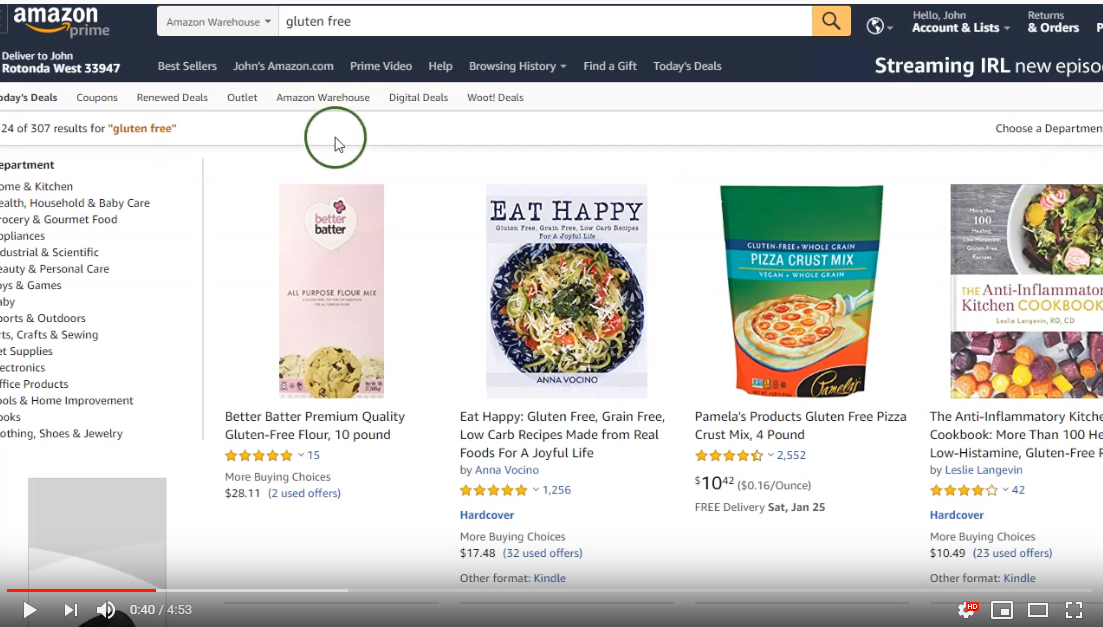
Hey Guys! I thought it would be fun to see what is selling on Amazon Warehouse today. Amazon Warehouse is basically Amazon’s discount section. You can find hundreds of gluten-free product deals there. Let’s take…

Hello! We have some exciting news for you! We have been busy putting the finishing touches on our Gluten Free Works Treatment Guide. This important resource is the natural follow up to our groundbreaking printed…


I just found this great deal on Amazon and wanted to share it with you.
Deal alert here!
