Skip to content

Ulceration And Stenosis, Postbulbar Duodenal

What Is Postbulbar Duodenal Ulceration/Stenosis?

Postbulbar duodenal ulceration is a chronic inflammatory disorder characterized by thickening of the intestinal lining with excoriation penetrating the muscularis mucosae (muscle layer of the intestine) associated with villous atrophy.

The ulcer is well-defined. Stenosis due to thickening of the area narrows the hollow inside of the duodenum which impairs passage of foodstuffs and may lead to obstruction.

Q: Is postbulbar duodenal ulceration painful?

A: Postbulbar duodenal ulceration may not cause symptoms but usually causes gnawing pain that is relieved by eating food. After eating there develops nausea and bloating.

Complications include obstruction, bleeding, and perforation of the duodenal lining. Ulcers do not usually become malignant.

What Is Postbulbar Duodenal Ulceration/Stenosis In Celiac Disease and/or Gluten Sensitivity?

Volvulus

Small Bowel Volvulus, Courtesy  African Journal of Pediatric Surgery.
Small Bowel Volvulus Caused the  Enlarged Dark Loops. Courtesy African Journal of Pediatric Surgery.

What Is Volvulus?

Volvulus is twisting of a loop(s) of bowel onto itself which effectively closes it thus preventing digested matter from passing and causing engorgement of the closed loop with gas and fluid.

Q: How does the bowel get untwisted?

A: This condition usually necessitates surgical correction although some do return to their proper position.

The danger is that there may develop necrosis of the twisted loop(s) in which case, if left untreated, death will ensue.

What Is Volvulus In Celiac Disease and/or Gluten Sensitivity?

Macrocytosis

Comparison of normoblast and megaloblastWhat Is Macrocytosis?

Macrocytosis is a blood cell disorder characterized by altered blood cell formation that results in abnormally large erythrocytes (red blood cells) circulating in the bloodstream.

The mean corpuscular volume (MCV), which is a measure of the size of red blood cells in the bloodstream, is greater than 100 fL as shown in a complete blood count (CBC) laboratory analysis report.

Macrocytosis produces macrocytic anemias that are classified as megaloblastic or non-megaloblastic:

  1. Megaloblastic anemias result from disorders of DNA synthesis of red blood cell precursors (megaloblasts) in bone marrow due to B vitamin deficiency demonstrated by macro-ovalocytes and hypersegmented neutrophils.1
  2. Non-megaloblastic anemias are or those caused primarily by alcoholism, liver disease and hypothyroidism.2

What Is Macrocytosis In Celiac Disease and/or Gluten Sensitivity?

Sources:
  1. Kaferle J, Strzoda CE.Evaluation of macrocytosis. Am Fam Physician. 2009 Feb 1;79(3):203-8. [↩]
  2. Davenport J. Macrocytic anemia. Am Fam Physician. 1996 Jan;53(1):155-62. [↩]

Cholesterol, Low 

Model of cholesterol molecule.

What Is Low Cholesterol?

Low cholesterol found in blood indicates an abnormal blood level of this essential lipid (fat) that is characterized by decreased production of steroid hormones and bile.

Cholesterol is a soft, fat-like substance found in the bloodstream and is an essential structural component in all body cells. It is required for membrane fluidity and permeability of cells. Within the cell membrane, cholesterol also functions in intracellular transport, cell signaling and nerve conduction.

Cholesterol is required for these essential body processes:

  1. Cholesterol is converted to bile by the liver and stored in the gallbladder until needed for digestion of fats in the small intestine.  
  2. Cholesterol is used by the adrenal glands to produce the steroid hormones cortisol and aldosterone.
  3. Cholesterol is used by the sex glands to make progesterone, estrogen, and testosterone and their derivatives.
  4. Cholesterol is needed for the production of vitamin D.

Q: What makes cholesterol bad for you?

A: There are different forms of cholesterol that can be bad or good depending on the level. In blood vessels, low-density lipoprotein (LDL or ‘bad’) cholesterol can abnormally join with fats and other substances to build up in the inner walls of arteries. The arteries can become clogged and narrow, and blood flow is reduced. This is atherosclerosis which can lead to stroke, heart attack and thrombosis.

High-density lipoprotein (HDL or ‘good’) carries harmful cholesterol away from the arteries and helps protect from heart attack and stroke.1

What Is Low Cholesterol In Celiac Disease and/or Gluten Sensitivity?

Sources:
  1. http://watchlearnlive.heart.org/CVML_Player.php?moduleSelect=hdlldl [↩]

Coagulation Factors, Low

Model of coagulation factors found in blood.

What Are Low Coagulation Factors?

Coagulation factors II, VII, IX, X found in blood are essential for normal blood clotting.  Low coagulation factors on blood assay indicate an altered secondary coagulation disorder that is characterized by impaired clot formation.

Each coagulation factor must be present in sufficient quantity in order for normal clotting to occur, but the level required is different for each factor. Results are frequently reported as a percentage with 100% being normal. For example, a factor VIII that is 30% would be considered abnormally low.1

The production of the coagulation factors II, VII, IX, and X requires vitamin K without which the factors will be low.

Q: What happens when coagulation factors II, VII, IX, and X are low?

A: When any of the blood clotting factors are lacking or not working properly, the blood tests prothrombin (PT) and partial thromboplastin time (PTT) will be abnormally prolonged. Prothrombin and partial thromboplastin time measure the time it takes for blood to clot.  When you bleed, the body launches a series of activities that help the blood clot. This is called the coagulation cascade. There are three pathways to this event. These tests looks at coagulation factors, found in two of these pathways.2

What Are Low Coagulation Factors In Celiac Disease and/or Gluten Sensitivity?

Sources:
  1. http://labtestsonline.org/understanding/analytes/coagulation-factors/tab/test [↩]
  2. http://www.nlm.nih.gov/medlineplus/ency/article/003653.htm [↩]

Hyperprolactinemia (Excess Prolactin Hormone)

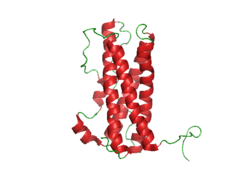
Prolactin Structure. Courtesy Boris TM at Wikipedia.

What Is Hyperprolactinemia?

Hyperprolactinemia is an excess secretion of prolactin hormone causing an elevated blood level that is characterized by its effects on reproduction: in females causing  amenorrhea and in males causing reduced sexual potency.

Q: What is prolactin?

A: Prolactin is a hormone produced by the the anterior pituitary gland that is transported by the bloodstream to stimulate androgen hormone production in male and estrogen hormone production in female sex glands. However, too much prolactin inhibits hormone production of estrogen in women and testosterone in men.

In pregnant females upon delivery of a baby, prolactin stimulates breast development and milk production for the purpose of feeding the infant. Sucking by the infant stimulates the release of prolactin which keeps the milk supply adequate.

Prolactin also promotes autoimmune mechanisms. Prolactin interferes specifically with B cell tolerance induction, enhances proliferative response to antigens and mitogens and increases the production of immune globulins, cytokines and autoantibodies.1

Other conditions that can stimulate prolactin release include nutritional deficiencies, thyroid stimulating hormone (TSH) produced by the pituitary gland, stress, exercise, and anterior pituitary tumors.

What Is An Elevated Prolactin Level In Celiac Disease and/or Gluten Sensitivity?

Sources:
  1. Shelly S, Boaz M, Orbach H. Prolactin and autoimmunity. Autoimmun Rev. 2012 May;11(6-7):A465-70. doi: 10.1016/j.autrev.2011.11.009. [↩]

Gluten Disorders

Gluten – Not a Friendly Protein Gluten is a protein found in grains.  Research has shown that the gluten that is in grains of wheat, barley, rye, and oats (to a lesser degree) is toxic to many individuals.  While gluten… 

How to Use Millet in Gluten-Free Recipes

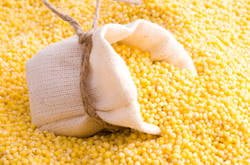
Millet has been used as food for thousands of years.

Millets – Important Food Source Worldwide:

The millets, a group of thousands of varieties of grass-like annual plants that bear small to miniscule-sized seeds belong to the Gramineae family of plants.Food anthropologists believe that millet was the first cereal plant domesticated by man. Today millet is considered the 6th most important grain crop in the world.

The most common varieties of millet include pearl, proso, foxtail, finger and teff (Ethiopian millet). Millet has been a major source of protein and energy for millions of people in Asia, Africa and India for thousands of years.

Bird Food or People Food?:

Pityriasis Rubra Pilaris: definition

A chronic generalized exfoliative dermatitis characterized by erythema (redness), scaling and keratoderma (thickened skin) that develops from vitamin A deficiency and is often associated with iron deficiency anemia and low serum albumin (protein deficiency). It…