Skip to content

Hyperprolactinemia (Excess Prolactin Hormone)
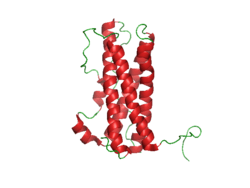
Prolactin Structure. Courtesy Boris TM at Wikipedia.

What Is Hyperprolactinemia?

Hyperprolactinemia is an excess secretion of prolactin hormone causing an elevated blood level that is characterized by its effects on reproduction: in females causing  amenorrhea and in males causing reduced sexual potency.

Q: What is prolactin?

A: Prolactin is a hormone produced by the the anterior pituitary gland that is transported by the bloodstream to stimulate androgen hormone production in male and estrogen hormone production in female sex glands. However, too much prolactin inhibits hormone production of estrogen in women and testosterone in men.

In pregnant females upon delivery of a baby, prolactin stimulates breast development and milk production for the purpose of feeding the infant. Sucking by the infant stimulates the release of prolactin which keeps the milk supply adequate.

Prolactin also promotes autoimmune mechanisms. Prolactin interferes specifically with B cell tolerance induction, enhances proliferative response to antigens and mitogens and increases the production of immune globulins, cytokines and autoantibodies.1

Other conditions that can stimulate prolactin release include nutritional deficiencies, thyroid stimulating hormone (TSH) produced by the pituitary gland, stress, exercise, and anterior pituitary tumors.

What Is An Elevated Prolactin Level In Celiac Disease and/or Gluten Sensitivity?

Sources:
  1. Shelly S, Boaz M, Orbach H. Prolactin and autoimmunity. Autoimmun Rev. 2012 May;11(6-7):A465-70. doi: 10.1016/j.autrev.2011.11.009. []

Gluten Disorders

Gluten – Not a Friendly Protein Gluten is a protein found in grains.  Research has shown that the gluten that is in grains of wheat, barley, rye, and oats (to a lesser degree) is toxic to many individuals.  While gluten… 

How to Use Millet in Gluten-Free Recipes

Millet has been used as food for thousands of years.

Millets – Important Food Source Worldwide:

The millets, a group of thousands of varieties of grass-like annual plants that bear small to miniscule-sized seeds belong to the Gramineae family of plants.Food anthropologists believe that millet was the first cereal plant domesticated by man. Today millet is considered the 6th most important grain crop in the world.

The most common varieties of millet include pearl, proso, foxtail, finger and teff (Ethiopian millet). Millet has been a major source of protein and energy for millions of people in Asia, Africa and India for thousands of years.

Bird Food or People Food?:

Post-Cricoid Carcinoma: definition

A malignancy with early metastasis and poor prognosis arising in the hypopharynx, the region of the throat lying behind the voice box (larynx). Symptoms start out as difficulty swallowing (dysphagia) that progress to the feeling… 

Pityriasis Rubra Pilaris: definition

A chronic generalized exfoliative dermatitis characterized by erythema (redness), scaling and keratoderma (thickened skin) that develops from vitamin A deficiency and is often associated with iron deficiency anemia and low serum albumin (protein deficiency). It…