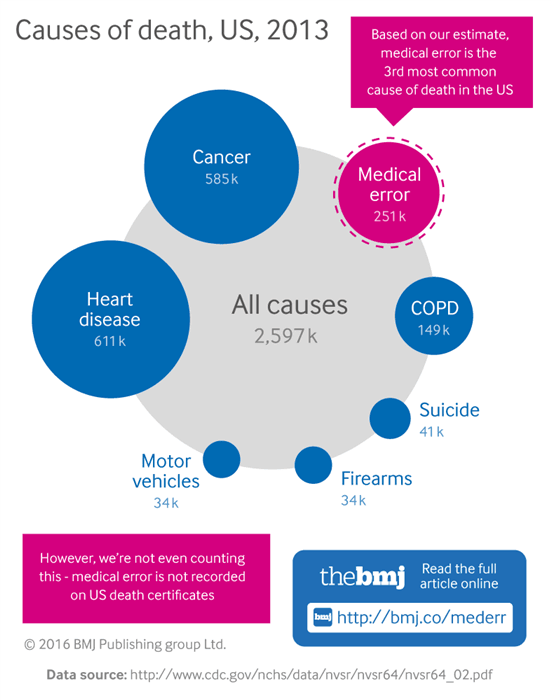
Don’t be a Statistic. Medical Mistakes are the Third Leading Cause of Death in the United States.
![13502036_10154102429271815_7497922383029815833_n[1]](https://glutenfreeworks.com/wp-content/uploads/2016/06/13502036_10154102429271815_7497922383029815833_n1-236x300.png) A recent Johns Hopkins study found medical mistakes are the third leading cause of death in the United States, killing between 200,000 and 400,000 per year.
A recent Johns Hopkins study found medical mistakes are the third leading cause of death in the United States, killing between 200,000 and 400,000 per year.
The study does not even consider misdiagnoses, or how many people suffer injuries without dying. We frequently see people who are medicated for what doctors think are diseases, but are actually symptoms with underlying causes. This is why we created the Gluten Free Works Treatment Guide – to improve proper diagnosis and treatment – so you and your doctor could connect the dots between hundreds of symptoms and their causes, causes like nutrient deficiencies that doctors do not recognize.
“Medical mistakes — from surgical disasters to accidental drug overdoses — are the No. 3 cause of death in the U.S., behind cancer and heart disease, two experts argued Wednesday.
They said a careful count of all deaths from preventable medical errors shows between 200,000 and 400,000 people a year die in the U.S. from these mistakes. The only way to get the country to do something about them is to start counting them, Dr. Martin Makary and Michael Daniel of Johns Hopkins University medical school argued.
“We spend a lot of money on cancer and heart disease but we have not even recognized that medical error is the third leading cause of death in the United States,” Makary told NBC News.
“We have not as a country recognized the endemic problem of people dying from the care that they receive rather than the illness or injury for which they seek care.” Read the rest of the story at NBC News. The case report is available at the New England Journal of Medicine.


 When you have a child diagnosed with a severe food allergy it can be extremely challenging to help them feel comfortable and safe in social situations. While living with food allergies may always present challenges there are a few things you can do as a parent to help your child manage their fears and anxieties.



 Premenstrual syndrome (PMS) is a female menstrual disorder that occurs regularly around ovulation and subsides within a few days of the onset of menstruation. PMS affects up to 75% of women during their childbearing years.



 I sit here writing this post from my bed. It’s 9:39pm and I have been in bed since 4:30pm. My tonsils are so big it hurts to swallow and I feel like I have been in a boxing match where I lost, severely.