Skip to content

Multiple Gastric Ulcerations 

Multiple Gastric Ulcerations. Courtesy Dr. Krum.

What Are Multiple Gastric Ulcerations?

Multiple gastric ulcerations denote a stomach disorder that involves damage to the superficial mucosa characterized by many sores of the stomach antrum that are marked by inflammation, necrosis (death of the affected cells) and sloughing of destroyed tissue.

Q: Where is the stomach antrum?

A: The antrum is the lower region of the stomach before the pylorus which is nearest the duodenum (first part of the small intestine). The stomach and duodenum are separated by the powerful pyloric sphincter.

The stomach antrum propels food in the stomach against the pylorus which resists passage of food until it is turned into chyme. Chyme is highly acidic liquified food that has been thoroughly mixed with stomach juices.

Gastric ulcerations are typically associated with widespread gastritis (inflammation), inflammatory involvement of acid producing cells, and atrophy of acid and pepsin producing cells.1

The primary causes of gastric ulcerations are H. pylori infection, use of Aspirin and non-steroidal drugs (NSAIDS), and stress.1

What Are Multiple Gastric Ulcerations In Celiac Disease and/or Gluten Sensitivity?

Sources:
  1. Kathleen Mahan and Sylvia Escott-Stump, ed. Krause’s Food, Nutrition & Diet Therapy, 10th Edition. Philadelphia, PA. USA: W.B. Saunders Company, 2000. [] []

Volvulus

Small Bowel Volvulus, Courtesy  African Journal of Pediatric Surgery.
Small Bowel Volvulus Caused the  Enlarged Dark Loops. Courtesy African Journal of Pediatric Surgery.

What Is Volvulus?

Volvulus is twisting of a loop(s) of bowel onto itself which effectively closes it thus preventing digested matter from passing and causing engorgement of the closed loop with gas and fluid.

Q: How does the bowel get untwisted?

A: This condition usually necessitates surgical correction although some do return to their proper position.

The danger is that there may develop necrosis of the twisted loop(s) in which case, if left untreated, death will ensue.

What Is Volvulus In Celiac Disease and/or Gluten Sensitivity?

Anorexia or Loss of Appetite

anorexia nervosa celiac disease gluten symptomWhat Is Anorexia?

Anorexia or loss of appetite is a reduced desire to eat which can cause unintentional weight loss.

Anorexia is a feature of many disorders caused by malutrition such as celiac disease and aging or gastrointestinal problems such as chronic gastroenteritis, and dysgeusia (loss of taste).

Q: Are there other conditions that cause anorexia?

A: Other underlying problem include medication side effects, infection, chronic pain, depression, grief, dehydration, hormonal dysfunction such as thyroid disease, primary hyperparathyroidism, or Addison’s disease, autoimmune mechanisms such as sarcoidosis,  and cancer growth.

What Is Anorexia In Celiac Disease and/or Gluten Sensitivity?

Gastritis, Collagenous

Microscopic View of Gastric  Biopsy Showing a Collagen Band Under the Surface Mucosal Cells. Courtesy Gastrolab.com
Microscopic View of Gastric Biopsy Showing a Collagen Band Stained Pink Under the Surface Mucosal Cells. Courtesy Gastrolab.com

What Is Collagenous Gastritis?

Collagenous gastritis is a rarely reported stomach disorder characterized by the deposition of a subepithelial collagen band and accompanying inflammatory infiltrate in the stomach wall.

A subepithelial collagen band means that collagen, a tough fibrous protein, has abnormally accumulated under the surface layer of epithelial cells which form the mucosa lining the stomach.

The surface mucosa may remain intact and not show lymphocytosis and/or gastritis on endoscopic examination or it may become stripped off and bleed from entrapped capillaries. Biopsy is necessary to diagnose collagenous gastritis.1

Q: Why does collagen become deposited under the surface lining of the stomach?

A: It is thought that collagen deposition is preceded by inflammation and tissue damage. However, the natural history and pathogenesis of collagenous gastritis remain unclear.2

What Is Collagenous Gastritis In Celiac Disease and/or Gluten Sensitivity?

Sources:
  1. Jain R, Chetty R. Collagenous gastritis. Int J Surg Pathol. 2010 Dec;18(6):534-6. doi: 10.1177/1066896908329588. Epub 2008 Dec 22. []
  2. Leung ST, Chandan VS, Murray JA, Wu TT. Collagenous gastritis: histopathologic features and association with other gastrointestinal diseases. Am J Surg Pathol. 2009 May;33(5):788-98. doi: 10.1097/PAS.0b013e318196a67f. []

Macrocytosis

Comparison of normoblast and megaloblastWhat Is Macrocytosis?

Macrocytosis is a blood cell disorder characterized by altered blood cell formation that results in abnormally large erythrocytes (red blood cells) circulating in the bloodstream.

The mean corpuscular volume (MCV), which is a measure of the size of red blood cells in the bloodstream, is greater than 100 fL as shown in a complete blood count (CBC) laboratory analysis report.

Macrocytosis produces macrocytic anemias that are classified as megaloblastic or non-megaloblastic:

  1. Megaloblastic anemias result from disorders of DNA synthesis of red blood cell precursors (megaloblasts) in bone marrow due to B vitamin deficiency demonstrated by macro-ovalocytes and hypersegmented neutrophils.1
  2. Non-megaloblastic anemias are or those caused primarily by alcoholism, liver disease and hypothyroidism.2

What Is Macrocytosis In Celiac Disease and/or Gluten Sensitivity?

Sources:
  1. Kaferle J, Strzoda CE.Evaluation of macrocytosis. Am Fam Physician. 2009 Feb 1;79(3):203-8. []
  2. Davenport J. Macrocytic anemia. Am Fam Physician. 1996 Jan;53(1):155-62. []

Cholesterol, Low 

Model of cholesterol molecule.

What Is Low Cholesterol?

Low cholesterol found in blood indicates an abnormal blood level of this essential lipid (fat) that is characterized by decreased production of steroid hormones and bile.

Cholesterol is a soft, fat-like substance found in the bloodstream and is an essential structural component in all body cells. It is required for membrane fluidity and permeability of cells. Within the cell membrane, cholesterol also functions in intracellular transport, cell signaling and nerve conduction.

Cholesterol is required for these essential body processes:

  1. Cholesterol is converted to bile by the liver and stored in the gallbladder until needed for digestion of fats in the small intestine.  
  2. Cholesterol is used by the adrenal glands to produce the steroid hormones cortisol and aldosterone.
  3. Cholesterol is used by the sex glands to make progesterone, estrogen, and testosterone and their derivatives.
  4. Cholesterol is needed for the production of vitamin D.

Q: What makes cholesterol bad for you?

A: There are different forms of cholesterol that can be bad or good depending on the level. In blood vessels, low-density lipoprotein (LDL or ‘bad’) cholesterol can abnormally join with fats and other substances to build up in the inner walls of arteries. The arteries can become clogged and narrow, and blood flow is reduced. This is atherosclerosis which can lead to stroke, heart attack and thrombosis.

High-density lipoprotein (HDL or ‘good’) carries harmful cholesterol away from the arteries and helps protect from heart attack and stroke.1

What Is Low Cholesterol In Celiac Disease and/or Gluten Sensitivity?

Sources:
  1. http://watchlearnlive.heart.org/CVML_Player.php?moduleSelect=hdlldl []

Coagulation Factors, Low

Model of coagulation factors found in blood.

What Are Low Coagulation Factors?

Coagulation factors II, VII, IX, X found in blood are essential for normal blood clotting.  Low coagulation factors on blood assay indicate an altered secondary coagulation disorder that is characterized by impaired clot formation.

Each coagulation factor must be present in sufficient quantity in order for normal clotting to occur, but the level required is different for each factor. Results are frequently reported as a percentage with 100% being normal. For example, a factor VIII that is 30% would be considered abnormally low.1

The production of the coagulation factors II, VII, IX, and X requires vitamin K without which the factors will be low.

Q: What happens when coagulation factors II, VII, IX, and X are low?

A: When any of the blood clotting factors are lacking or not working properly, the blood tests prothrombin (PT) and partial thromboplastin time (PTT) will be abnormally prolonged. Prothrombin and partial thromboplastin time measure the time it takes for blood to clot.  When you bleed, the body launches a series of activities that help the blood clot. This is called the coagulation cascade. There are three pathways to this event. These tests looks at coagulation factors, found in two of these pathways.2

What Are Low Coagulation Factors In Celiac Disease and/or Gluten Sensitivity?

Sources:
  1. http://labtestsonline.org/understanding/analytes/coagulation-factors/tab/test []
  2. http://www.nlm.nih.gov/medlineplus/ency/article/003653.htm []

Hyperprolactinemia (Excess Prolactin Hormone)

Prolactin Structure. Courtesy Boris TM at Wikipedia.

What Is Hyperprolactinemia?

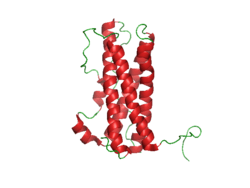
Hyperprolactinemia is an excess secretion of prolactin hormone causing an elevated blood level that is characterized by its effects on reproduction: in females causing  amenorrhea and in males causing reduced sexual potency.

Q: What is prolactin?

A: Prolactin is a hormone produced by the the anterior pituitary gland that is transported by the bloodstream to stimulate androgen hormone production in male and estrogen hormone production in female sex glands. However, too much prolactin inhibits hormone production of estrogen in women and testosterone in men.

In pregnant females upon delivery of a baby, prolactin stimulates breast development and milk production for the purpose of feeding the infant. Sucking by the infant stimulates the release of prolactin which keeps the milk supply adequate.

Prolactin also promotes autoimmune mechanisms. Prolactin interferes specifically with B cell tolerance induction, enhances proliferative response to antigens and mitogens and increases the production of immune globulins, cytokines and autoantibodies.1

Other conditions that can stimulate prolactin release include nutritional deficiencies, thyroid stimulating hormone (TSH) produced by the pituitary gland, stress, exercise, and anterior pituitary tumors.

What Is An Elevated Prolactin Level In Celiac Disease and/or Gluten Sensitivity?

Sources:
  1. Shelly S, Boaz M, Orbach H. Prolactin and autoimmunity. Autoimmun Rev. 2012 May;11(6-7):A465-70. doi: 10.1016/j.autrev.2011.11.009. []

Hyperthyroidism – Grave’s Disease 

hypokalemia gluten celiac disease symptomWhat Is Hypokalemia?

H ypokalemia means the level of potassium in the bloodstream is too low to meet metabolic needs of the body for this mineral and is characterized by metabolic acidosis, altered nerve conduction and muscle contraction.

Rapid potassium loss can result in life-threatening hypokalemic rhabdomyolysis which is destruction of muscle tissue that results in kidney damage.1

Q: What are metabolic needs of the body for potassium?

A: The metabolic needs of the body for potassium are great because this mineral is crucial for life and especially for normal nerve and muscle function.

Most potassium is intracellular, meaning it is found within cells while sodium, its opposing mineral (both electrolytes), is found in the fluid surrounding cells. In muscle contraction, exchange of potassium and sodium takes place so that potassium moves out of muscle cells and sodium moves into them. With muscle relaxation, potassium moves back into the cells and sodium moves out.

What Is Hypokalemia In Celiac Disease and/or Gluten Sensitivity?

Sources:
  1. Williams SG, Davison AG, Glynn MJ. Hypokalaemic rhabdomyolsis: an unusual presentation of celiac disease. European Journal of Gastroenterology and Hepatology. Feb 1995;7(2):183-4. []