Skip to content

Coagulation Factors, Low

Model of coagulation factors found in blood.

What Are Low Coagulation Factors?

Coagulation factors II, VII, IX, X found in blood are essential for normal blood clotting.  Low coagulation factors on blood assay indicate an altered secondary coagulation disorder that is characterized by impaired clot formation.

Each coagulation factor must be present in sufficient quantity in order for normal clotting to occur, but the level required is different for each factor. Results are frequently reported as a percentage with 100% being normal. For example, a factor VIII that is 30% would be considered abnormally low.1

The production of the coagulation factors II, VII, IX, and X requires vitamin K without which the factors will be low.

Q: What happens when coagulation factors II, VII, IX, and X are low?

A: When any of the blood clotting factors are lacking or not working properly, the blood tests prothrombin (PT) and partial thromboplastin time (PTT) will be abnormally prolonged. Prothrombin and partial thromboplastin time measure the time it takes for blood to clot.  When you bleed, the body launches a series of activities that help the blood clot. This is called the coagulation cascade. There are three pathways to this event. These tests looks at coagulation factors, found in two of these pathways.2
What Are Low Coagulation Factors In Celiac Disease and/or Gluten Sensitivity?

Sources:
  1. http://labtestsonline.org/understanding/analytes/coagulation-factors/tab/test []
  2. http://www.nlm.nih.gov/medlineplus/ency/article/003653.htm []

Hyperprolactinemia (Excess Prolactin Hormone)

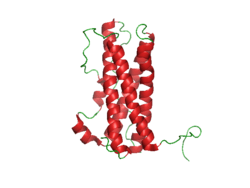
Prolactin Structure. Courtesy Boris TM at Wikipedia.

What Is Hyperprolactinemia?

Hyperprolactinemia is an excess secretion of prolactin hormone causing an elevated blood level that is characterized by its effects on reproduction: in females causing  amenorrhea and in males causing reduced sexual potency.

Q: What is prolactin?

A: Prolactin is a hormone produced by the the anterior pituitary gland that is transported by the bloodstream to stimulate androgen hormone production in male and estrogen hormone production in female sex glands. However, too much prolactin inhibits hormone production of estrogen in women and testosterone in men.

In pregnant females upon delivery of a baby, prolactin stimulates breast development and milk production for the purpose of feeding the infant. Sucking by the infant stimulates the release of prolactin which keeps the milk supply adequate.

Prolactin also promotes autoimmune mechanisms. Prolactin interferes specifically with B cell tolerance induction, enhances proliferative response to antigens and mitogens and increases the production of immune globulins, cytokines and autoantibodies.1

Other conditions that can stimulate prolactin release include nutritional deficiencies, thyroid stimulating hormone (TSH) produced by the pituitary gland, stress, exercise, and anterior pituitary tumors.

What Is An Elevated Prolactin Level In Celiac Disease and/or Gluten Sensitivity?

Sources:
  1. Shelly S, Boaz M, Orbach H. Prolactin and autoimmunity. Autoimmun Rev. 2012 May;11(6-7):A465-70. doi: 10.1016/j.autrev.2011.11.009. []

Glucose Deficiency

DSCN2943aWhat Is Glucose?

Glucose is the most important simple sugar in human metabolism because it is the primary source of energy for most cells of the body and is particularly required by the brain.

Q: Where does glucose get energy?

A: The energy in glucose originally comes from the sun. Plants capture and bind the sun’s energy by means of photosynthesis. We eat the plants directly or indirectly by eating food from animals  that have eaten plants.

Energy from glucose is obtained in the body from its reaction with oxygen (oxidation) that occurs in power producing mitochondria within cells.1

Humans cannot live without an adequate supply of glucose to the body.

What Is Glucose Deficiency In Celiac Disease and/or Gluten Sensitivity?

Sources:
  1. http://hyperphysics.phy-astr.gsu.edu/hbase/organic/sugar.html accessed 11 14 12 []

Vitamin K Deficiency

Kale For Vitamin K.
Kale For Vitamin K.

What Is Vitamin K?

Vitamin K is a family of fat-soluble vitamins, called K vitamers, that exists in three forms:

  • K1 is a natural form found in plants (phylloquinone);
  • K2, found in some animal foods, is synthesized in the intestine (menaquinone); and
  • K3, is a synthetic form that must be activated in the liver (menadione).

Vitamin K is essential for the formation of clotting factors in blood and bone proteins and serves as a cofactor in the production of  proteins that regulate blood clotting.

Q: What are the clotting factors that require vitamin K in the regulation of blood clotting?

A: The clotting factors that require vitamin K in the regulation of  blood clotting are factors II, VII, IX, and X.   Low coagulation factors on blood assay indicate an altered secondary coagulation disorder that is characterized by impaired clot formation.

Each coagulation factor must be present in sufficient quantity in order for normal clotting to occur.

What Is Vitamin K Deficiency In Celiac Disease and/or Gluten Sensitivity?

Linoleic Acid (LA) Deficiency

nutsWhat Is Linoleic Acid?

Linoleic acid is an essential omega-6 fatty acid that comes from plant sources. Essential means the body must have it to maintain health and life sustaining functions. Omega-6 fatty acids are polyunsaturated.

Among its many vital roles in the body, linoleic acid composition of intestinal membranes is important for epithelial cell function and disturbances may contribute to the pathophysiology of celiac disease.1

Q: What are epithelial cells?

A: Epithelial cells make up the surface mucosa of the digestive tract and also the respiratory tract, urinary tract and genital tract.

Linoleic acid is an important building material for the eicosanoids, a large group of highly bioactive hormone-like substances including prostaglandins, leukotrienes, and thromboxanes that are involved in blood clotting, inflammation, and vasoconstriction.2

What Is Linoleic Acid Deficiency in Celiac Disease?

Sources:
  1. Steel DM, Ryd W, Ascher H, Strandvik B. Abnormal fatty acid pattern in intestinal mucosa of children with celiac disease is not reflected in serum phospholipids. J Pediatr Gastroenterol Nutr. 2006 Sep; 43(3):318-23. []
  2. Richardson AJ. The importance of omega-3 fatty acids for behavior, cognition, and mood. Scandinavian Journal of Nutrition. 2003; 47(2):92-8 []