
Skip to content

Cleo Libonati, RN, BSN

Coagulation Factors, Low

Model of coagulation factors found in blood.

What Are Low Coagulation Factors?

Coagulation factors II, VII, IX, X found in blood are essential for normal blood clotting.  Low coagulation factors on blood assay indicate an altered secondary coagulation disorder that is characterized by impaired clot formation.

Each coagulation factor must be present in sufficient quantity in order for normal clotting to occur, but the level required is different for each factor. Results are frequently reported as a percentage with 100% being normal. For example, a factor VIII that is 30% would be considered abnormally low.1

The production of the coagulation factors II, VII, IX, and X requires vitamin K without which the factors will be low.

Q: What happens when coagulation factors II, VII, IX, and X are low?

A: When any of the blood clotting factors are lacking or not working properly, the blood tests prothrombin (PT) and partial thromboplastin time (PTT) will be abnormally prolonged. Prothrombin and partial thromboplastin time measure the time it takes for blood to clot.  When you bleed, the body launches a series of activities that help the blood clot. This is called the coagulation cascade. There are three pathways to this event. These tests looks at coagulation factors, found in two of these pathways.2
What Are Low Coagulation Factors In Celiac Disease and/or Gluten Sensitivity?

Sources:
  1. http://labtestsonline.org/understanding/analytes/coagulation-factors/tab/test [↩]
  2. http://www.nlm.nih.gov/medlineplus/ency/article/003653.htm [↩]

Hyperprolactinemia (Excess Prolactin Hormone)

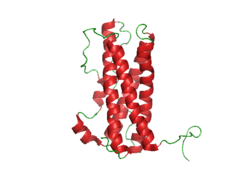
Prolactin Structure. Courtesy Boris TM at Wikipedia.

What Is Hyperprolactinemia?

Hyperprolactinemia is an excess secretion of prolactin hormone causing an elevated blood level that is characterized by its effects on reproduction: in females causing  amenorrhea and in males causing reduced sexual potency.

Q: What is prolactin?

A: Prolactin is a hormone produced by the the anterior pituitary gland that is transported by the bloodstream to stimulate androgen hormone production in male and estrogen hormone production in female sex glands. However, too much prolactin inhibits hormone production of estrogen in women and testosterone in men.

In pregnant females upon delivery of a baby, prolactin stimulates breast development and milk production for the purpose of feeding the infant. Sucking by the infant stimulates the release of prolactin which keeps the milk supply adequate.

Prolactin also promotes autoimmune mechanisms. Prolactin interferes specifically with B cell tolerance induction, enhances proliferative response to antigens and mitogens and increases the production of immune globulins, cytokines and autoantibodies.1

Other conditions that can stimulate prolactin release include nutritional deficiencies, thyroid stimulating hormone (TSH) produced by the pituitary gland, stress, exercise, and anterior pituitary tumors.

What Is An Elevated Prolactin Level In Celiac Disease and/or Gluten Sensitivity?

Sources:
  1. Shelly S, Boaz M, Orbach H. Prolactin and autoimmunity. Autoimmun Rev. 2012 May;11(6-7):A465-70. doi: 10.1016/j.autrev.2011.11.009. [↩]

Polymyositis: definition

An uncommon autoimmune body-wide connective tissue disease characterized by inflammatory and degeneratory changes in skeletal muscles leading to muscle weakness, wasting, and loss.  Click for full description.

Psoriasis: definition

A chronic relapsing dermatosis characterized by scaling, erythema (redness), and less commonly pustulation that is an associated disorder of celiac disease involving deficiencies of omega-3 fatty acids, vitamin D, and zinc – features of malnutrition.… 

Pityriasis Rubra Pilaris: definition

A chronic generalized exfoliative dermatitis characterized by erythema (redness), scaling and keratoderma (thickened skin) that develops from vitamin A deficiency and is often associated with iron deficiency anemia and low serum albumin (protein deficiency). It…