Skip to content

Bleeding / Swollen Gums

Vitamin C Deficiency: Clean Teeth with Swollen Gums.
Vitamin C Deficiency: Swollen Gums.

What Are Bleeding / Swollen Gums?

Bleeding and/or swollen gums is  an inflammatory disorder characterized by changes in gum integrity that may result in tooth loss.

Sponginess of the gum (swelling) indicates inflammation, called gingivitis. 

Q: What causes gingivitis?

A: Gingivitis that is caused by inadequate dental hygiene shows as pockets of swollen gum between or along the base of teeth where sticky plaque was allowed to build up. Plaque holds bacteria that inflames the gums where it occurs.

Gingivitis that is caused by vitamin C deficiency, pregnancy, certain drugs such as the anti-epileptic drug phenytoin, and leukemia affects the whole gum irrespective of mouth care.

What Are Bleeding / Swollen Gums In Celiac Disease and/or Gluten Sensitivity?

Cachexia

Cachexia with Wasted Muscles, Weakness, and That Developed over 3 Years Time.
Cachexia with Wasted Muscles, Weakness, Weight Loss, Anemia, Skin Hemorrhages, Anorexia. GFW

What Is Cachexia?

Cachexia is a state of ill health involving deteriorating body composition that is characterized by general malnutrition and loss of lean tissue such as muscle.

Q: What are typical findings in cachexia?

A: Arm muscle triceps (the muscles at the back of the upper arm), skin folds, subscapular skin folds, fat area index, and bone mineral content are significantly lower than normal.

Cachexia may develop in protein-losing enteropathy such as celiac disease, chronic or severe infection such as pneumonia, tuberculosis, malaria, or many chronic diseases such as heart failure and cancer.

Cachexia can develop in persons of any age.

What Is Cachexia In Celiac Disease and/or Gluten Sensitivity?

Coagulation Factors, Low

Model of coagulation factors found in blood.

What Are Low Coagulation Factors?

Coagulation factors II, VII, IX, X found in blood are essential for normal blood clotting.  Low coagulation factors on blood assay indicate an altered secondary coagulation disorder that is characterized by impaired clot formation.

Each coagulation factor must be present in sufficient quantity in order for normal clotting to occur, but the level required is different for each factor. Results are frequently reported as a percentage with 100% being normal. For example, a factor VIII that is 30% would be considered abnormally low.1

The production of the coagulation factors II, VII, IX, and X requires vitamin K without which the factors will be low.

Q: What happens when coagulation factors II, VII, IX, and X are low?

A: When any of the blood clotting factors are lacking or not working properly, the blood tests prothrombin (PT) and partial thromboplastin time (PTT) will be abnormally prolonged. Prothrombin and partial thromboplastin time measure the time it takes for blood to clot.  When you bleed, the body launches a series of activities that help the blood clot. This is called the coagulation cascade. There are three pathways to this event. These tests looks at coagulation factors, found in two of these pathways.2

What Are Low Coagulation Factors In Celiac Disease and/or Gluten Sensitivity?

Sources:
  1. http://labtestsonline.org/understanding/analytes/coagulation-factors/tab/test []
  2. http://www.nlm.nih.gov/medlineplus/ency/article/003653.htm []

Cholesterol, Low 

Model of cholesterol molecule.

What Is Low Cholesterol?

Low cholesterol found in blood indicates an abnormal blood level of this essential lipid (fat) that is characterized by decreased production of steroid hormones and bile.

Cholesterol is a soft, fat-like substance found in the bloodstream and is an essential structural component in all body cells. It is required for membrane fluidity and permeability of cells. Within the cell membrane, cholesterol also functions in intracellular transport, cell signaling and nerve conduction.

Cholesterol is required for these essential body processes:

  1. Cholesterol is converted to bile by the liver and stored in the gallbladder until needed for digestion of fats in the small intestine.  
  2. Cholesterol is used by the adrenal glands to produce the steroid hormones cortisol and aldosterone.
  3. Cholesterol is used by the sex glands to make progesterone, estrogen, and testosterone and their derivatives.
  4. Cholesterol is needed for the production of vitamin D.

Q: What makes cholesterol bad for you?

A: There are different forms of cholesterol that can be bad or good depending on the level. In blood vessels, low-density lipoprotein (LDL or ‘bad’) cholesterol can abnormally join with fats and other substances to build up in the inner walls of arteries. The arteries can become clogged and narrow, and blood flow is reduced. This is atherosclerosis which can lead to stroke, heart attack and thrombosis.

High-density lipoprotein (HDL or ‘good’) carries harmful cholesterol away from the arteries and helps protect from heart attack and stroke.1

What Is Low Cholesterol In Celiac Disease and/or Gluten Sensitivity?

Sources:
  1. http://watchlearnlive.heart.org/CVML_Player.php?moduleSelect=hdlldl []

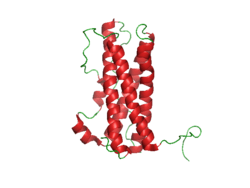
Hyperprolactinemia (Excess Prolactin Hormone)

Prolactin Structure. Courtesy Boris TM at Wikipedia.

What Is Hyperprolactinemia?

Hyperprolactinemia is an excess secretion of prolactin hormone causing an elevated blood level that is characterized by its effects on reproduction: in females causing  amenorrhea and in males causing reduced sexual potency.

Q: What is prolactin?

A: Prolactin is a hormone produced by the the anterior pituitary gland that is transported by the bloodstream to stimulate androgen hormone production in male and estrogen hormone production in female sex glands. However, too much prolactin inhibits hormone production of estrogen in women and testosterone in men.

In pregnant females upon delivery of a baby, prolactin stimulates breast development and milk production for the purpose of feeding the infant. Sucking by the infant stimulates the release of prolactin which keeps the milk supply adequate.

Prolactin also promotes autoimmune mechanisms. Prolactin interferes specifically with B cell tolerance induction, enhances proliferative response to antigens and mitogens and increases the production of immune globulins, cytokines and autoantibodies.1

Other conditions that can stimulate prolactin release include nutritional deficiencies, thyroid stimulating hormone (TSH) produced by the pituitary gland, stress, exercise, and anterior pituitary tumors.

What Is An Elevated Prolactin Level In Celiac Disease and/or Gluten Sensitivity?

Sources:
  1. Shelly S, Boaz M, Orbach H. Prolactin and autoimmunity. Autoimmun Rev. 2012 May;11(6-7):A465-70. doi: 10.1016/j.autrev.2011.11.009. []

Post-Cricoid Carcinoma: definition

A malignancy with early metastasis and poor prognosis arising in the hypopharynx, the region of the throat lying behind the voice box (larynx). Symptoms start out as difficulty swallowing (dysphagia) that progress to the feeling…