Skip to content

Blepharitis, Non-Infectious (Swollen Eyelids)

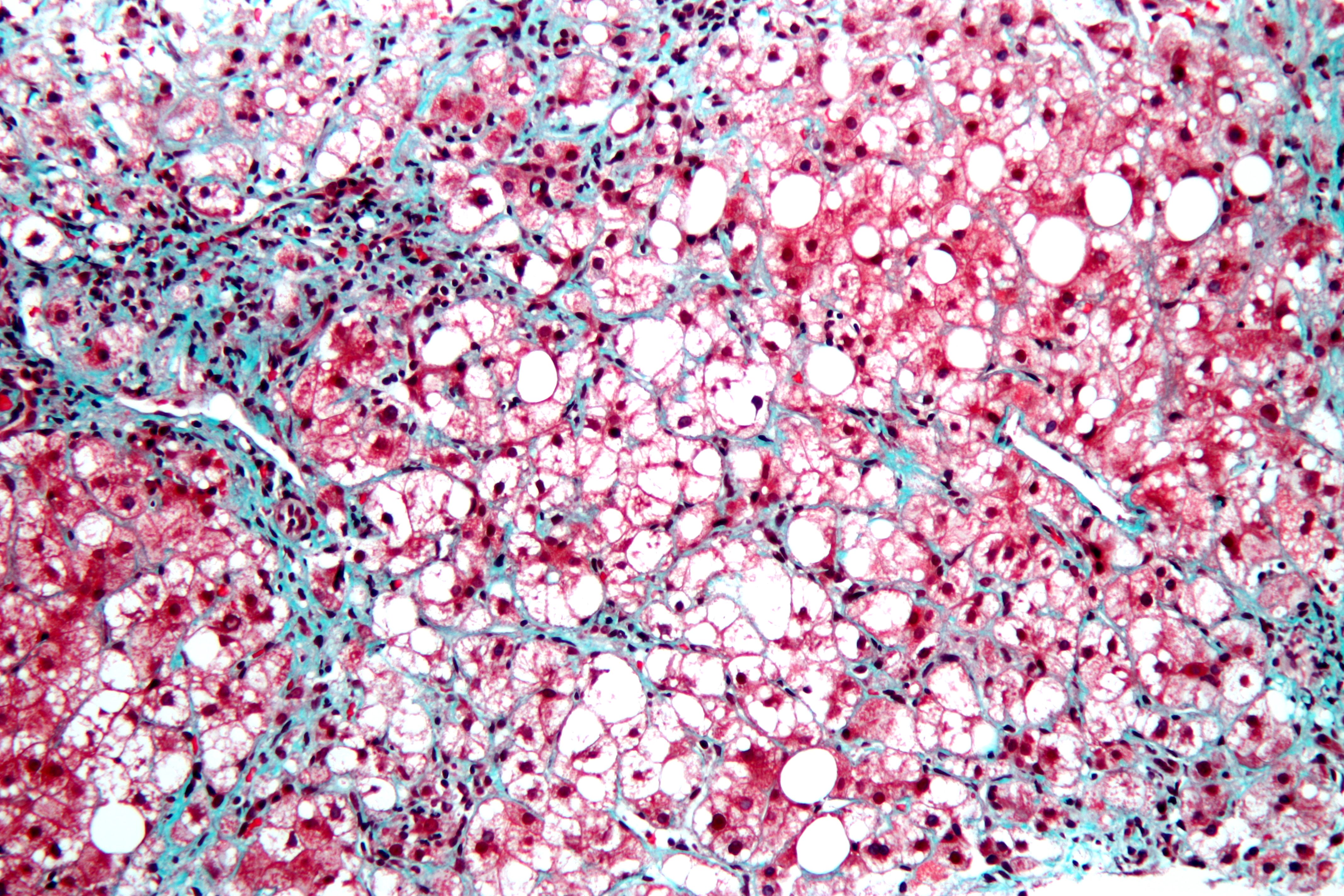
This is a stained liver biopsy sample showing advanced cellular changes in non-alcoholic fatty liver disease. Blue is fibrosis. White is fat accumulation in degenerated cells. Courtesy of Nephron's work.
This is a stained liver biopsy sample showing advanced cellular changes in non-alcoholic fatty liver disease. Blue is fibrosis. White is fat accumulation in degenerated cells. Courtesy of Nephron’s work.

What Is Non-Alcoholic Fatty Liver Disease?

N on-alcoholic fatty liver is a non-inflammatory liver disorder characterized by degenerative changes in the liver caused by excessive accumulation of lipid (fat) in hepatocytes (liver cells) that is called free fatty acid-generated lipotoxicity.

Non-alcoholic fatty liver shows an increase in liver enzymes called transaminases.

Q: What are the enzymes that increase?

A: The transaminases that increase are ALT and AST. ALT is the abbreviation for alanine aminotransferase enzyme and AST is the abbreviation for aspartate aminotransferase enzyme. They are commonly measured in blood tests to determine liver function and when elevated indicate inflammation.

What Is Non-Alcoholic Fatty Liver In Celiac Disease and/or Gluten Sensitivity?

Lymphocyte: definition

A small white blood cell that plays a major role in defending the body against disease. There are two types of lymphocytes: B cells, which make antibodies that attack bacteria and toxins, and T cells… 

Juvenile Diabetes (Type 1 Diabetes Mellitus)

Muscle pain in celiac disease and gluten sensitivityWhat Is Chronic Muscle Pain And Tenderness?

M uscle pain and tenderness, also called myalgia, is a disorder of muscle tissue.

Muscle pain that is ongoing or chronic can result from a variety of disorders, infections, overuse, injury, as an unwanted effect of certain medications, toxic substances, celiac disease, and certain nutritional deficiencies.

What Is Muscle Pain and Tenderness In Celiac Disease and/or Gluten Sensitivity?

Anemia, Refractory Iron Deficiency In Childhood (Unresponsive To Iron)

Psoriasis_on_back[1]

 What Is Psoriasis?

P soriasis is a chronic, autommune relapsing skin disorder characterized by scaling, erythema (redness), and less commonly, pustulation.1 

The body surface area affected and the degree to which psoriasis is a problem varies considerably among patients and over time.2 Often there are additional manifestations in the nails and in joints.3

Q: Are there different forms of psoriasis?

A: There are five forms of psoriasis. The lesions in all forms are itchy and red but vary in appearance and severity. Plaque psoriasis is the most common form observed in more than 80% of patients. Atypical forms include guttate, inverse, pustular, and erythrodermic psoriasis.4

  • Plaque psoriasis features thickened or raised red areas that have a distinct edge and are covered with silvery white buildup of flaky skin typically on elbows, knees, scalp and buttocks.
  • Gutate psoriasis appears as small, flat red patches with shiny buildup that are not usually painful, just itchy. There may be a few or many patches and they can group together.
  • Inverse psoriasis affects folds of skin, armpits and the groin area. Lesions are deep red with shiny buildup. It can be a thin red area along a crease line or involve, for example, the whole armpit.
  • Pustular psoriasis features an itchy, red base followed by blisters of white, non-infectious pus that appears glossy after a day or two and then sloughs in cycles. These areas may be limited to certain areas such as the hands and feet or be more widespread.
  • Erythrodermic psoriasis involves large areas of the body’s surface, inflaming normal skin and changing it into very red, raw looking flesh that is painful, swollen and itchy. This form requires extensive treatment, and complications can be life-threatening. Fortunately, this form of psoriasis is the least common.

Psoriasis in children has been reported to differ from that among adults being more frequently itchy and plaque lesions are relatively thinner, softer, and less scaly, face and flexural involvement is common and guttate type is the characteristic presentation.5

In children, psoriasis is a common skin disorder with about one third of all patients having onset of disease in the first or second decade of life. A chronic disfiguring skin disease, such as psoriasis, in childhood is likely to have profound emotional and psychological effects, and hence requires special attention.6

What Is Psoriasis In Celiac Disease and/or Gluten Sensitivity?

Sources:

  1. Addolorato G, Parente A, de Lorenzi G, et al. Rapid regression of psoriasis in a coeliac patient after gluten-free diet. A case report and review of the literature. Digestion. 2003;68(1):9-12. []
  2. Stern, R. S., Nijsten, T., Feldman, S. R., Margolis, D. J. and Rolstad, T.

    Psoriasis is common, carries a substantial burden even when not extensive, and is associated with widespread treatment dissatisfaction. J. Invest. Dermatol. Symp.. 2004 Mar;9(2):136-9.. []

  3. Weigle N, McBane S. Psoriasis. Am Fam Physician. 2013 May 1;87(9):626-33. []
  4. Weigle N, McBane S. Psoriasis. Am Fam Physician. 2013 May 1;87(9):626-33. []
  5. Dogra S, Kaur I. Childhood psoriasis. Indian J Dermatol Venereol Leprol. 2010 Jul-Aug;76(4):357-65. doi: 10.4103/0378-6323.66580. []
  6. Dogra S, Kaur I. Childhood psoriasis. Indian J Dermatol Venereol Leprol. 2010 Jul-Aug;76(4):357-65. doi: 10.4103/0378-6323.66580. []

Penicillin V Impaired Absorption in Children 

osteomalacic myopathy in celiac diseaseWhat Is Osteomalacic Myopathy?

O steomalacic myopathy is a major feature of osteomalacia that is characterized by painful muscle weakness involving the thighs and upper arms and hyperreflexia.

Q: What is hyperreflexia?

A: Hyperreflexia means the action of reflexes is increased. Reflex action is an involuntary, or automatic, response to a stimulus. A reflex action is complicated but essentially depends on  a normal responding muscle which is altered in osteomalacia.

Osteomalacic myopathy is diagnosed on bloodwork that shows deficient levels of vitamin D and elevated levels of parathyroid hormone and alkaline phosphatase, a bone enzyme.

What Is Osteomalacic Myopathy In Celiac Disease and/or Gluten Sensitivity?

Bleeding: Fecal Occult Blood In Children 

Muscle fiber anatomy. Courtesy NIH.
Muscle Fiber Anatomy. Courtesy NIH.

What Is Muscle Weakness?

M uscle weakness is the impaired status of muscle function characterized by decreased or low muscle strength and inability to perform normal work such as lifting a pot off the stove.

Q: How do muscles work?

A: Muscles do their work by contracting or shortening. For example, to move the foot up and down at the ankle, muscles attached to the foot by tendons must contract to shorten or relax to return to their resting length. Calf muscles contract to point the foot down (flexion) while the shin muscles relax (extension).  For the foot to point up, calf muscles relax while the opposing shin muscles contract.

Each muscle is made up of individual muscle fibers. A muscle fiber is a long cylindrical cell that contains many nuclei, mitochondria, and sarcomeres. Each muscle fiber is surrounded by a thin layer of connective tissue called the endomysium.

Approximately 20–80 of these muscle fibers are grouped together in a parallel arrangement called a muscle fascicle or fiber bundle that is encapsulated by a perimysium. A distinct muscle is formed by enveloping a large number of muscle fascicles in a thick collagenous external sheath extending from the tendons called the epimysium.1

Muscles fall into three types:

  • Voluntary muscles.  These muscles, also called skeletal, we can control by will. Voluntary muscles function by contracting their fibers to draw one part of the body toward another in flexion while opposing muscles that extend or pull a body part away from another. They move our bones to perform activities such as walking to get somewhere, chewing to eat food, lifting to do work, and moving the eyeball to look at something.
  • Involuntary muscles. These muscles work independently of our conscious control. They are needed for internal organs, sphincters, and other parts to do their work, such as peristalsis in the gut that must function at all times to digest and move food, the squirting of bile juice into the duodenum by the Sphincter of Odi in the presence of fat eaten, and action of the pupil to see.
  • Cardiac muscles. These muscles are specialized to keep the heart functioning at all times.

  Muscle weakness can involve all types of muscles.

What Is Muscle Weakness In Celiac Disease and/or Gluten Sensitivity?

Sources:
  1. http://www.ncbi.nlm.nih.gov/books/NBK57140/ []

Dermatitis Herpetiformis In Childhood

muscle wastingWhat Is Muscle Wasting?

M uscle wasting, or atrophy, is a muscle disorder resulting from the loss of muscle tissue which is characterized by thin muscles that have reduced strength and endurance.

What Is Muscle Wasting In Celiac Disease and/or Gluten Sensitivity?

Glycogenic Acanthosis (Esophageal Plaques)

What Is Intraepithelial Lymphocytosis In Normal Small Bowel Samples? I ntraepithelial lymphocytosis is characterized by an abnormal increase in the numbers of intraepithelial lymphocytes (IELs) that are present in the small intestinal mucosa. Q: What… 

Chronic Bullous Dermatosis of Childhood or Linear IgA Dermatosis

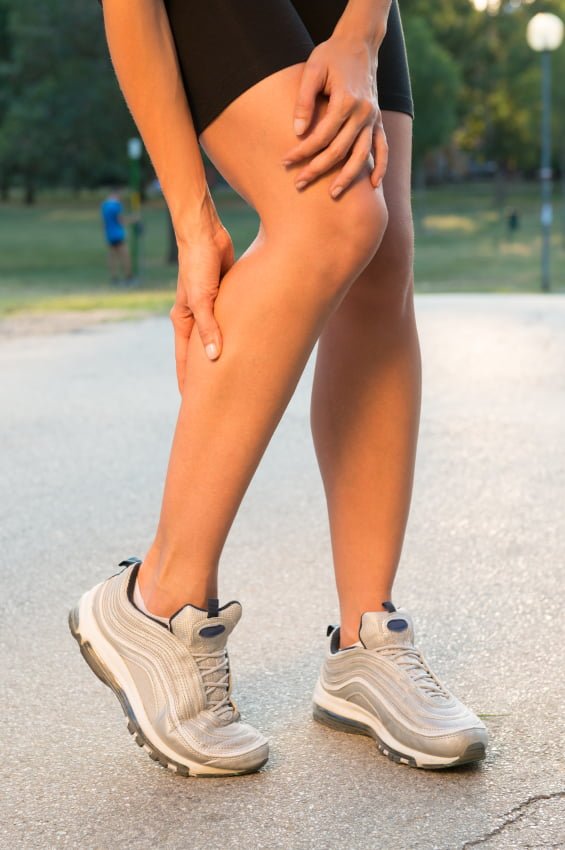
Muscle spasm and cramping in celiac disease and gluten sensitivity symptomWhat Are Muscle Spasm, Muscle Cramps?

M uscle spasm and muscle cramps are  disorders of muscle function caused by painful involuntary contractions of affected skeletal muscles characterized by limited movement.

Q: What is the difference between muscle spasm and cramps?

A: Cramps are stronger and more painful than spasms, occurring while the muscle is in its most shortened state.

Skeletal muscles are those that move the body skeleton to do work as we choose. Examples are muscles that move the mouth, arms,  hands, legs, and feet.

What Are Muscle Spasm, Muscle Cramps In Celiac Disease and/or Gluten Sensitivity?

Delayed Puberty In Girls 

sick woman on bed, symptom of cold, flu, insomnia, stress, headache, hangover, dizzinessWhat Is Hypokalemic Rhabdomyolysis?

H ypokalemic rhabdomyolysis is an acute and sometimes fatal disease due to its rapid progression of muscle destruction when untreated.

It is characterized by the accumulation of by-products of skeletal muscle destruction in the renal (kidney) tubules and producing acute kidney failure caused by rapid potassium loss.

This condition puts you in bed because the legs muscles cannot support the body and arms are too weak to move.

What Is Hypokalemic Rhabdomyolysis In Celiac Disease and/or Gluten Sensitivity and Dermatitis Herpetiformis?