
Contents
What Is Collagenous Colitis?
[dropcap]C[/dropcap]ollagenous colitis is a disease of the large intestine (colon) that is characterized by microscopic inflammation of the surface mucosal lining and an abnormally thickened collagen band of tissue that develops wthin the lining of the colon.
The thicker than normal layer of collagen of at least 10 µm (reference value: 2–7 µm) can vary in different locations. Inflammation occurs with increased numbers of lymphocytes (white blood cells) and plasma cells and epithelial (surface cell) damage. These changes can only be seen under microscopic examination of multiple biopsied tissue samples taken during a colonoscopy procedure.
Q: What is collagen?
A: Collagen is a strong, fibrous protein found in connective tissue of the colon and many other tissues such as tendons. The normal basement membrane in the bowel consists mainly of collagen type IV, laminin, and fibronectin. The increased collagen band observed in collagenous colitis consists basically of collagen type I and III, which are the subtypes produced by repair functions, indicating a reactive origin to some irritant or drug.1
The biopsies should preferably be taken from the ascending colon, since the pathological hallmarks may be absent in the descending colon, and in the normally occurring thicker collagen layer in the rectosigmoid region.1 Inflammation of the ileum (last segment of the small intestine next to colon) is common.2
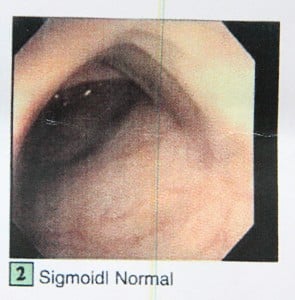
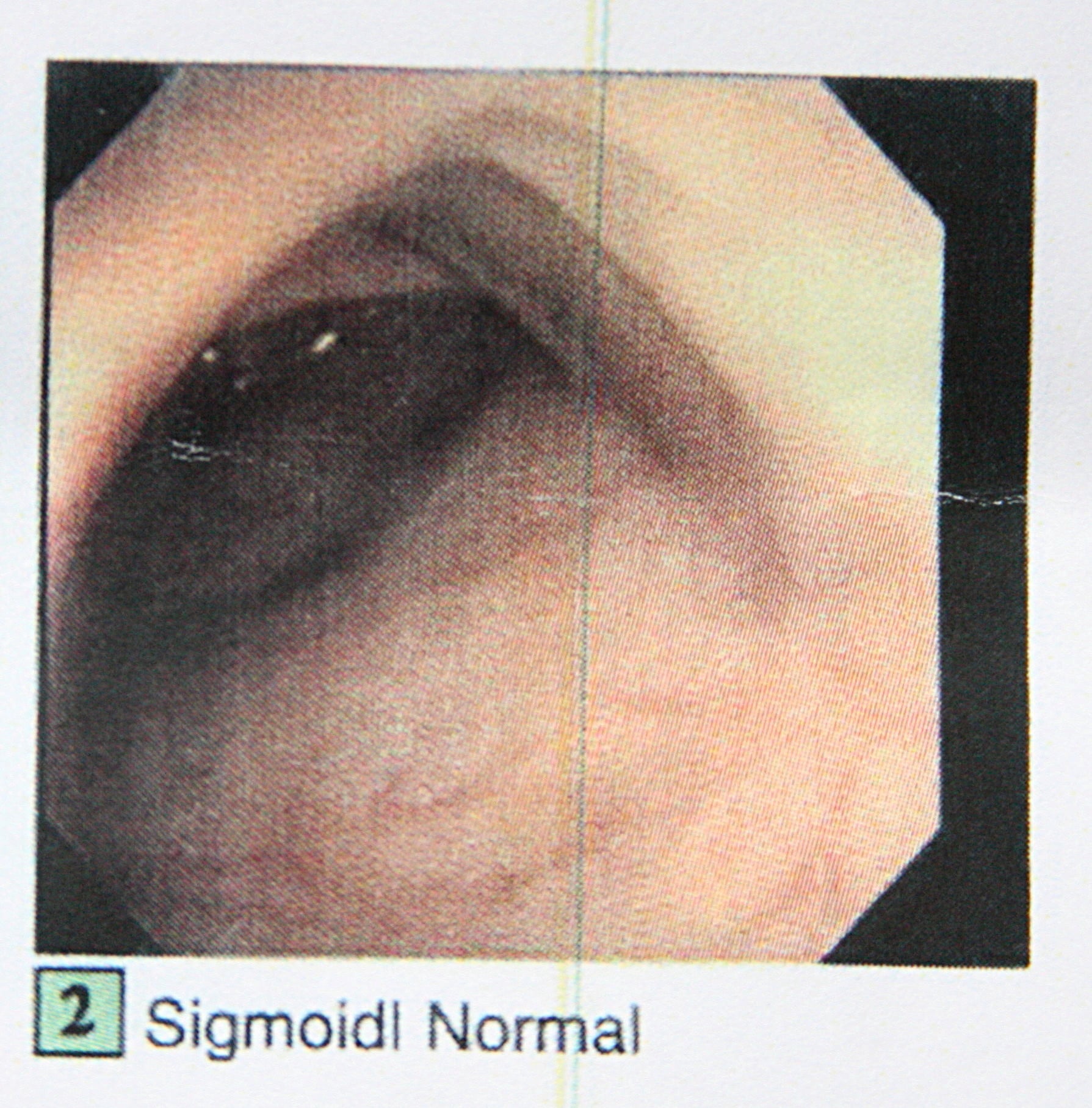
Endoscopy and radiological (x-ray) examinations are usually normal.3
Autoimmune disorders are frequently seen in adult patients with collagenous colitis.4 In the study below by Koskela et al. concomittent autoimmune diseases were present in 53% of patients with collagenous colitis.5
Importantly, the finding of collagenous colitis in patients with autoimmune diseases may reflect the treatment with NSAIDs (non-steroidal anti-inflammatory drugs), such as Ibuprofin and aspirin, PPIs (proton pump inhibitors), and other drugs. However, if secondary forms of collagenous colitis are not taken into consideration, underlying, treatable diseases may be overlooked, while only the gastrointestinal symptoms are treated symptomatically or with budesonide (a steroid).6
Treatment with budesonide steroid is efficacious irrespective of bile acid malabsorption.7
Budesonide at a mean dose of 4.5 mg/day maintained clinical remission for at least 1 year in the majority of patients with collagenous colitis and preserved health-related quality of life without safety concerns. Treatment extension with low-dose budesonide beyond 1 year may be beneficial given the high relapse rate after budesonide discontinuation.8
See below for nutritional deficiency problems caused by steroid usage and steps to be taken for correction.
What Is Collagenous Colitis In Celiac Disease and/or Gluten Sensitivity?
 Relationship between collagenous colitis and celiac disease. Collagenous colitis is an immune complication of celiac disease. All patients with collagenous colitis who were found to have celiac disease had severely abnormal small bowel biopsy changes characteristic of untreated celiac disease.
- Relationship between collagenous colitis and diagnostic work-up for celiac disease. Diagnosis of collagenous colitis should lead the clinician to consider exclusion of underlying hidden celiac disease.9,10
- Relationship between collagenous colitis and gluten. The association between celiac disease and other immune disorders may be due to the sharing of a common genetic background, such as HLA antigens. However, in a very large study, involving 909 patients with celiac disease, Ventura and his associates found that the development of immune disorders in celiac disease was clearly related to the duration of exposure to gluten.11
- Relationship between collagenous colitis and lysozyme as a response to inflammation. In collagenous colitis there is an increased production of lysozyme which supports a bacterial cause for this disease. This up-regulation is a response directed to the special types of bacteria recently detected in this disease. The aim of lysozyme up-regulation is to protect individual mucosal segments to chronic inflammation. Bacteria Firmicutes and Bacteroidetes were found to dominate the microbiota with seven phylotypes (similar bacteria) among 50% of the clones: B. cellulosilyticus, B. caccae, B. thetaiotaomicron, B. uniformis, B. dorei, B. spp., and clones showing similarity to Clostridium clostridioforme.12 This clostridium bacteria is an antibiotic resistant organism that causes invasive infections.
How Prevalent Is Collagenous Colitis In Celiac Disease and/or Gluten Sensitivity?
Celiac disease is found in 20% of patients with collagenous colitis.13 and may be the presenting manifestation of celiac disease.9
What Are The Symptoms Of Collagenous Colitis?
Collagenous colitis is marked by these symptoms:
- Persistent watery non-bloody diarrhea, with or without cramping, that may be continuous or intermittent in most people.
- Constipation in some people.
- Bloating.
- Progressive weight loss.
- Lactose Intolerance.14
How Does Collagenous Colitis Develop?
The etiology in most cases is unknown and most likely multifactoral:6
- Collagenous colitis results from unclear mechanisms involved in the pathogenesis.15
- An immune mechanism may be involved.16
- In collagenous colitis there is an increased production of lysozyme which supports a bacterial etiology for this disease. Lysozyme is a naturally produced substance that protects individual mucosal segments from chronic inflammation by bacteria. This up-regulation is a response directed to the special types of bacteria recently detected in this disease.12
- Deficiency of vitamin A can exacerbate collagenous colitis because vitamin A is required for the integrity of mucous membranes.
Does Collagenous Colitis Respond To Gluten-Free Diet?
Yes. Diarrhea resolved in all patients with celiac disease on a gluten free diet; collagen deposits persisted in more than half of patients.9
It is recommended that fat in the diet be reduced and caffeine and lactose-containing foods be eliminated because they aggravate diarrhea.
NSAIDS (non-steroidal anti-inflammatory drugs), such as Ibuprofin and aspirin, must be avoided because they inflame the gut and worsen collagenous colitis. Tylenol can be used instead for relief of headache or other pain not associated with the belly.
6 Steps To Improve Collagenous Colitis In Celiac Disease and/or Gluten Sensitivity:
- [dropcap]1[/dropcap]Remove the Trigger. Maintain a Strict, Nutritious Gluten Free Diet:
[box type=”shadow” ]Treatment. This condition responds to the complete elimination of gluten, which is the required treatment that improves both collagenous colitis and gut health.
- Gut health is the foundation to restore ALL health. Restored health will enable you to maintain a strict gluten free diet, just as other life tasks will be easier.
- A strict gluten free diet means removing 100% of wheat, barley, rye and oats from the diet.
- Cutting out bread and other obvious sources of gluten is not good enough for recovery. Even 1/8th teaspoon of flour or bread crumb is enough to sustain the inflammation that is damaging your small intestine, causing increased permeability (leaky gut) and allowing undigested gluten to enter your body where it can damage structures and function, and instigate immune inflammatory responses.
Correct Your Individual Nutritional Needs.
- Eat foods that can replenish missing nutrients. Find them under NUTRIENT DEFICIENCIES.
- Take nutritional supplements as needed. Find them under NUTRIENT DEFICIENCIES.
Recovery. You should begin to feel better within a week and notice more energy as inflammation subsides and the absorbing cells that make up the surface lining of your small intestine are better able to function.
- Intestinal lining cells are replaced every 5 days. The healing process is like sunburn where the damaged surface layer of skin sloughs off and is replaced with new normal cells.
- Leaky gut normally resolves in two month after starting a gluten free diet and brings about a big improvement in health. Improvement in intestinal permeability precedes morphometric recovery (cell appearance and structure) of the small intestine in celiac disease.17
- The intestinal lining may take up to a year to heal.[/box]
- [dropcap]2[/dropcap] Reduce Inflammation. Foods to Eat and Foods Not to Eat:
Because gluten is inflammatory, eliminate OTHER inflammatory foods from your diet to reduce an additive effect to gluten. At the same time, try to eat foods that reduce inflammation (anti-inflammatory).
[box type=”shadow” ]Here Are Major Inflammatory Food Types That Reduce Healing:
- Damaging Foods. In susceptible persons, includes corn, dairy (cow), and soy. Lactose, the sugar in any animal milk disrupts intestinal permeability causing leaky gut.18
- Allergenic Foods. Includes foods that trigger the immune sytem to produce IgE antibodies. Allergy testing is the usual way to discover these offending foods.
- Shelf Stable Processed Foods. Includes any that contain additives and preservatives. Look for them on the nutrition label of the box or package. Additives and preservatives also disrupt intestinal permeability causing leaky gut.18
- Fats. Limit deep fried foods, trans-fats, saturated fats (animal fat/butter), and EXCESSIVE omega-6 fatty acid oils like corn oil. Rancid fats, sodium caprate (a medium chain fat), and sucrose monester fatty acid (a food grade surfactant) induce significant disruption of the intestinal barrier that causes leaky gut.18.
- Excessive Refined White Flours (bran layer removed). Includes products made from them such as cookies, bread, cakes, pies. Bran contains the vitamins and minerals that metabolize grains and slows the otherwise rapid entry of sugar from their digestion into the bloodstream. Also disrupt intestinal permeability causing leaky gut.18
- Refined Sugars. Includes white sugar, corn fructose and high fructose corn syrup.
- Certain Spices. Includes paprika and cayenne pepper which disrupt intestinal permeability causing leaky gut.18
- Alcohol and Caffeine. Disrupt intestinal permeability causing leaky gut.18[/box]
[box type=”shadow” ]Here Are Important Anti-Inflammatory Food Types to Promote Health:
- Fruits. Contain ample amounts of vitamins, minerals and phytochemicals which are naturally occuring components in plants that detoxify toxins, carcinogens (reducing the risk by 50%) and mutagens.
- Non-Starchy Vegetables. Support intestinal integrity and provide ample amounts of vitamins, minerals and phytochemicals. Includes green leafy vegetables such as lettuce and kale, also onion, broccoli, garlic, and others.
- High Quality Complex Carbohydrates. Provide vitamins, minerals, and fiber while boosting serotonin levels to help you relax and feel calm. Includes whole grains, legumes, and root vegetables such as carrots, parsnips, sweet potatoes, turnips, red beets, and others.
- Antioxidants. Protect the body from inflammatory oxidant molecules that continually occur and help us handle stress and reduce irritability. Includes vitamin C-containing foods such as lemon, grapefruit, apricot, Brussels sprouts and strawberries, and others. Also, includes vitamin E-containing foods such as nuts, seeds, avocado, olive oil, and others. Cocoa is good, too.
- Omega-3 Fatty Acids. Balance opposing omega-6 fatty acids and bad fats. Fish sources includes tuna, salmon, cod, and others. Plants sources include flax, chia seeds, canola oil, and others.
- Probiotics. Supply normal microbes needed for colon health and health of the body such as these fermented foods: yogurt, kefir, and unpasteurized apple cider vinegar.
- Prebiotics/ High Fiber Foods. Food with fiber keeps our population of colonic microbes healthy.
- Protective Herbs and Spices. See below #6 below for examples.[/box]
- [dropcap]3[/dropcap] Information Sheet You Can Take to Your Doctor or Other Health Professional:
Click here.
- [dropcap]4[/dropcap] Manage Your Medications Safely:
[box type=”shadow” ]
Anti-diarrhea medication such as loperamide (eg. Imodium®) are tried first before steroids, particularly budesonide. The downside to steroids, especially when used long term, is that they cause these multiple nutritional deficiencies some of which can weaken the bowel integrity: Calcium, Vitamin D, Magnesium, Zinc, Vitamin C, Vitamin B6, Vitamin B12, Folic Acid, Selenium, Chromium, Phosphorus.
Certain medications used for other problems cause deficiency of vitamin A that can exacerbate collagenous colitis. Ask your doctor or pharmacist about this possible adverse effect if you are taking any of the drugs listed below. Do not stop prescribed medications without supervision.
This is not a complete listing.
ANTACIDS / ULCER MEDICATIONS
- Pepcid®, Tagamet®, Zantac® deplete Vitamin A.
- Magnesium and Aluminum Antacid preparations (Gaviscon®, Maalox®, Mylanta®) deplete Vitamin A.
CHOLESTEROL DRUGS
- Colestid® and Questran® deplete Vitamin A.
WEIGHT LOSS DRUGS THAT BIND FAT also interfere with absorption of some nutrients.
- Zenicol (Orlistat®) depletes Vitamin A.
[/box]
- [dropcap]5[/dropcap]Nutritional Supplements To Help Correct Deficiencies:
[box type=”shadow” ]
The type and quantity of nutritional supplements that may be needed depend on which nutrients are deficient.
- Multivitamin/mineral combination once a day is useful to improve overall nutrient levels. This is a safe dose, but always check with your doctor to avoid interactions with medications.
- Vitamin A as prescribed following blood test for status.
- If prescribed steroids as a treatment for collagenous colitis or any other disorder, ask about supplementing to restore the nutrients that steroids deplete: Calcium, Vitamin D, Magnesium, Zinc, Vitamin C, Vitamin B6, Vitamin B12, Folic Acid, Selenium, Chromium, Phosphorus.
Storage Note: Store container tightly sealed, away from heat, moisture and direct light to avoid loss of potency. That is, in a safe kitchen cabinet – not in the bathroom or on the kitchen table.[/box]
- [dropcap]6[/dropcap]Manage Natural Remedies:
[box type=”shadow” ]Hydration:
- Eight glasses of water are recommended per day unless there is a contraindication such as kidney or heart disease. The Institute of Medicine recommends approximately 2.7 liters (91 ounces) of total water, from all beverages and foods, each day for women and 3.7 liters (125 ounces) daily of total water for men.
- If you are thirsty, drink water. Add fresh, squeezed lemon to water. Lemon is anti-inflammatory, alkalizing and provides vitamin C.
- Hydration Test: Urine should be pale yellow. Fingertips should be plump, without pruning but this may not be reliable when fingers are swollen with edema. Lips should be plump, without puckering. The feeling of thirst can be unreliable.
- What is wrong with soda, coffee, tea, and alcohol? These drinks are dehydrating, increase acid, and deplete nutrients.[/box]
[box type=”shadow” ]Carminatives. The following anti-inflammatory plant sources called carminitives help heal the digestive tract. They also tone the digestive muscles which improves peristalsis, thus aiding in the expulsion of gas from the stomach and intestine to relieve digestive colic and gastric discomfort.
Carminative Food Remedies:
- Raspberry.
- Carrot is also a cleansing digestive tonic.
- Grape is also bile stimulating and a cleansing remedy for sluggish digestion and laxative.
- Redbeets also stimulate and improve digestion and are easily digested.
- Cabbage also stimulates and improves digestion and is also a liver decongestant.
- Lettuce also stimulates and improves digestion and is also an alterative, meaning it improves the function of organs involved with the digestion and excretion of waste products to bring about a gradual change.
- Potatoes are antispasmodic (due to atropine like properties) and a liver remedy.
Carminative Herb Remedies:
- Sage is also a digestive, astringent, bile stimulant and energy tonic that heals the mucosa. Drink as tea or use in cooking.
- Chamomile, lemon balm, and fennel, (as a tea) also help relieve nervous tension.
- Parsley also relieves indigestion.
- Rosemary as a tea and in cooking also is a nervous system tonic for stress and fatigue, bile stimulant, and can relieve headaches and indigestion.
- Thyme is also soothing remedy useful for stimulating digestion of rich, fatty foods.
Carminative Spice Remedies:
- Cloves are also antispasmodic.
- Nutmeg is also useful for indigestion.
- Ginger.[/box]
[box type=”shadow” ]Exercise Helps: Exercise improves circulation and rids the body of toxins.
- Walking is aerobic exercise that reconditions the whole body to improve stamina. Read more about Exercise and Fitness.
- Weight training builds muscle. Read more about Exercise and Fitness.
- Stretching improves flexibilty. Read more about Exercise and Fitness.
Note: Exercise is important, but the amount and type of exercise undertaken depends on your health. Your first priority is to heal. [/box]
What Do Medical Research Studies Tell About Collagenous Colitis?
RESEARCH STUDY SUMMARIES
“Microscopic colitis: a descriptive clinical cohort study of 795 patients with collagenous and lymphocytic colitis.” This report comprises demographic data, clinical and endoscopic features, and occurrence of celiac and inflammatory bowel disease (IBD) in a large urban cohort of patients with lymphocytic colitis (LC) and collagenous colitis (CC). This study confirms the strong association with celiac disease.
A total of 795 patients with microscopic colitis from two hospitals in Stockholm were included. Medical records were reviewed and clinical data, including endoscopic and histological findings, were compiled.
Forty-three percent had CC (female: male ratio 3.7:1) and 57% had LC (female: male ratio 2.7:1). The mean age at diagnosis of CC was 63 years and of LC was 59 years (p = 0.005). Clinical features were similar in both entities, but the intensity of symptoms differed. Watery diarrhea was reported in 55% in CC patients versus in 43% in LC patients (p = 0.0014), and nocturnal diarrhea in 28% versus 18% (p = 0.002). Subtle endoscopic mucosal findings were reported in 37% of the CC patients and in 25% of the LC patients (p = 0.0011). Colorectal adenomatous polyps were found in 5.3% of all patients. Celiac disease occurred in 6% and IBD occurred in 2.1% of all patients.
CONCLUSIONS:
Clinical features of LC and CC are similar but not identical. CC seems to be a more severe type of bowel inflammation and LC tends to occur earlier in life. Both forms might indeed feature endoscopic findings despite the designation ‘microscopic’.19
“Clinical characteristics of collagenous and lymphocytic colitis.” This study investigating the clinical features of collagenous colitis and lymphocytic colitis demonstrated that collagenous colitis and lymphocitic colitis are largely similar but the differences in the occurrence of autoimmune conditions and bronchial asthma suggest that they differ in immunopathogenesis. Concomittent autoimmune diseases were present in 53% of patients with collagenous colitis.13
“Collagenous colitis as the presenting feature of biopsy-defined celiac disease.” This study investigating the presence of celiac disease in patients with chronic diarrhea and the initial finding of collagenous colitis demonstrated that collagenous colitis may be the presenting clinical and pathologic feature of celiac disease. All patients found to have celiac disease had severely abnormal small bowel biopsy changes characteristic of untreated celiac disease. In some patients lymphocytic or collagenous gastritis were also detected with or without celiac disease. Diagnosis of collagenous colitis should lead the clinician to consider exclusion of underlying hidden celiac disease.20
Sources:- Ohlsson B. New insights and challenges in microscopic colitis. Therap Adv Gastroenterol. 2015 Jan;8(1):37-47. doi: 10.1177/1756283X14550134. [↩] [↩]
- Bjørnbak C, Engel PJ, Nielsen PL, Munck LK. Microscopic colitis: clinical findings, topography and persistence of histopathological subgroups. Aliment Pharmacol Ther. 2011 Nov;34(10):1225-34. doi: 10.1111/j.1365-2036.2011.04865.x. [↩]
- Abdo AA, Urbanski SJ, Beck PL. Lymphotcytic and collagenous colitis: the emerging entity of microscopic colitis. An update on pathophysiology, diagnosis and management. Canadian Journal of Gastroenterology. Jul 2003;17(7):425-32. [↩]
- Leung ST, Chandan VS, Murray JA, Wu TT. Collagenous gastritis: histopathologic features and association with other gastrointestinal diseases. Am J Surg Pathol. 2009 May;33(5):788-98. doi: 10.1097/PAS.0b013e318196a67f. [↩]
- Koskela RM, Niemela SE, Karttunen TJ, Lehtola JK. Clinical characteristics of collagenous and lymphocytic colitis. Scandanavian Journal of Gastroenterology. Sep 2004;39(9):837-45. [↩]
- Ohlsson B. New insights and challenges in microscopic colitis. Therap Adv Gastroenterol. 2015 Jan;8(1):37-47. doi: 10.1177/1756283X14550134. [↩] [↩]
- Bjørnbak C, Engel PJ, Nielsen PL, Munck LK. Microscopic colitis: clinical findings, topography and persistence of histopathological subgroups. Aliment Pharmacol Ther. 2011 Nov;34(10):1225-34. doi: 10.1111/j.1365-2036.2011.04865.x. [↩]
- Münch A, Bohr J, Miehlke S, et al. Low-dose budesonide for maintenance of clinical remission in collagenous colitis: a randomised, placebo-controlled, 12-month trial. Gut. 2014 Nov 25. pii: gutjnl-2014-308363. doi: 10.1136/gutjnl-2014-308363. [↩]
- Freeman HJ. Collagenous colitis as the presenting feature of biopsy-defined celiac disease. Journal of Clinical Gastroenterology. Sep 2004;38(8):664-8. [↩] [↩] [↩]
- Busto-Bea V, Crespo-Pérez L, García-Miralles N, Ruiz-del-Árbol-Olmos L, Cano-Ruiz A. Collagenous sprue: don´t forget connective tissue in chronic diarrhea evaluation. Rev Esp Enferm Dig. 2013 Mar;105(3):171-4. [↩]
- La Villa G, Pantaleo P, Tarquini R, Cirami L, Perfetto F, Mancuso F, Laffi G. Multiple immune disorders in unrecognized celiac disease: a case report. World J Gastroenterol. 2003;9(6):1377-1380, [↩]
- Rubio CA. The Natural Antimicrobial Enzyme Lysozyme is Up-Regulated in Gastrointestinal Inflammatory Conditions. Pathogens. 2014 Jan 16;3(1):73-92. doi: 10.3390/pathogens3010073. [↩] [↩]
- Koskela RM, Niemela SE, Karttunen TJ, Lehtola JK. Clinical characteristics of collagenous and lymphocytic colitis. Scandanavian Journal of Gastroenterology. Sep 2004;39(9):837-45. [↩] [↩]
- Koskela RM, Niemela SE, Karttunen TJ, Lehtola JK. Clinical characteristics of collagenous and lymphocytic colitis. Scandanavian Journal of Gastroenterology. Sep 2004;39(9):837-45. [↩]
- Abdo AA, Urbanski SJ, Beck PL. Lymphotcytic and collagenous colitis: the emerging entity of microscopic colitis. An update on pathophysiology, diagnosis and management. Canadian Journal of Gastroenterology. Jul 2003;17(7):425-32. [↩]
- Koskela RM, Niemela SE, Karttunen TJ, Lehtola JK. Clinical characteristics of collagenous and lymphocytic colitis. Scandanavian Journal of Gastroenterology. Sep 2004;39(9):837-45. [↩]
- Cummins AG, Thompson FM, Butler RN, et al. Improvement in intestinal permeability precedes morphometric recovery of the small intestine in coeliac disease. Clinical Science. Apr 2001;100(4):379-86. [↩]
- Farhadi A, Banan A, Fields J, Keshavarzian A. Intestinal barrier: an interface between health and disease. Journal of Gastroenterology and Hepatology. 2003;18:479-91. [↩] [↩] [↩] [↩] [↩] [↩]
- Mellander MR, Ekbom , Hultcrantz R, Löfberg R, Öst Å, Björk J. Microscopic colitis: a descriptive clinical cohort study of 795 patients with collagenous and lymphocytic colitis. Scand J Gastroenterol. 2016;51(5):556-62. doi: 10.3109/00365521.2015.1124283. Epub 2015 Dec 18. [↩]
- Freeman HJ. Collagenous colitis as the presenting feature of biopsy-defined celiac disease. Journal of Clinical Gastroenterology. Sep 2004;38(8):664-8. [↩]