Contents
 What Is Atherosclerosis?

[dropcap]A[/dropcap]therosclerosis is a disease of arteries involving the buildup of fatty material called plaque along the walls of medium and large arteries characterized by patchy subintimal thickening, hardening, and loss of elasticity of blood vessels.
The intima is the innermost layer of an artery, having contact with blood. The subintima is beneath it.
Q: What happens when arteries become narrowed and less flexible?
A: Narrowing of the inside diameter of blood vessels and hardening of their walls reduce or obstruct blood flow through them which impairs their ability to supply tissues of the body with oxygen and nourishment.
When tissues are deprived of oxygen, pain and dysfunction results such as angina pectoris involving heart muscle because the heart continually needs oxygen never being able to rest.
It is thought that atherosclerosis develops from 1) epithelial cell dysfunction of the intima, and 2) lipid (fat) accumulation in smooth muscle cells and in foam cells, causing buildup of fatty deposits on the inside walls progressing to fibrous plaque formation. That is, intimal smooth muscle cells are surrounded by connective tissue and intracellular and extracellular lipids (fat build-up inside and outside of these cells).
What Is Atherosclerosis In Celiac Disease and/or Gluten Sensitivity?
- Atherosclerosis is a complication of celiac disease.
Hypothesis for development of atherosclerosis in celiac disease: Inflammatory responses of the mucosal immune system in celiac disease patients are not limited to the small intestine but also affect arteries of all sizes. T lymphocytes specific to tTG-deamidated gluten peptides were found in peripheral blood of untreated celiac disease patients. These patients presented a memory cell characterisitic and expressed β7 integrin as a marker of gut homing. Analysis of cytokine profile showed that circulating T lymphocytes and macrophages secrete the inflammatory IFN-gamma (interferon-gamma) and IL-6 (interleukin-6) cytokines. Thus, pro-inflammatory cells found in blood of celiac disease patients could activate processes inducing atherosclerosis.
Cytokine-stimulated endothelial cells start to express adhesion molecules and initiate the binding of inflammatory T lymphocytes that are found in the early atherosclerosis plaques. This hypothesis was confirmed by experiments in mouse atherosclerosis models, which proved a disease producing role for CD4+ T lymphocytes. In atherosclerosis patients, the presence of increased percentages of CD4+ T lymphocytes producing IFN-gamma and TNF-alfa in complicated plaques in comparison with uncomplicated ones, supports the concept of the key role of activated T lymphocyte cells in the progression of atherosclerotic lesions.
- Dysfunction of epithelial cells that line arteries results from elevated homocysteine blood levels. Homocysteine is an amino acid that is briefly formed in the breakdown of the amino acid methionine. Homocysteine is normally converted to cystathione and then to cysteine by means of a vitamin B6 dependent enzyme. In the reverse, conversion of homocysteine to methionine requires an enzyme dependent on adequate folic acid and vitamin B12 levels. Inadequate levels of these B vitamins allow the homocyteine level to rise which is toxic to blood vessels.
Folic acid, pyridoxine, and vitamin B12 are involved in the metabolic removal of homocysteine, but folic acid deficit occurs the most often in celiac disease.1
- Lipid (fat) accumulation in smooth muscle cells results from elevated plasma triglyceride levels and elevated plasma LDL (low density cholesterol), the latter being rendered more atherogenic by oxidation. Insufficient antioxidant molecules (such as vitamin E) are involved. Omega-3 fatty acids, a component of lipoproteins and a precursor of leukotrienes and series 3 prostaglandins, exert a specific preventive effect against atherosclerosis. Their action lowers tiglycerides by inhibiting VLDL (the main source of LDL), and apolipoprotein B-100 synthesis and by decreasing post prandial lipemia (fat in the blood after eating).2
- Inflammation. Celiac patients have greater carotid intima-media thickness (vessel walls) as compared with healthy individuals. Patients with type 1 diabetes mellitus (T1DM) and celiac disease show more severe subclinical atherosclerosis as compared with those presenting T1DM or celiac disease only, while no difference was found between T1DM and celiac disease. This finding suggests that the association of these autoimmune diseases might accelerate the atherosclerotic process.3
How Prevalent Is Atherosclerosis In Celiac Disease and/or Gluten Sensitivity?
- Atherosclerosis has increased prevalence in celiac disease.
- The largest study to date on ischemic heart disease (IHD) risk in celiac disease, with almost 1000 deaths from IHD during follow-up, examined the risk of IHD incidence in individuals with celiac disease based on small intestinal histopathology. Reseachers found that individuals with celiac disease or small intestinal inflammation have a 19% increased risk of IHD. A positive association between latent celiac disease (non-inflammatory celiac disease) and IHD was not found.4
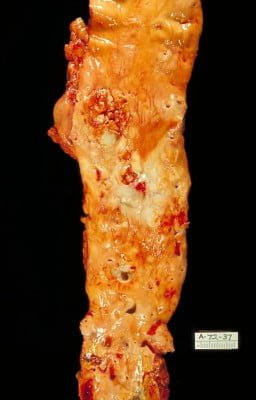
What Are The Symptoms Of Atherosclerosis?
Atherosclerosis is marked by gradual development of these symptoms:
- Hypertension.
- Claudication (cramping pain in the legs on walking that goes away with rest) due to partial blockage of arteries.
- Angina on exertion.
Acute occlusion of a major vessel may be dramatic and fatal such as stroke or heart attack.
How Does Atherosclerosis In Celiac Disease and/or Gluten Sensitivity Develop ?
Atherosclerosis results from nutritional deficiencies that are made worse by inflammation in active celiac disease:
- Hyperhomocysteinemia due to deficiencies of folic acid, vitamin B12, and pyridoxine;
- Oxidized LDL cholesterol due to deficiency of antioxidants such as vitamin E; and
- Elevated triglyceride levels due to deficiency of omega-3 fatty acids in celiac disease.
- Dysbiosis (abnormal alterations of normal microbe populations in the gut) is innloved in the pathogenesis of atherosclerosis by not producing adequate anti-oxidants. The gut metagenome of symptomatic atherosclerosis patients was enriched in genes encoding peptidoglicans, i.e., molecules which may contribute to atherosclerosis by priming the pro-inflammatory innate immunity, whereas genes involved in synthesis of anti-inflammatory and anti-oxidants (β-carotene) were depleted.5
Does Atherosclerosis Respond To Gluten-Free Diet?
Gluten free diet containing deficient nutrients may resolve nutritional causes of atherosclerosis with normalization of homocysteine, LDL and triglyceride levels. Supplementation suggested.
Overall diet content is very important. A meta-analysis (examination) of 9 cohort studies observed a protective effect of fruits and vegetables by means of their protective constituents such as potassium, folate, vitamins, fiber, and other phenolic compounds in the risk of developing coronary heart disease and stroke. The study consisted of 91,379 men, 129,701 women, and 5,007 coronary heart disease (CHD) events. The risk of CHD was decreased by 4% for each additional portion per day of fruit and vegetable intake and by 7% for fruit intake.6
6 Steps To Improve Atherosclerosis Related to Celiac Disease and/or Gluten Sensitivity:
- [dropcap]1[/dropcap]Remove the Trigger. Maintain a Strict, Nutritious Gluten Free Diet:
[box type=”shadow” ]Treatment. This condition responds to the complete elimination of gluten, which is the required treatment that improves both atherosclerosis and gut health.
- Gut health is the foundation to restore ALL health. Restored health will enable you to maintain a strict gluten free diet, just as other life tasks will be easier.
- A strict gluten free diet means removing 100% of wheat, barley, rye and oats from the diet.
- Cutting out bread and other obvious sources of gluten is not good enough for recovery. Even 1/8th teaspoon of flour or bread crumb is enough to sustain the inflammation that is damaging your small intestine, causing increased permeability (leaky gut) and allowing undigested gluten to enter your body where it can damage structures and function, and instigate immune inflammatory responses.
Correct Your Individual Nutritional Needs.
- Eat foods that can replenish missing nutrients. Find them under NUTRIENT DEFICIENCIES.
- Take nutritional supplements as needed. Find them under NUTRIENT DEFICIENCIES.
Recovery. You should begin to feel better within a week and notice more energy as inflammation subsides and the absorbing cells that make up the surface lining of your small intestine are better able to function.
- Intestinal lining cells are replaced every 5 days. The healing process is like sunburn where the damaged surface layer of skin sloughs off and is replaced with new normal cells.
- Leaky gut normally resolves in two month after starting a gluten free diet and brings about a big improvement in health. Improvement in intestinal permeability precedes morphometric recovery (cell appearance and structure) of the small intestine in celiac disease.7
- The intestinal lining may take up to a year to heal.[/box]
- [dropcap]2[/dropcap] Reduce Inflammation. Foods to Eat and Foods Not to Eat:
Because gluten is inflammatory, eliminate OTHER inflammatory foods from your diet to reduce an additive effect to gluten. At the same time, try to eat foods that reduce inflammation (anti-inflammatory).
[box type=”shadow” ]Here Are Major Inflammatory Food Types That Reduce Healing:
- Damaging Foods. In susceptible persons, includes corn, dairy (cow), and soy. Lactose, the sugar in any animal milk disrupts intestinal permeability causing leaky gut.8
- Allergenic Foods. Includes foods that trigger the immune sytem to produce IgE antibodies. Allergy testing is the usual way to discover these offending foods.
- Shelf Stable Processed Foods. Includes any that contain additives and preservatives. Look for them on the nutrition label of the box or package. Additives and preservatives also disrupt intestinal permeability causing leaky gut.8
- Fats. Limit deep fried foods, trans-fats, saturated fats (animal fat/butter), and EXCESSIVE omega-6 fatty acid oils like corn oil. Rancid fats, sodium caprate (a medium chain fat), and sucrose monester fatty acid (a food grade surfactant) induce significant disruption of the intestinal barrier that causes leaky gut.8.
- Excessive Refined White Flours (bran layer removed). Includes products made from them such as cookies, bread, cakes, pies. Bran contains the vitamins and minerals that metabolize grains and slows the otherwise rapid entry of sugar from their digestion into the bloodstream. Also disrupt intestinal permeability causing leaky gut.8
- Refined Sugars. Includes white sugar, corn fructose and high fructose corn syrup.
- Certain Spices. Includes paprika and cayenne pepper which disrupt intestinal permeability causing leaky gut.8
- Alcohol and Caffeine. Disrupt intestinal permeability causing leaky gut.8[/box]
[box type=”shadow” ]Here Are Important Anti-Inflammatory Food Types to Promote Health:
- Fruits. Contain ample amounts of vitamins, minerals and phytochemicals which are naturally occuring components in plants that detoxify toxins, carcinogens (reducing the risk by 50%) and mutagens.
- Non-Starchy Vegetables. Support intestinal integrity and provide ample amounts of vitamins, minerals and phytochemicals. Includes lettuce, kale, onion, broccoli, garlic, and others.
- High Quality Complex Carbohydrates. Provide vitamins, minerals, and fiber while boosting serotonin levels to help you relax and feel calm. Includes whole grains, legumes, and root vegetables such as carrots, parsnips, sweet potatoes, turnips, red beets, and others.
- Antioxidants. Protect the body from inflammatory oxidant molecules that continually occur and help us handle stress and reduce irritability. Includes vitamin C-containing foods such as lemon, grapefruit, apricot, Brussels sprouts and strawberries, and others. Also, includes vitamin E-containing foods such as nuts, seeds, avocado, olive oil, and others. Cocoa is good, too.
- Omega-3 Fatty Acids. Balance opposing omega-6 fatty acids and bad fats. Fish sources includes tuna, salmon, cod, and others. Plants sources include flax, chia seeds, canola oil, and others.
- Probiotics. Supply normal microbes needed for colon health and health of the body such as these fermented foods: yogurt, kefir, and unpasteurized apple cider vinegar.
- Prebiotics/ High Fiber Foods. Food with fiber keeps our population of colonic microbes healthy.
- Protective Herbs and Spices. See below #6 below for examples.[/box]
- [dropcap]3[/dropcap] Information Sheet You Can Take to Your Doctor or Other Health Professional:
Click here.
- [dropcap]4[/dropcap] Manage Your Medications Safely:
[box type=”shadow” ]
Certain prescription drugs can cause nutritional deficiencies that promote atherosclerosis including vitamin B12, vitamin B6, and folic acid. Ask your doctor or pharmacist about this possible adverse effect if you are taking any of the drugs listed below. Do not stop prescribed medications without supervision.
This is not a complete listing.
FEMALE HORMONES disrupt intestinal permeability.
- Oral Contraceptives (Norinyl®, Ortho-Novum®, Triphasil®, and others) deplete Vitamin B6, Vitamin B12, Folic Acid, Selenium.
- Oral Estrogen/Hormone Replacement (Evista®, Prempro®, Premarin®, Estratab® and others) deplete Vitamin B6, Vitamin B12, Folic Acid.
DIURETICS
- Loop Diuretics (Lasix®, Bumex®, Edecrin®) depletes Vitamin B6.
- Potassium Sparing Diuretics (Midamor®, Aldactone®, Dyrenium® and others) deplete Folic Acid.
DIABETIC DRUGS
- Metformin® depletes Folic acid, Vitamin B12.
CARDIOVASCULAR DRUGS
- Antihypertensives (Catapres®, Aldomet) deplete Vitamin B6.
ANTI-INFLAMMATORIES – Disrupt Intestinal permeability.
- Corticosteroids (Prednisone, Medrol®, Aristocort®, Decadron) deplete Vitamin B6, Vitamin B12, Folic Acid, Selenium.
- NSAIDS (Motrin®, Aleve®, Advil®, Anaprox®, Dolobid®, Feldene®, Naprosyn® and others) deplete Folic acid.
- Aspirin and Salicylates deplete Folic acid.
ANTICONVULSANTS
- Phenobarbital and Barbituates; and Dilantin®, Tegretol®, Mysoline®, Depakane/Depacon® deplete Folic Acid, Vitamin B12, Selenium.
MAJOR TRANQUILIZERS
- Thorazine®, Mellaril®, Prolixin®, Serentil® and others deplete Vitamin B12.
ANTIBIOTICS disrupt intestinal permeability.
- Gentomycin, Neomycin, Streptomycin, Cephalosporins, Penicillins deplete B Vitamins.
- Tetracyclines deplete Vitamin B6.
ANTACIDS / ULCER MEDICATIONS
- Pepcid®, Tagamet®, Zantac® deplete Folic Acid, Vitamin B12.
- Magnesium and Aluminum Antacid preparations (Gaviscon®, Maalox®, Mylanta®) deplete Folic Acid, Vitamin B12.
- Prevacid®, Prilosec® depleteVitamin B12.
- Alka Seltzer®, Baking Soda deplete Folic Acid.
ANTI-DEPRESSANTS
- Adapin®, Aventyl®, Elavil®, Pamelor®, and others deplete these nutrients: Vitamin B12.[/box]
- [dropcap]5[/dropcap]Nutritional Supplements To Help Correct Deficiencies:
[box type=”shadow” ]
The type and quantity of nutritional supplements that may be needed depend on which nutrients are deficient.
- Multivitamin/mineral combination once a day is useful to improve overall nutrient levels. This is a safe dose, but always check with your doctor to avoid interactions with medications.
- 100% of the B vitamins, or as prescribed by a doctor. About B Vitamin Complex supplements: some labeling can be confusing, for example, “B 100” does not mean 100%. If the ingredient list shows an excessive amount like 3000% or more, look for another brand because this excessive amount will cause the loss of mineral in the urine.
- Selenium as prescibed following a blood test for status.
- EPA in fish oil preparations.
Storage Note: Store container tightly sealed, away from heat, moisture and direct light to avoid loss of potency. That is, in a safe kitchen cabinet – not in the bathroom or on the kitchen table. Fish oil goes in the refrigerator[/box]
- [dropcap]6[/dropcap]Manage Natural Remedies:
[box type=”shadow” ]Hydration:
- Eight glasses of water are recommended per day unless there is a contraindication such as kidney or heart disease. The Institute of Medicine recommends approximately 2.7 liters (91 ounces) of total water, from all beverages and foods, each day for women and 3.7 liters (125 ounces) daily of total water for men.
- If you are thirsty, drink water. Add fresh, squeezed lemon to water. Lemon is anti-inflammatory, alkalizing and provides vitamin C.
- Hydration Test: Urine should be pale yellow. Fingertips should be plump, without pruning but this may not be reliable when fingers are swollen with edema. Lips should be plump, without puckering. The feeling of thirst can be unreliable.
- What is wrong with soda, coffee, tea, and alcohol? These drinks are dehydrating, increase acid, and deplete nutrients.[/box]
[box type=”shadow” ]Carminatives. The following anti-inflammatory plant sources called carminitives help heal the digestive tract. They also tone the digestive muscles which improves peristalsis, thus aiding in the expulsion of gas from the stomach and intestine to relieve digestive colic and gastric discomfort which are often part of chronic anxiety.
Carminative Food Remedies:
- Raspberry.
- Carrot is also a cleansing digestive tonic.
- Grape is also bile stimulating and a cleansing remedy for sluggish digestion and laxative.
- Redbeets also stimulate and improve digestion and are easily digested.
- Cabbage also stimulates and improves digestion and is also a liver decongestant.
- Lettuce also stimulates and improves digestion and is also an alterative, meaning it improves the function of organs involved with the digestion and excretion of waste products to bring about a gradual change.
- Potatoes are antispasmodic (due to atropine like properties) and a liver remedy.
Carminative Herb Remedies:
- Sage is also a digestive, astringent, bile stimulant and energy tonic that heals the mucosa. Drink as tea or use in cooking.
- Chamomile, lemon balm, and fennel, (as a tea) also help relieve nervous tension.
- Parsley also relieves indigestion.
- Rosemary as a tea and in cooking also is a nervous system tonic for stress and fatigue, bile stimulant, and can relieve headaches and indigestion.
- Thyme is also soothing remedy useful for stimulating digestion of rich, fatty foods.
Carminative Spice Remedies:
- Cloves are also antispasmodic.
- Nutmeg is also useful for indigestion.
- Ginger.[/box]
[box type=”shadow” ]Exercise Helps:
Gentle exercise improves circulation and rids the body of toxins. Exercise only up to the point of pain to prevent tissue damage from lack of oxygen.
- Walking is aerobic exercise that reconditions the whole body to improve stamina. Read more about Exercise and Fitness.
- Weight training builds muscle. Read more about Exercise and Fitness.
- Stretching improves flexibilty. Read more about Exercise and Fitness.
Note: Exercise is important, but the amount and type of exercise undertaken depends on your health. Your first priority is to heal. [/box]
What Do Medical Research Studies Tell About Atherosclerosis In Celiac Disease and/or Gluten Sensitivity?
RESEARCH STUDY SUMMARIES
“Combined atherogenic effects of celiac disease and type 1 diabetes mellitus.” This study assessed carotid intima-media thickness (c-IMT) to measure atherosclerosis in 30 patients with type 1 diabetes mellitus (T1DM), 30 with celiac disease or 30 with both (T1DM+celiac disease) compared to 30 age- and sex-matched healthy individuals (H). All T1DM patients were on insulin while all celiac disease patients were on a gluten-free diet.
Results of study demonstrate that celiac patients have greater c-IMT as compared with healthy individuals and that patients with T1DM+celiac disease show more severe subclinical atherosclerosis as compared with those presenting T1DM or celiac disease only, while no difference was found between T1DM and celiac disease. This finding suggests that the association of these autoimmune diseases might accelerate the atherosclerotic process.3
“Homocysteine and related B-vitamin status in coeliac disease: Effects of gluten exclusion and histological recovery.” This study investigating plasma homocysteine levels and biomarker status of metabolically related B vitamins (folate, vitamin B12, B6 and riboflavin) in treated and untreated celiac patients and healthy controls found that gluten exclusion in celiac disease improves folate status and normalizes homocysteine concentrations. Celiac patients attending a clinic for either initial or follow-up biopsy (at least 12 months after commencing a gluten-free diet) were categorized into three groups: 1) 35 newly diagnosed patients; 2) 24 patients with persistent villous atrophy (VA) at follow-up; or 3) 41 patients with recovered VA at follow-up. Blood samples were analyzed for plasma homocysteine, serum and red cell folate and serum vitamin B12 levels, and for plasma pyridoxal 5-phosphate (PLP, vitamin B6) and riboflavin (vitamin B2) status.
Homocysteine concentrations were significantly higher and red cell and serum folate significantly lower in untreated patients compared with controls, while all three reached normal levels in recovered VA patients. Although untreated and persistent VA patients tended to have lower B12 levels, these did not reach significance. There was no evidence of compromised B6 or riboflavin status, even in untreated CD patients. Homocysteine concentrations were inversely associated with both serum and red cell folate and with serum vitamin B12. Reducing the risk of homocysteine-related disease may be another reason for aggressive diagnosis and treatment of celiac disease.9
“Reversible hypertension following celiac disease treatment: the role of moderate hyperhomocysteinaemia and vascular endothelial dysfunction.” This study investigating the role of oxidative stress in celiac disease demonstrated that the level of markers of oxidative stress derived for both protein (carbonyl groups) and lipids (thiobarbituric acid-reactive substances) were significantly higher in asymptomatic celiac disease patients, whereas lipoproteins and alpha-tocopherol were significantly lower.
These data indicate that in celiac disease even when asymptomatic, a redox imbalance persists; this is probably caused by an absorption deficiency, even if slight. Dietary supplementation with antioxidant molecules may offer some benefit and deserves further investigation.10
Sources:
- Lim PO, Tzemos N, Farquharson CA, et al. Reversible hypertension following coeliac disease treatment: the role of moderate hyperhomocysteinaemia and vascular endothelial dysfunction. Journal of Human Hypertension. Jun 2002;16(6):411-5. [↩]
- Krause’s Food, Nutrition, & Diet Therapy. 10th Edition. Kathleen Mahan, Sylvia Escott-Stump. 2000. W.B. Saunders Company. [↩]
- Pitocco D, Giubilato S, Martini F, Zaccardi F, Pazzano V, Manto A, Cammarota G, Di Stasio E, Pedicino D, Liuzzo G, Crea F, Ghirlanda G. Combined atherogenic effects of celiac disease and type 1 diabetes mellitus. Atherosclerosis. 2011 Aug;217(2):531-5. doi: 10.1016/j.atherosclerosis.2011.04.042. [↩] [↩]
- Ludvigsson JF, James S, Askling J, Stenestrand U, Ingelsson E. Nationwide cohort study of risk of ischemic heart disease in patients with celiac disease. Circulation. 2011 Feb 8;123(5):483-90. doi: 10.1161/CIRCULATIONAHA.110.965624. [↩]
- Rybak A, Cukrowska B, Socha J, Socha P. Long term follow up of celiac disease-is atherosclerosis a problem? Nutrients. 2014 Jul 21;6(7):2718-29. doi: 10.3390/nu6072718. [↩]
- Dauchet L1, Amouyel P, Hercberg S, Dallongeville J. Fruit and vegetable consumption and risk of coronary heart disease: a meta-analysis of cohort studies. J Nutr. 2006 Oct;136(10):2588-93. [↩]
- Cummins AG, Thompson FM, Butler RN, et al. Improvement in intestinal permeability precedes morphometric recovery of the small intestine in coeliac disease. Clinical Science. Apr 2001;100(4):379-86. [↩]
- Farhadi A, Banan A, Fields J, Keshavarzian A. Intestinal barrier: an interface between health and disease. Journal of Gastroenterology and Hepatology. 2003;18:479-91. [↩] [↩] [↩] [↩] [↩] [↩]
- Dickey W, Ward M, Whittle CR, Kelly MT, Pentieva K, Horigan G, Patton S, McNulty H. Homocysteine and related B-vitamin status in coeliac disease: Effects of gluten exclusion and histological recovery. Scand J Gastroenterol. 2008;43(6):682-8. doi: 10.1080/00365520701881118. [↩]
- Lim PO, Tzemos N, Farquharson CA, et al. Reversible hypertension following coeliac disease treatment: the role of moderate hyperhomocysteinaemia and vascular endothelial dysfunction. Journal of Human Hypertension. Jun 2002;16(6):411-5. [↩]